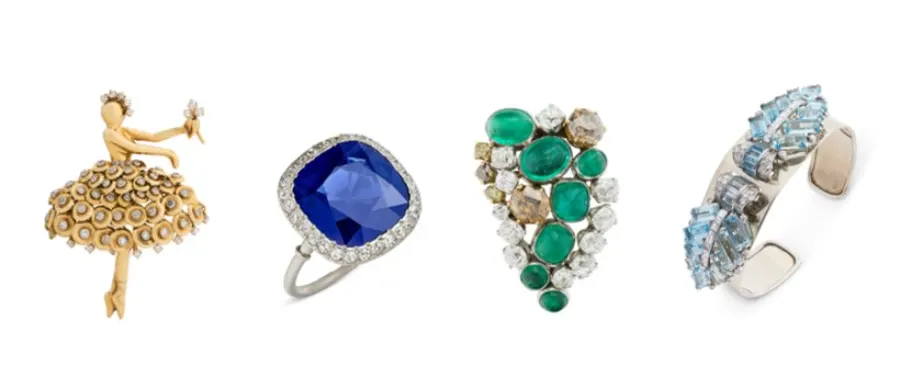
Christie's has announced a new edition of its *Joaillerie Paris* online jewellery sale, scheduled to run from 4 to 16 December 2026 with more than 220 pieces spanning historic houses, distinctive gemstones and contemporary collecting interests. The official Christie’s release dated 20 November 2026 identifies a Kashmir sapphire estimated at €600,000–800,000 among the highlights, alongside a Van Cleef & Arpels Ballerine clip, pieces by Cartier and Bvlgari, and a selection from the house of René Boivin. The sale opens after this article's publication date; estimates are the auction house's pre-sale guides, not guaranteed prices or verified results. An exhibition is planned from 11 to 16 December. For collectors and luxury travellers visiting Paris, the event offers an opportunity to explore craftsmanship across several periods, but serious purchases warrant independent inspection and careful attention to bidding conditions.
An online auction with a Paris exhibition
The December sale is described as an online auction, with a separate public viewing period in Paris. That arrangement allows people to participate remotely while providing an opportunity to examine selected objects in person. The precise availability of every lot at an exhibition should be checked with the auction house, because an online sale may contain many objects that cannot all be displayed identically. The published timeline is important: bidding runs from 4 to 16 December, whereas the exhibition begins on 11 December. A visitor who arrives on the first day of bidding should not assume the public display is already open. Collectors should consult official viewing hours, identification requirements and appointments before planning a trip around a specific jewel.
The sale includes a wide range of price estimates
Christie's presents estimates beginning around €2,000 for selected pieces and rising substantially for major gemstones and historical works. Some lots are described as having no reserve, which affects the minimum price at which a sale can occur but does not guarantee a bargain. A pre-sale estimate is a guide, not an invoice or an assurance of resale value. The final amount a buyer pays may include a buyer's premium, tax, delivery, insurance and other charges depending on location and terms. Those practical differences matter in a market where visual appeal can make an object feel immediately desirable. Comparing estimates without considering fees and condition can lead to an unrealistic understanding of the commitment.
A 10.365-carat Kashmir sapphire leads the gemstone interest
The auction house identifies a 10.365-carat Kashmir sapphire as one of the most significant individual stones, with an estimate of €600,000–800,000. Its pre-sale description says the jewel comes from the Bordeaux region of France. Kashmir sapphires are prized by collectors for particular aspects of their blue colour and historical scarcity, but origin claims and gemstone treatments require professional documentation. A buyer should review the accompanying reports, assess condition and seek appropriate advice rather than infer quality from weight alone. The estimate is Christie's view before bidding, not a statement that the stone has already sold for that amount. Its presence gives the sale a high-value focus within a much wider selection.
Van Cleef & Arpels' Ballerine brings historical narrative
One of the sale's most distinctive pieces is a gold-and-diamond Ballerine clip by Van Cleef & Arpels, estimated at €80,000–120,000. The auction house traces the motif to the maison's creative relationship with the world of ballet, describing its first introduction in New York in 1943. The example offered is associated with the 1946 Paillette collection, whose decorative language reflects the fashions of an earlier period. Christie's also notes a connection to the family of Paris Opera Ballet dancer Emma Sandrini. Such provenance can make a jewel culturally interesting, but its documentary support is essential. A collector should request the formal catalogue description rather than rely on romantic associations alone.
Jewellery can connect different artistic disciplines
The Ballerine motif is a reminder that fine jewellery often draws on performance, architecture, textile design and the decorative arts. A dancer rendered as a brooch involves not only precious materials but a designer's effort to capture gesture in miniature. Those creative relationships can be especially compelling to collectors who also follow art and design. They do not make every older brooch a museum-quality object or guarantee an increase in value. Condition, rarity, material and market demand remain important. Christie's release provides a useful starting point by placing the Ballerine in a historical context, but the final judgement of any individual jewel depends on more than the story attached to its name.
Cartier's transformable bracelet reflects Art Deco ingenuity
Among the works described is a Cartier aquamarine-and-diamond bracelet that can be worn as two clip-brooches, with an estimate of €60,000–80,000. Transformable jewellery has a particular appeal because one object can be adapted to several settings or styles of dress. Its mechanics also require careful examination: hinges, clasps and removable elements may show wear, and the originality of the configuration should be verified. The auction house connects the jewel with the design language of the Art Deco period. A buyer may enjoy its versatility without assuming that every historic component remains untouched. An inspection report and specialist advice are more useful than a broad claim that an object is simply timeless.
Bvlgari brings a different use of colour
The catalogue announcement also describes a necklace and bracelet suite from Bvlgari's Celtaura collection, combining coloured stones including tourmaline, amethyst, citrine, peridot and topaz. The pieces are associated with an estimate of €30,000–50,000 in the official release. Their visual appeal is not the same as the single-stone rarity of the Kashmir sapphire: here the design relies on relationships among several colours and materials. This difference illustrates why collecting high jewellery is not reducible to carat totals or the presence of diamonds. Some collectors value an expressive design, a house's historical language or the way a piece can be worn. Such preferences should remain separate from any financial claim about future price performance.
René Boivin adds an alternative design language
Christie's highlights works from the house of René Boivin, including jewellery informed by decorative arts and historical imagery. A pair of ruby earrings from the Passementerie series is among the examples, with an estimate of €10,000–20,000. The house's late-1930s Indu designs are also discussed in the source material. Boivin appeals to collectors interested in distinctive forms and artistic experimentation rather than only familiar monograms. Yet a brand name alone cannot establish authorship or date for a specific object. The auction house's formal attribution, supporting documents and condition assessment should guide any serious acquisition. Collectors may benefit from comparing such designs with more conventional period pieces before deciding what matters most to them.
JAR contributes a playful interpretation of the bow
The release includes a bow-inspired jewel associated with JAR, estimated at €30,000–50,000. The auction house describes a contrast between the flexibility of leather and the brilliance of diamonds, an unusual choice that shows how contemporary jewellery can play with expectations about precious and everyday materials. The combination may interest collectors who prize invention, but it also introduces practical questions about wear and conservation. Organic materials and delicate surfaces can have different storage and maintenance needs from gold and gemstones. A good inspection should address these details before purchase. The attraction of an unusual design should not be confused with proof that it will be uncomplicated to preserve or wear frequently.
A Cartier Molécules necklace adds a modern dimension
Christie's also notes a Cartier necklace from the 2000s designed by Lorenz Bäumer, part of the Molécules concept, with an estimate around €30,000–50,000. The release characterises it as architecturally expressive, suggesting a relationship between jewellery and ideas associated with structure or flexible movement. This offers a contrast to the mid-century Ballerine clip and older decorative references elsewhere in the sale. An auction that spans decades allows collectors to see how ideas of luxury change over time. It does not mean modern pieces are intrinsically more wearable or older pieces necessarily more valuable. Comparison should begin with the particular object and its documented condition rather than a simple hierarchy of periods.
Provenance is not a decorative footnote
A jewel's history can affect both its cultural interest and the practical questions a buyer needs answered. Records of previous ownership, alterations, repairs and accompanying laboratory reports may all matter. For significant coloured gemstones, treatment and geographical origin are especially important. The public press release is not a substitute for the full condition report and legal sale terms. International buyers may also need to understand export and import rules, insurance and tax treatment. The fact that an object appears in a respected auction house's catalogue does not eliminate the need for due diligence. It creates an organised opportunity for specialist examination, which responsible collectors should make full use of.
Paris is part of the collecting experience
Paris has a long association with high jewellery, fashion and the decorative arts. The exhibition accompanying the online sale can give travellers a reason to see pieces close to the place where many of their design traditions developed. However, the specific opening hours, appointment rules and security arrangements should be confirmed directly with Christie's. A visitor should also avoid assuming that a pre-sale display implies an obligation to bid. Viewing significant jewellery can be an educational experience in its own right, even for people who are simply curious about craftsmanship and design. A considered itinerary might combine the exhibition with other cultural stops, without inventing exclusive access or a fixed schedule.
Estimates must not be described as realised prices
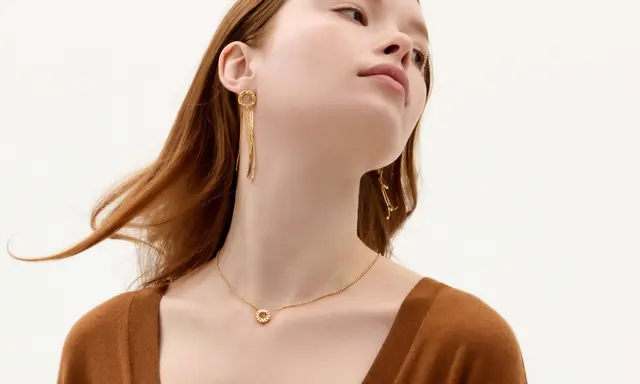
As of 28 November 2026, the announced December online sale has not opened. It would therefore be inaccurate to report winning bids, sell-through percentages or any final total for this edition. The Christie's primary press material documents the catalogue highlights and pre-sale estimates, with more than 220 pieces and a planned viewing period. The lead photograph is an original Christie’s auction image associated with this specific release, properly credited rather than replaced with generic jewellery imagery. For Luxury Yacht Guide readers interested in collecting, the development offers a grounded look ahead to a Paris sale where precious stones, historical designers and inventive wearable art will meet the market in December.
Explore related Luxury Yacht Guide lifestyle reporting
- Christie's Hong Kong Jewels Sale Reaches HK$536.9m as Pink Diamond Leads
- Christie's Hong Kong Handbag Sale Tops HK$59.5m with Rare Hermès Birkins
- Doloni Brings Ukrainian Jewellery and Craft to Design Miami 2026
- Harry Nuriev and JRP Editions Turn Sound Into Furniture at Design Miami
Primary reporting and image credit
Primary manufacturer and organiser source(s): https://press.christies.com/vente-emjoaillerie-parisem-522941/?lang=eng. © Christie’s Images Limited 2026. Original official catalogue press image for the 4–16 December Joaillerie Paris jewellery online auction. Image is used only for correctly attributed factual editorial coverage and never represented as open-licence stock photography.