Christie’s London is presenting more than 170 prints and multiples by artists including Roy Lichtenstein, Andy Warhol, Banksy, Pablo Picasso, David Hockney and Yayoi Kusama. The sale combines an online auction with a public exhibition and spans estimates from around £300 to £200,000, creating one of the widest entry ranges in the autumn art calendar.
Prints occupy an unusual position in collecting because they can provide access to major artists at prices far below unique paintings while still demanding serious knowledge about edition, paper, condition, signature and printing history. The category therefore attracts both first-time buyers and experienced specialists.
Lichtenstein and Warhol lead the upper end
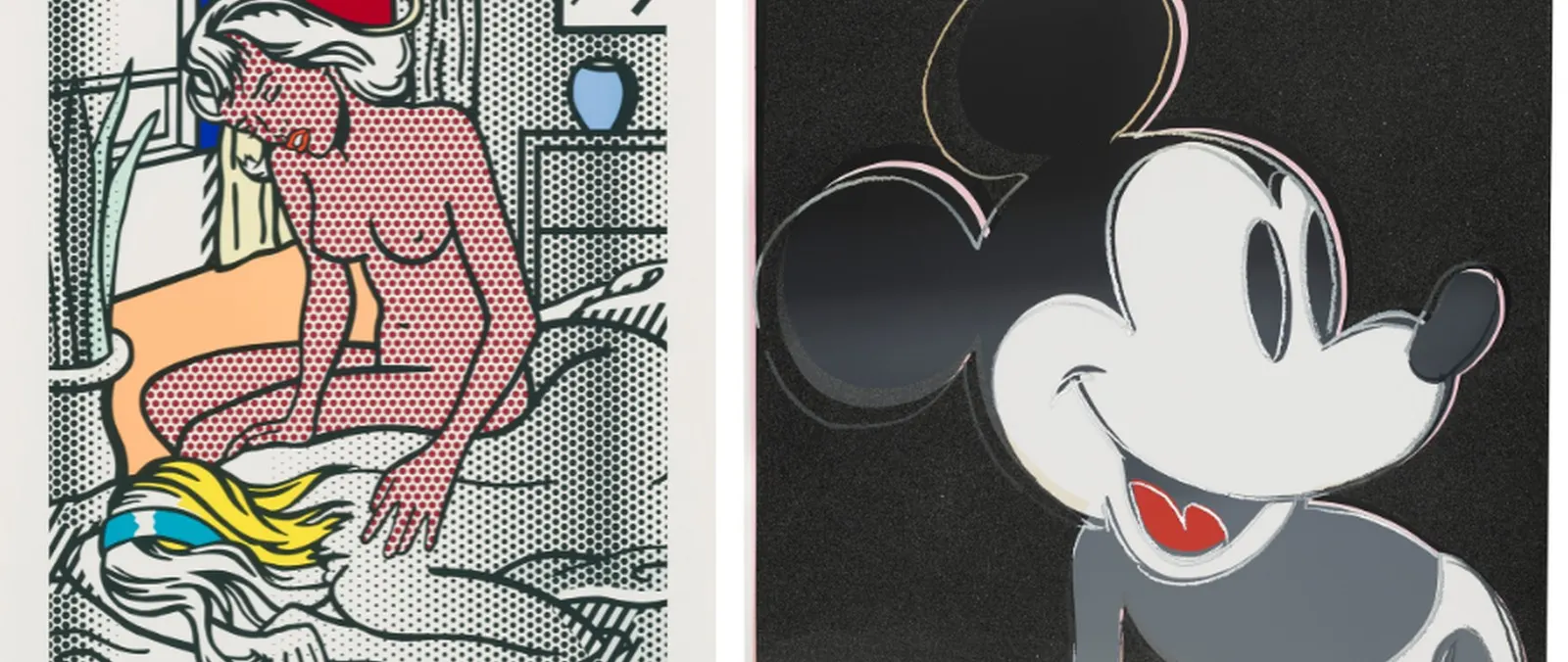
Roy Lichtenstein’s Two Nudes from the Nude Series and Andy Warhol’s Mickey Mouse from Myths are each estimated at £150,000 to £200,000. Both works use the graphic clarity that made the artists central to Pop Art, but they approach popular imagery through different visual languages.
For collectors, major prints can be important works in their own right rather than substitutes for paintings. The strongest editions were carefully conceived for printmaking and can contain colours, surfaces and formats that do not exist elsewhere in an artist’s output.
Kusama’s Pumpkins bring colour and recognisable imagery
Three examples of Yayoi Kusama’s Pumpkins in red, yellow and green are estimated at £20,000 to £30,000 each. The motif has become one of the most widely recognised in contemporary art, and editioned works offer collectors a route into a practice whose unique pieces can command much higher prices.
Popularity, however, makes condition and authenticity especially important. Buyers should pay attention to edition details, printing quality and provenance because familiar imagery can attract a wider range of secondary-market material.
The low end gives new collectors room to learn
With estimates beginning around £300, the sale includes works that allow buyers to experience auction participation without committing large sums. This can be valuable because collecting skill develops through handling objects, reading catalogues and comparing condition rather than through theory alone.
Affordable editions can also support a collection built around ideas rather than status. A buyer might focus on British printmaking, political graphics, colour or one artist across decades without needing a multimillion-pound budget.
The exhibition makes print quality easier to understand
Christie’s public viewing allows visitors to examine paper, scale, colour and surface directly. These qualities often disappear in digital photographs, particularly when embossing, metallic inks or subtle tonal differences are important to the work.
Viewing several editions together also makes the category more legible. Collectors can compare how different artists used lithography, screenprinting and other processes rather than treating every print as the same type of reproduction.
Prints remain one of the most democratic serious art markets
The category can accommodate a £500 purchase and a six-figure Pop Art icon inside the same sale. That range is unusual in the auction world and helps explain why prints often become a starting point for younger or newer collectors.
For established buyers, the attraction is different: rare editions, exceptional impressions and important series can fill gaps that unique works cannot. Christie’s London sale demonstrates both sides of the market in one catalogue.