Christie’s will mark 60 years of specialist wine auctions with a dedicated Hong Kong sale from the cellar of Henry Tang, one of Asia’s most prominent private wine collectors. More than 800 lots will be offered on October 10 at The Henderson, connecting the auction house’s 1966 inaugural wine sale in London with the mature Asian collecting market of today.
Tang built the cellar over more than fifty years, assembling Burgundy, Bordeaux, Champagne, Napa Valley, Italian, Spanish and Australian wines. The scale is significant, but the stronger attraction lies in provenance because many bottles have remained under one ownership and have been cellared for decades.
Burgundy sits at the heart of the collection
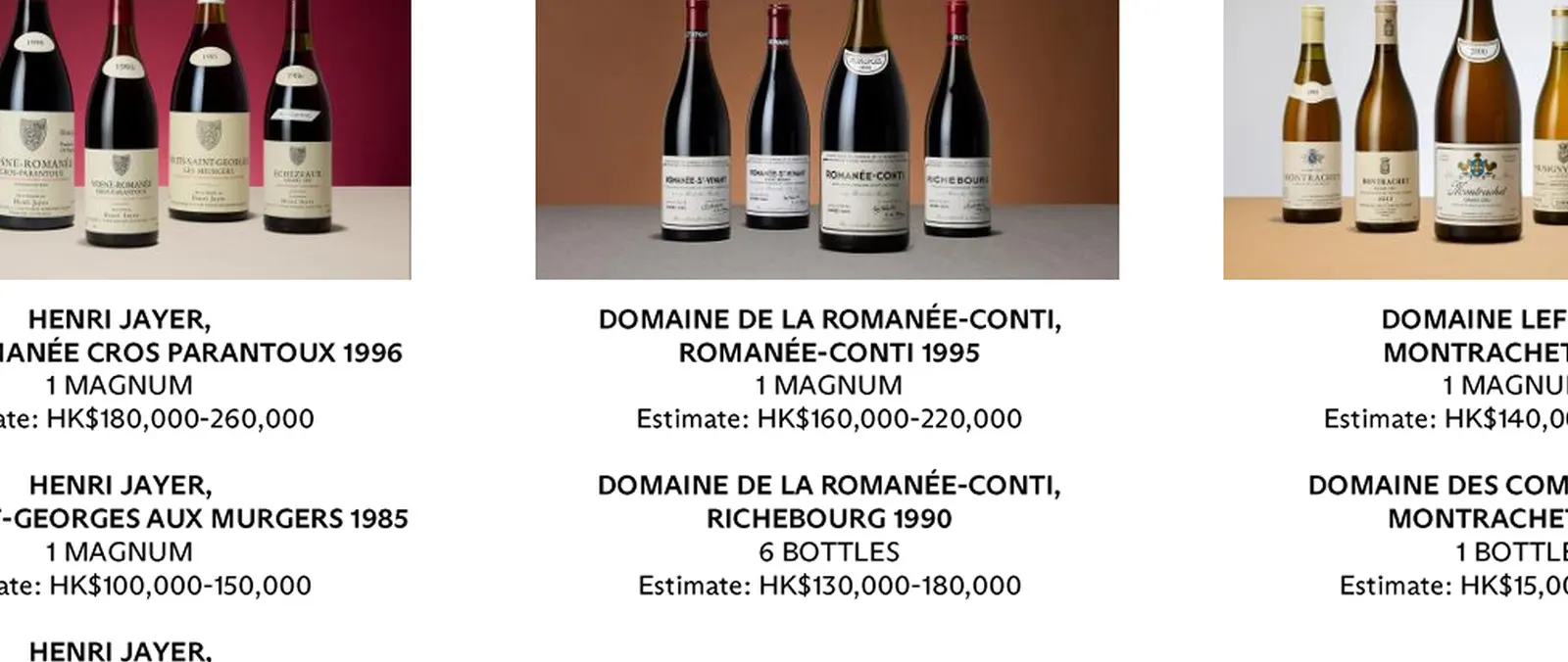
Domaine de la Romanée-Conti and Henri Jayer are among the producers highlighted by Christie’s, reflecting the extraordinary international demand for top Burgundy. Limited production, vineyard specificity and decades of rising collector interest have turned leading domaines into reference points for the entire fine-wine market.
For buyers, storage history becomes critical at this level. A famous label alone is not enough when mature bottles are being considered, and collectors often pay a premium for documented cellars where temperature, handling and ownership can be traced with confidence.
Bordeaux gives the cellar historical depth
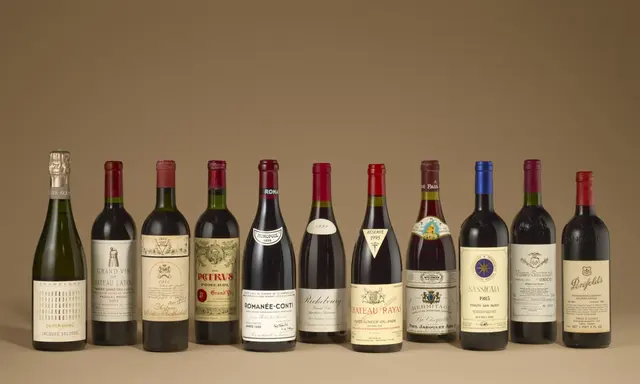
The collection includes all of the First Growths alongside Pétrus, Lafleur, Le Pin and other major estates. Bordeaux remains one of the foundations of serious wine collecting because its classification, château system and long ageing potential give buyers a framework that has been understood internationally for generations.
Tang’s cellar spans multiple regions rather than focusing exclusively on one producer or vintage. That makes the sale relevant to collectors who want to build complete drinking cellars as well as those concentrating on investment-grade bottles.
Champagne and New World wines broaden the range
Christie’s also points to important Champagne, Napa Valley, Italy, Spain and Australia, demonstrating how fine-wine collecting has become increasingly global. A modern cellar can move comfortably from Burgundy to Napa Cabernet or Australian Shiraz without treating one region as inherently secondary.
This breadth is useful for buyers who actually plan to drink from their collections. Different regions and styles create options for restaurants, yacht entertaining and long dinners rather than leaving a cellar dominated by wines that demand the same occasions or decades of further ageing.
The sale also tells the story of Asian wine collecting
Hong Kong became one of the world’s most important wine-auction centres after duties were removed and regional collector demand accelerated. Tang played a visible role in that development, both as a buyer and as an advocate for fine wine culture in Asia.
Christie’s decision to begin its 60th anniversary programme with his collection therefore has symbolic weight. The sale connects the old European foundations of the category with a market whose growth over recent decades changed where important cellars are bought, sold and enjoyed.
A great cellar is ultimately about sharing
Tang has described wine as a source of friendship and discovery rather than simply an asset. That philosophy is particularly relevant as a long-held private cellar disperses, because the bottles move from one collector’s history into many new ones.
For successful bidders, the strongest lots will carry two forms of provenance: the reputation of the producer and the documented history of Tang’s ownership. In mature wine, that combination can be as important as the vintage printed on the label.