An exhibition opening on 15 November
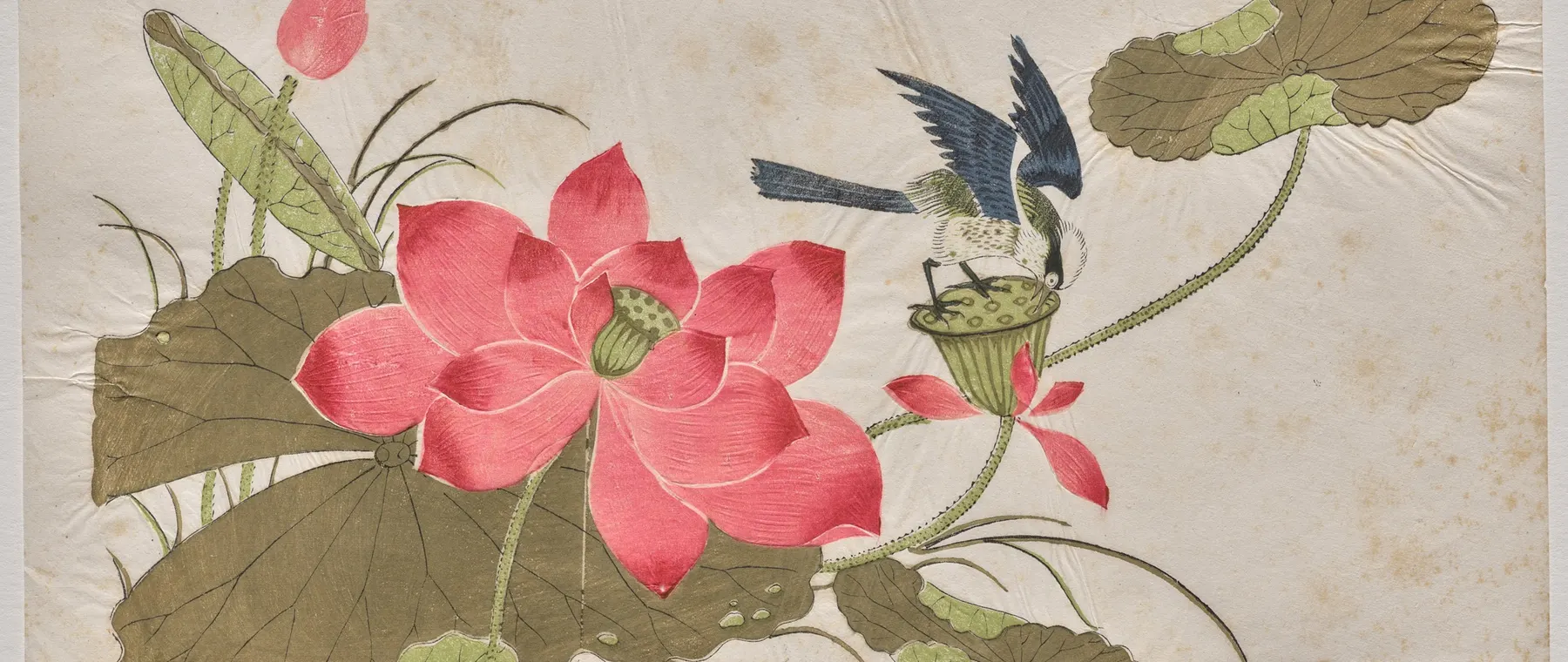
The Cleveland Museum of Art opens Print Revolutions: Chinese Impressions, 1630s–1960s on 15 November 2026. The exhibition continues until 4 April 2027 and brings together approximately eighty objects, including prints, paintings and ceramics, to trace the development of Chinese printmaking from the seventeenth century through the modern period. Its starting point is a recent acquisition of eighteenth-century colour woodblock prints from Suzhou. Among the works highlighted by the museum is Bird on Lotus, an image combining a delicately coloured bird, lotus flowers and calligraphy within a composition measuring only 30.1 by 38.2 centimetres.
This exhibition offers an interesting cultural destination for visitors travelling around the Great Lakes, while the prints themselves are particularly relevant to people furnishing small, carefully designed spaces. A luxury yacht does not need a large collection of monumental paintings to have a distinctive visual identity. A single carefully selected work on paper can introduce a story and a quality of detail that reward attention over a long period. The practical questions involved in displaying such a work at sea are quite different from those of looking after a painting in a conventional domestic room.
The importance of separate printing blocks
Colour woodblock printing relies on the preparation and coordination of several surfaces. A separate carved block can carry a particular colour or portion of the design, and the succession of impressions brings those individual elements together. The quality of the final image consequently depends not only on the design of each block but on the decisions made about their interaction.
A viewer can appreciate this process by examining the edges of coloured areas and the relationship between adjacent shapes. Colours that initially appear to form a single continuous area may have been assembled from several impressions. Differences in the treatment of a leaf, petal or feather can also provide a sense of the work required to reproduce delicate visual detail. The effect differs from the straightforward application of a single painted surface. It is a practical demonstration of how complex results can emerge from a series of carefully organised technical operations.
For a person interested in craftsmanship, the preparation of such a print is as interesting as its completed appearance. The tools and techniques used bring together decisions about materials, line and reproduction. A museum presentation that includes different forms of printmaking makes it possible to examine those choices through the actual objects rather than regard them merely as illustrations of decorative motifs.
Bird on Lotus and the Suzhou tradition
The museum dates Bird on Lotus to approximately 1700–1750 and attributes it to Suzhou in southeast China. The work uses multicolour woodblock printing together with embossing. Its bird is positioned on a lotus seed pod, with the flowers, leaves and inscriptions occupying their own parts of the composition.
There is a useful contrast between the precision of the printing method and the freedom with which the natural forms appear to occupy the sheet. The bird, the broad leaves and the more delicate lines of the stems provide points of attention at different scales. Rather than treating the image as a simple botanical illustration, a viewer may follow the relationship of these shapes and the areas of paper left comparatively open. The calligraphic elements also form part of the visual arrangement.
The museum records Suzhou as one of several Jiangnan cities where printing developed from illustrated publications associated with private enjoyment towards individually produced sheets serving a wider urban market. Bird on Lotus belongs to a tradition in which a print could be displayed as an individual object rather than viewed exclusively as a page in a book. The physical nature of such a sheet has implications for its subsequent use, collection and preservation.
Technical detail and the character of the surface
The identification of embossing among the techniques used for Bird on Lotus is especially interesting because it suggests a dimension of the finished print that a reproduction viewed on a screen may not fully communicate. The character of the paper, the raised or recessed areas and the effects of light on the physical surface form part of the experience of looking at a work on paper.
A collector examining a print should distinguish intentional features of its manufacture from later changes in condition. The presence of texture or a variation in the surface does not necessarily indicate that the paper has been damaged. At the same time, a print can be affected by creases, tears, previous mounting arrangements or other interventions. An appropriately qualified paper conservator can examine those features in their proper context and advise on the suitability of a particular display or storage arrangement.
The distinction is particularly relevant to people accustomed to commissioning newly manufactured objects for a yacht. The qualities of an older handmade print are not always evaluated by the criteria of a newly printed decorative panel. Understanding its construction and history allows the owner to appreciate the characteristics that make the individual object significant.
From early colour printing to the modern woodcut
The museum's programme extends beyond the eighteenth-century prints of Suzhou. Its selection follows the development of printing into the international modern woodcut movement of the early twentieth century and onwards towards the 1960s. By including paintings and porcelain among the prints, the exhibition offers a means of considering relationships between images and the different materials through which those images circulated.
This broader perspective is worth attention when considering a collection of decorative objects for a private residence. An owner may be attracted to a particular visual theme without realising that its appearance changes considerably when translated from one medium to another. A painted ceramic surface, a coloured print and a painted sheet have different characteristics of light, texture, scale and manufacture. The same subject can consequently provide quite different experiences.
A useful way of visiting the exhibition is to notice how individual artists and makers address the demands of their materials. Rather than seeking one unchanging tradition across three centuries, look for the decisions that distinguish the individual works. The variety of the selection is an opportunity to develop that more considered approach to collecting.
The suitability of works on paper for yacht interiors
A relatively small print can occupy an important position within a cabin or saloon without requiring substantial architectural changes. Its scale makes it possible to display a work at a distance where its individual details are visible. It may also provide a particularly effective point of interest within an interior whose other surfaces use restrained colours.
However, the display of historic paper aboard a vessel requires attention to an environment quite different from the museum gallery. Light, humidity, temperature and the movement of the vessel can all affect the suitability of the proposed setting. A work requiring sensitive conservation should be assessed before it is installed. A professional mounting system appropriate to both the work and the vessel is essential, as is consideration of the potential exposure to water. The responsible marine specialists should establish the suitability and safety of any fixing to the yacht's structure.
In certain circumstances an owner may prefer to retain a valuable original in an appropriate shore-based collection and select a properly authorised reproduction for the yacht. That decision need not reduce the importance of the image within the interior. It can reflect an appropriate distinction between the pleasure of the visual arrangement and the responsibilities associated with preserving an individual historic object.
Choosing an image rather than a fashionable style
A Chinese woodblock print should be considered as an individual work rather than selected solely to introduce a broadly defined Asian decorative character. The date, origin, subject, printing technique and condition of the particular sheet can be meaningful aspects of the collection. Museum records provide useful points of reference for developing a more informed understanding of those characteristics.
An owner designing an interior around one or two works can consider how the surrounding materials allow those pieces to be appreciated. A heavily patterned finish immediately beside a complex print may compete with its details. Conversely, a simple area of fabric or timber can give the image room to be seen. There is no single correct combination: the individual work and the proposed interior need to be examined together. Lighting should be considered in the context of conservation requirements rather than designed solely to create an impressive appearance during an evening visit.
A specialist gallery or conservator can assist in establishing the background of a particular acquisition and in making appropriate arrangements for its continued care. Museum documentation is a valuable starting point for such enquiries but should not be understood as a guarantee of the authenticity or condition of a superficially similar item offered elsewhere.
Visiting Cleveland during a Great Lakes journey
Print Revolutions occupies the museum's prints and drawings galleries and Chinese art galleries. The published exhibition information specifies free admission without a ticket through 4 April 2027. Visitors should check the museum's opening hours and any changes to the programme before arranging a journey. The exhibition is not situated at a yacht marina, so transport from a confirmed shore location needs to be organised separately.
For a party whose Great Lakes itinerary includes Cleveland, a visit to the museum offers a valuable alternative to planning the shore programme exclusively around the waterfront. For owners interested in decorative arts, the acquisition of Bird on Lotus and the wider exhibition provide an opportunity to consider the cultural and technical history of designs that can be appreciated in comparatively intimate surroundings. The most rewarding outcome might not be an immediate purchase. It may simply be a more informed eye for the relationships between an image, its medium and the place where it is displayed.
Sources and photograph
Source documentation: https://www.clevelandart.org/art/2025.118, https://www.clevelandart.org/exhibitions/print-revolutions-chinese-impressions-1630s-1960s. Photograph: Bird on Lotus, Suzhou, 1700–1750 — Cleveland Museum of Art, Bird on Lotus, 1700–1750, Purchase from the J. H. Wade Fund 2025.118; CC0 Open Access.. Resized for web display under CC0 1.0.