A quieter answer to Mallorca’s reputation
Mallorca has a well-established image of glamorous yacht ports and crowded summer anchorages, but its eastern coastline can reward a different kind of visit. Cala d’Or offers a marina with practical boating services close to a settlement where guests can enjoy a meal ashore or spend an unhurried afternoon on board. The attraction is not necessarily to depart for another bay at first light. For a family on a 15-metre cruiser or a couple on a 21-metre motor yacht, a well-chosen berth can become the comfortable centre of a short holiday. The marina’s own information emphasises both its substantial mooring capacity and the technical support available to visiting owners. That makes the destination worth considering for a planned stop, not merely an incidental anchorage.
A working marina, not just a scenic photograph
The operator describes Marina Cala d’Or as having 499 moorings and an extensive shore-side operation that includes maintenance, mechanical assistance and handling equipment. It lists 45- and 65-ton travel lifts, along with hull treatment and selected engine-service facilities. These are operator-stated capacities, not proof that every yacht can be lifted, serviced or berthed on a specific date. For owners planning a visit, the valuable message is that the port has an established technical character. A routine maintenance appointment can potentially be combined with a shore holiday if it is booked well in advance. Conversely, anyone seeking complete quiet should ask where their berth sits relative to working areas and other harbour activity.
How yacht size affects the enquiry
A yacht within Luxury Yacht Guide’s 12–23.99-metre range may be suitable for Cala d’Or, but length alone is not enough to determine berth compatibility. The marina’s service information says water and 220-volt electricity are available at moorings for vessels up to the specified size limit of 82 feet. A skipper should verify the actual electrical provision for the assigned berth rather than assume the general description matches the yacht’s shore-power equipment. Beam, draft, access route and turning space are equally important. A 22-metre yacht can have very different manoeuvring needs from a narrow 13-metre sailing cruiser. The proper first step is a direct enquiry containing full dimensions, dates and utility requirements.
Arrival and harbour procedures
Marina Cala d’Or publishes VHF channel 9 for harbour communications and describes berthing assistance as available on request. It also states that anchoring within the marina is prohibited and that berths use a defined mooring arrangement. Those details should be checked against the latest operator instructions before approach. Guests may see an apparently calm entrance and assume the harbour presents no challenge; the skipper must instead account for the actual weather, traffic and designated berth. Fendering and line preparation matter, particularly when arriving in an unfamiliar configuration. A relaxed first hour ashore begins with a disciplined, unhurried arrival. The marina staff’s knowledge is useful, but the command responsibility remains with the vessel’s skipper.
The difference a service schedule makes
The marina advertises year-round staff support, yet individual functions have separate hours. Its published service page distinguishes the fuel station’s summer and winter arrangements and lists routine schedules for the harbour office, boatyard and some guest amenities. Those distinctions matter when arriving outside the peak cruising season. A promise of round-the-clock harbour assistance does not mean that a technician, lift or fuel attendant is available on demand at any hour. For a planned maintenance stop, agree the work, parts, handling and payment arrangements before reaching Mallorca. For a leisure visit, confirm the basic essentials—fuel, power, water, showers and shore access—so the crew can concentrate on guests once the lines are secure.
A sensible first afternoon
Cala d’Or is at its best when the first afternoon is not overloaded. Secure the boat, finish the check-in routine and take a short walk to understand the marina’s layout. Find the harbour office, sanitary facilities, refuse arrangements and any shops needed for provisions. If everyone is tired after a passage, have an uncomplicated meal and postpone the more ambitious exploring until the next day. Owners occasionally treat a new berth as merely a pause between anchorages, but this misses the pleasure of having an efficient base. A well-organised marina day can leave guests ready for swimming, dining and excursions rather than preoccupied with small logistical problems.
Why eastern coves require judgement
The coast around Cala d’Or is known for indented shores and small coves, but the appearance of shelter in photographs should never determine a navigation plan. A pleasant morning swimming spot may be unsuitable in another wind direction, and available room can be limited during busy periods. Use current charts and notices, check seabed, depth and exposure, and follow local restrictions on anchoring and access. The skipper should be especially cautious about the position of tenders and swimmers relative to other boats. A short passage can offer the same delight as a longer cruise when the chosen destination is appropriate. The objective is a comfortable day on the water, not a competition to reach the most celebrated beach.
Posidonia is part of the cruising experience
Balearic seagrass meadows are a critical feature of the marine environment, and anchor choice has real consequences. The regional government has reported progress in its 2026 Posidonia surveillance season, noting a reduction in the proportion of anchoring recorded over protected meadows. That is welcome news, but it is not a reason for individual yachts to relax their responsibilities. Seagrass can be damaged by an anchor and its chain; official mapped areas, local rules and authorised moorings should guide the decision. Owners and skippers should check the latest regional guidance before each anchoring plan. Responsible cruising is easier when protection is discussed before the first swim, not after a tender has already been launched.
The pleasures of an ordinary shore day
A luxury-yacht holiday need not involve a resort reservation every evening. At Cala d’Or, a simple day can comprise breakfast aboard, a short walk, swimming where permitted and an excellent local meal. A family may prefer a familiar timetable and easy return to the yacht; adults travelling without children may choose a longer lunch and a more leisurely evening. Organise transport only when the destination merits it, and keep the afternoon flexible enough for someone to remain aboard. The yacht is valuable precisely because it provides a private base from which different guests can enjoy the same location in different ways. Unnecessary transfers and tightly scheduled excursions often reduce that freedom.
Berthing, fuel and maintenance are separate decisions
It is tempting to book a marina that lists many services and assume they will all be available together. In practice, fuel, a visitor berth, workshop labour and lifting capacity may have different lead times and operating rules. The Cala d’Or operator distinguishes these functions, including a workshop and dry-dock service with published hours. Owners contemplating work should ask for written scope and scheduling, especially if the boat will be unusable during part of the stay. An overnight guest needing only a berth has different priorities: quiet location, reliable utilities, safe shore access and easy provisioning. A good enquiry makes those needs explicit instead of sending a vague request for a luxury berth.
What changes outside summer
Shoulder-season cruising can be especially attractive for travellers interested in a slower pace, but it requires a different practical checklist. The official marina material describes winter fuel arrangements that differ from its summer service, and shore establishments elsewhere in the area may also follow seasonal opening patterns. Weather can become a stronger determinant of when to move, so leave room for a layday rather than forcing an onward passage. A comfortable yacht makes such flexibility enjoyable when basic systems are well managed. Before travelling, confirm the actual berth, current operating hours, availability of required supplies and the expected conditions for the next leg of the route.
A short-stay itinerary without overreaching
For a two-night visit, arrive with sufficient daylight for an orderly approach and devote the first evening to the marina. Spend the second day at a safe swimming location if conditions and restrictions allow, or use a shore excursion when the weather is unsuitable. Allow time for provisions and a meaningful dinner rather than making the entire stay a sequence of departures and arrivals. On the final morning, verify fuel and services and review the forecast before leaving. This is a hospitality plan, not navigational advice; the actual route and places to stop must be chosen from up-to-date information. Its virtue is that the yacht and its guests both enjoy a manageable rhythm.
Luxury defined by ease and consideration
Cala d’Or’s combination of 499 advertised moorings, operator-described technical services and a recognisable eastern Mallorcan setting gives it a useful position in a luxury-yacht itinerary. The details are more important than the marina’s scale: suitable berth dimensions, accurate approach instructions, confirmed utility provision and respect for protected seabed. When those are settled, guests can enjoy the pleasures that brought them to Mallorca in the first place—water, shore walks, relaxed dining and time together. The best luxury destination is not always the one with the largest reputation. Sometimes it is the place where the boat works smoothly, the natural setting is treated carefully and everyone has time to stay.
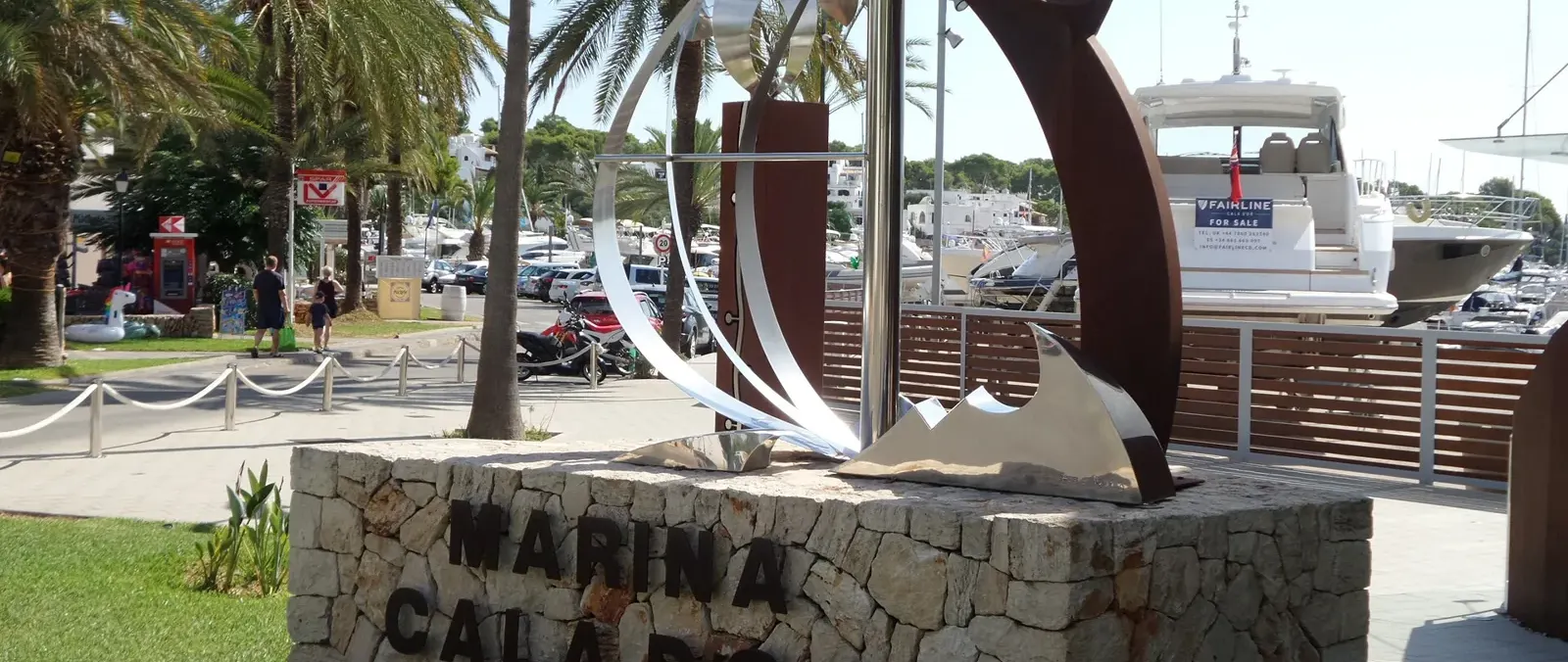
Photograph: Marina Cala d’Or, Mallorca, by Xxlstier (3 September 2019), Wikimedia Commons, CC BY-SA 4.0; resized and converted to WebP.