A port that looks towards the Atlantic
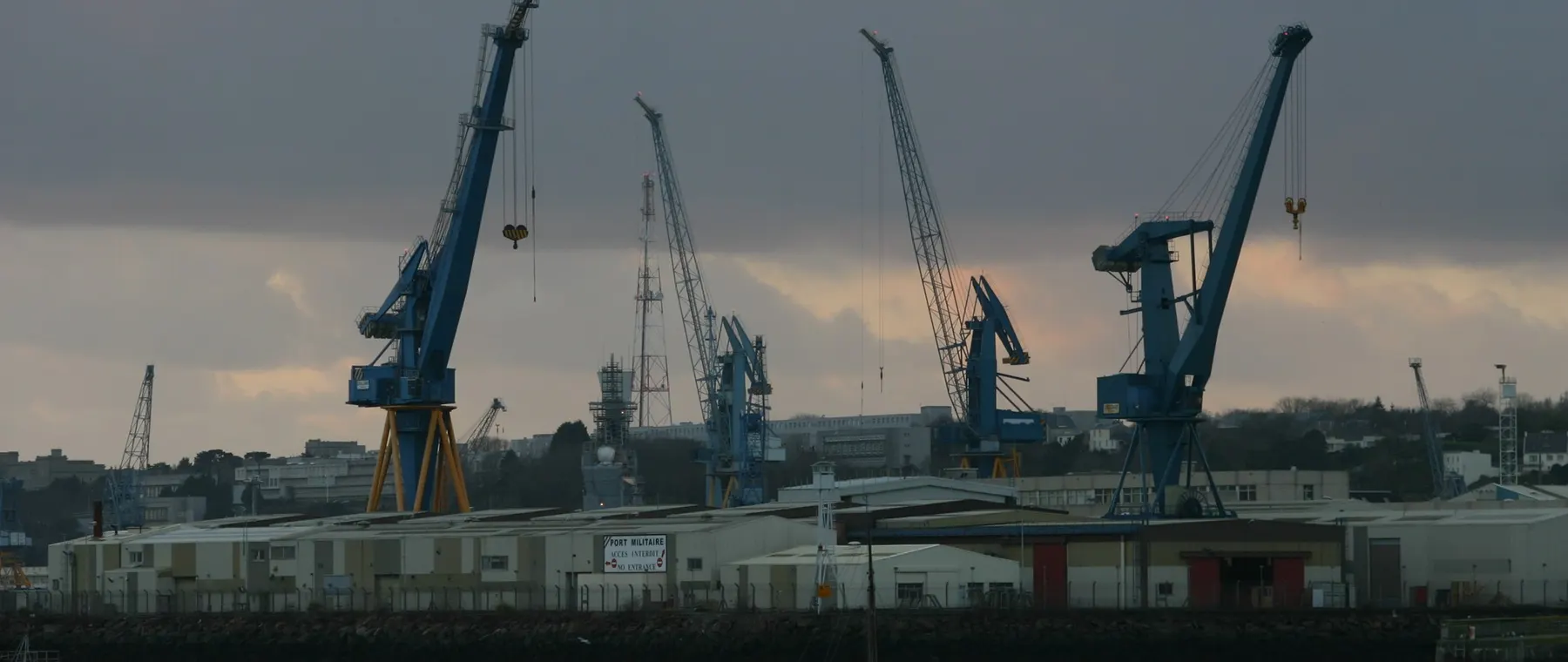
Brest offers a private yacht owner a particularly varied introduction to western Brittany. The city combines an extensive maritime environment with institutions dedicated to navigation history, marine science and botanical conservation. The regional tourism authority describes the large bay, the River Penfeld and a city substantially rebuilt after the destruction of the Second World War. These elements create a distinctive setting for a visit by a yacht between twelve and twenty-four metres, provided the individual vessel's berthing and operating arrangements are confirmed. A major port contains facilities intended for very different types of vessel, and the yacht's skipper must establish the actual approach, accepted dimensions, services and requirements of the specific recreational facility. Once the necessary arrangements are made, the attraction of Brest is the ability to explore several aspects of maritime life from a settled base. The accompanying photograph by Julien Carnot depicts the area near the Port du Château; it illustrates a waterfront setting rather than today's operational circumstances.
The castle and the maritime museum
At the mouth of the Penfeld stands Brest's castle, which houses the National Maritime Museum. Brittany Tourism identifies the castle and museum as central elements of the city's maritime heritage. Their geographical relationship with the river and the port is particularly instructive. Defensive structures do not acquire their importance independently of the surroundings in which they were built; the protection and control of access to a waterway often determine their position and form.
For guests interested in the design of vessels, a maritime collection can provide a much wider historical context than the equipment encountered aboard a contemporary yacht. The requirements of different naval operations, changing materials and new technologies have influenced the evolution of ship design. Objects exhibited in a museum can reveal how particular decisions emerged from contemporary needs rather than a simple progression towards the forms familiar today. The castle itself has its own architectural history, distinct from that of the collections it accommodates. Confirm the actual opening conditions, exhibition programme and access requirements before arranging a visit. Consider allowing a separate morning for the museum rather than combining it with every other maritime attraction.
The reconstructed city and its architectural character
Brest suffered extensive destruction during the bombings of 1944. The regional guide describes the city's subsequent architectural character through several styles, including modernist, neoclassical and Art Deco elements. A visitor who expects an uninterrupted medieval or nineteenth-century townscape may miss one of the most interesting aspects of Brest: the way a city responds to extensive destruction while maintaining its identity as a maritime centre.
Walking along Rue de Siam towards the port provides an opportunity to examine the relationship between the organized street pattern and the changing outlook towards the water. The experience is different from approaching an older walled settlement where streets occupy comparatively narrow spaces. A guided architectural walk can help explain how the reconstruction was planned and which structures survived or were incorporated into later development. Owners interested in the architecture of their own residences may appreciate the way materials, proportions and urban planning communicate the priorities of a particular period. The city is not a single stylistic exhibition, and a considered visit should look at individual buildings and districts in their own context.
Crossing the Penfeld and the Capucins
The aerial cable car connecting the banks of the Penfeld offers a perspective on the river quite different from that obtained from a vessel on the water. Brittany Tourism describes the short journey towards the Capucins, an area developed for cultural, sporting, commercial and social activities. The cable car's elevated route enables visitors to see the relationship between the river, Recouvrance Bridge and the city built on either side.
The reuse of earlier industrial or maritime spaces is another interesting aspect of the excursion. Large structures constructed for a particular historic purpose may be adapted to support new activities, but the adaptation must consider the characteristics that made the original building useful. Such projects can be examined in relation to the changing needs of a city, rather than as exercises in retaining decorative fragments alone. Check the current programme of activities and actual cable-car operating conditions before booking or travelling. A family whose members wish to explore different subjects can choose separate experiences at the Capucins and meet afterwards. The yacht does not need to change position simply because the passengers wish to cross the river.
Océanopolis and the world beneath the surface
The major ocean discovery centre Océanopolis is one of the distinctive reasons to include Brest in a yacht itinerary. Brittany Tourism describes extensive aquariums and interpretation of marine environments, together with facilities associated with marine animal care. For people who regularly observe the sea from a deck, an aquarium allows a closer consideration of aspects of marine life that might otherwise remain unseen.
A visit is particularly useful when it goes beyond identifying individual species. Examine how animals' forms, behaviour and habitats are related, and how different conditions influence the organisms living in a particular environment. A carefully presented exhibition can illustrate relationships that are difficult to observe during ordinary recreational cruising. For families travelling with children, it offers opportunities to discuss questions arising from their own observations aboard. The experience should be based on the centre's current exhibition and visitor information rather than an assumption that every display or animal mentioned in a general tourism guide remains available. Allow sufficient time for the visit. Those with a special interest in marine research may also wish to investigate related public interpretation programmes, without presuming that laboratory facilities are ordinarily open to visitors.
The 70.8 museum and the study of ocean technologies
Brittany Tourism also identifies the museum known as 70.8 at the Capucins, which addresses the ocean and its technological and scientific dimensions. This provides a complementary experience to the aquariums. Understanding the ocean involves not only observing living organisms but also the equipment, methods and institutions through which observations are made.
A private yacht carries many instruments that convert aspects of the physical environment into useful information, yet their operation may be largely invisible to guests. An ocean-related museum can encourage consideration of how different measurements are obtained, what limitations apply to them and why information gathered over time is useful. The visitor should distinguish educational interpretation from the technical instructions required for operating actual onboard equipment. The museum is an opportunity to develop an understanding of the wider context, while the captain remains responsible for selecting appropriate information for navigation. Confirm exhibition details, operating times and accessibility. A day combining the museum with the experience of crossing the Penfeld would give passengers both a scientific and an urban perspective on the port without requiring movement of the yacht.
The botanical conservatory and a living collection
Brest's National Botanical Conservatory provides another opportunity to consider the relationship between scientific work and public education. The regional tourism guide describes a landscaped garden extending over approximately thirty hectares, containing wild and exotic plants. The botanical visit offers a markedly different pace from exploring the commercial waterfront or the maritime museum.
A collection of living plants requires decisions about growing conditions, maintenance, propagation and the preservation of particular species. A guest interested in horticulture can look at the way plants are arranged within the landscape and consider why some specimens require special conditions. The collection also provides a context for looking at the vegetation encountered during walks around Brittany. The appearance and accessibility of particular parts of a garden may vary considerably with the season. Consult the institution's current information, especially if the family is interested in a specific greenhouse or collection. The outing can be arranged as a separate excursion to allow sufficient time for the experience and to accommodate guests who prefer a gentler day after an offshore passage.
Lighthouses, islands and the changing geography of the bay
Brittany Tourism identifies the Petit Minou lighthouse west of the city, the beaches and bridges towards Moulin Blanc to the east and passenger links towards islands including Ushant and Molène. These destinations offer several distinct ways of experiencing the surrounding maritime geography. A lighthouse visit is especially rewarding when approached as a place whose position reflects the needs of navigation, without treating its visual appearance as sufficient guidance for the yacht's actual route.
A family may choose a land excursion or a suitable passenger service to explore an island while the yacht remains at its confirmed base. The skipper must independently assess the appropriate official charts, current notices, conditions and restrictions for any proposed yacht movement. A scheduled passenger route does not automatically establish safe access for a different vessel. Confirm timetables, return options and actual visitor access before arranging excursions. The various experiences can be spread across several days rather than made dependent on a single fixed voyage.
Choosing a maritime city rather than passing through it
Brest can reward an extended stay that allows time for its castle, the marine science institutions, industrial heritage and the botanical conservatory. Rail and air connections described by the regional visitor authority also give passengers alternatives for joining a cruise independently, subject to current schedules. The yacht owner should confirm suitable marine arrangements and the actual location of the vessel before arranging transfers. The pleasure of the city lies in the combination of the past and the future of maritime activity. An itinerary that allows guests to investigate both, with time for local food and cultural events, will be considerably richer than treating Brest only as a place to prepare for the next Atlantic passage.
Sources and photograph
Source documentation: https://www.brittanytourism.com/destinations/the-10-destinations/brest-terres-oceanes/brest/. Photograph: Waterfront near the Port du Château, Brest — Julien Carnot / Wikimedia Commons, CC BY-SA 2.0. Resized for web display under CC BY-SA 2.0.