A working harbour at the northeastern corner of the peninsula
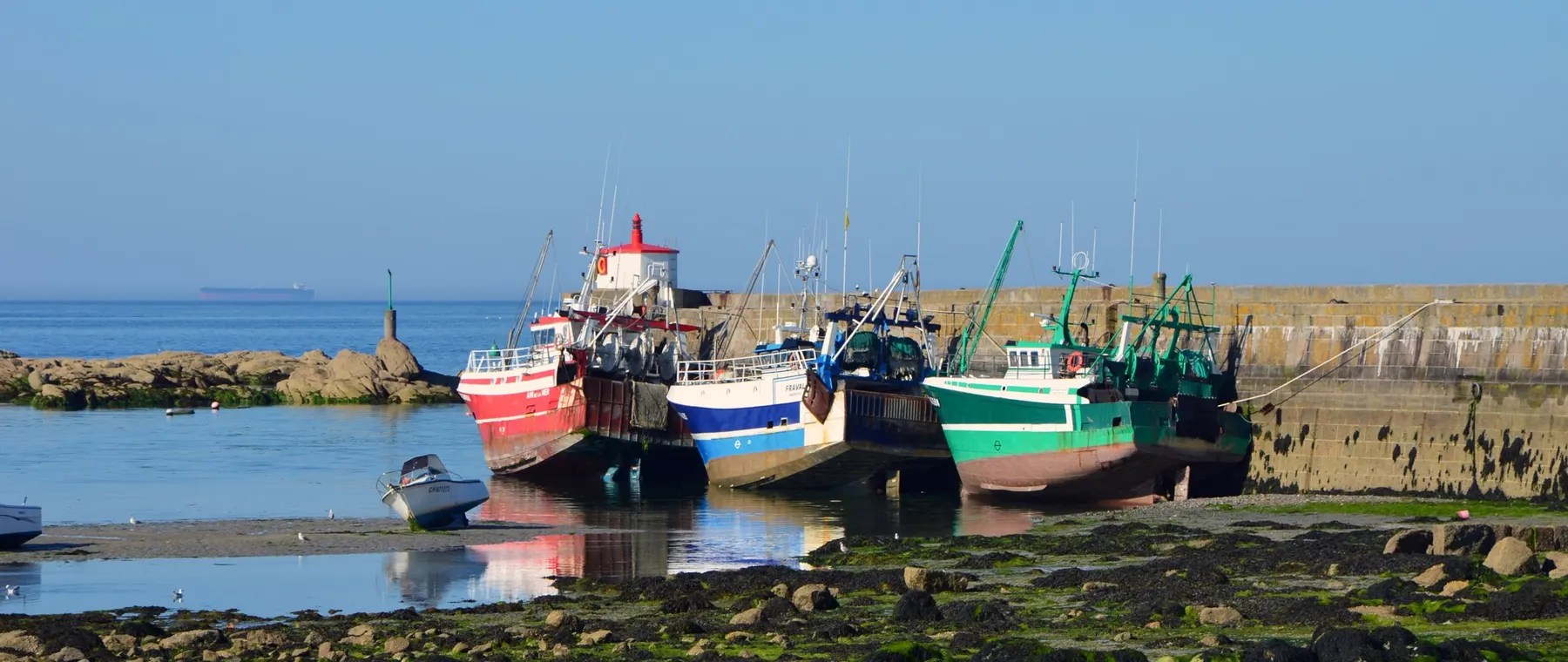
Barfleur differs from the larger ports of the Cotentin through the relatively intimate scale of its harbour and streets. Normandy's regional tourism authority identifies it as one of France's designated most beautiful villages, highlighting its granite fishermen's houses, trawlers and longstanding lifesaving tradition. For owners of larger recreational yachts, the appeal of the village should be separated from the question of whether their own vessel can enter and use its harbour. A yacht between twelve and twenty-four metres may require more room, water depth and support than the village's facilities can provide. Establish the actual arrangements with the responsible harbour operator and use an alternative confirmed base if they are unsuitable. A shore visit allows the family to enjoy the architecture and surrounding landscape without imposing the operational demands of a substantial yacht on a small working port. The accompanying photograph by Gzzz depicts fishing vessels in Barfleur and illustrates the maritime character of the destination.
Granite and slate as elements of local architecture
The grey granite houses of Barfleur are a particularly strong feature of the streets surrounding the harbour. Normandy Tourism recommends examining the homes around Cour Sainte-Catherine and along the village discovery route, identifying slate roofing and traditional decorative details among their characteristics. These buildings deserve attention in their own right rather than being regarded exclusively as a picturesque background for boats.
The local materials introduce a consistency of texture and colour, but the arrangement of doors, windows, roofs and individual plots creates variations throughout the settlement. A visitor interested in architectural conservation can observe how the character of a street emerges from several properties rather than a single prominent monument. The relationship between a building's materials and its coastal exposure is also interesting to people accustomed to selecting materials for a yacht. They are very different environments, but both require decisions about maintenance over long periods. Many houses remain occupied and should be appreciated from public routes. A guided visit or access to a particular property requires an appropriate arrangement rather than an assumption that the whole village is open as a museum.
Walking the discovery route
The regional tourism authority describes a village discovery walk of approximately 3.1 kilometres. It offers a useful framework for organizing a visit that moves gradually between streets and the quays. The route need not be completed without interruption. A group interested in photography may wish to spend longer observing the waterfront and the variations in the appearance of the stone buildings as light changes.
Before setting out, check current access arrangements and assess whether the full route is suitable for everyone taking part. Older guests may prefer a shorter route, and the conditions of surfaces can differ considerably after rain. A family can identify a convenient meeting place and make separate choices rather than require everyone to walk at the same speed. Such flexibility is especially valuable after a number of days aboard a yacht, when some passengers may wish to spend extended time outdoors and others may prefer a quieter outing. Current visitor information can help identify which sections of the route are available, but the programme should be adapted to the group's actual interests.
Saint-Nicolas Church and the appearance of a coastal landmark
The church of Saint-Nicolas has an unusually compact silhouette. Normandy Tourism draws particular attention to its tower without a spire and the octagonal domed chapel on the building's axis. These features are worth investigating from a closer perspective because a landmark that is easily recognized from the sea may contain architectural details not apparent at a distance.
A boat approaching a coastline in an earlier period sometimes depended on recognizable buildings to establish its geographical context. That historical relationship does not make the church an adequate contemporary navigation reference. The yacht must use appropriate current nautical information. The significance of the church to visitors is its place within the evolution of the village and its distinctive architectural form. Time spent examining the stained glass and the relationship between the dome and surrounding structure can make the visit more meaningful than an exterior photograph alone. Verify current opening arrangements and respect the building's continuing religious use. If access is not available, its exterior remains a rewarding subject of observation.
A lifesaving station established in 1865
The regional visitor authority identifies Barfleur's sea rescue station, established in 1865, as the oldest such station in France. The contemporary station is part of the SNSM network. This heritage is particularly relevant to people who spend time aboard private yachts because it reflects the longstanding need for organized assistance in maritime communities.
The existence of a rescue service should never be interpreted as a substitute for the preparation of a vessel or a reason to undertake an unsuitable passage. Nor does the history of the station establish that a particular lifeboat is available for public inspection. The work of volunteers and professional personnel can be appreciated through authorized visitor activities and information about the organization. A family may choose to learn about its history and how it contributes to the wider coastal community. This provides an opportunity to appreciate the responsibilities associated with recreational navigation and the people whose work supports maritime safety. A visit to the harbour should always leave operational access unobstructed, especially around equipment and facilities intended for emergency use.
Seafood at the source
Normandy Tourism recommends discovering fish and shellfish during the return of the fishing vessels and at the village's market. The usual market day is Saturday, with an additional Tuesday market in season according to the regional guide. Confirm the current arrangements before organizing a trip around them. The actual catch, season and methods of sale determine which ingredients will be available.
An owner who works with a private chef aboard may find a market visit a particularly interesting occasion to discuss the produce of the region. However, purchasing ingredients for use aboard requires appropriate arrangements for carrying, chilling and storing them. It is best to organize these matters in advance, especially if the yacht is at a different port. A meal in a local restaurant can be an easier way to appreciate the culinary tradition without additional logistical requirements. The enjoyment of an individual dish comes partly from understanding the community in which it is prepared. A visit should respect the separation between places operating commercially for the fishing industry and areas where the public is permitted to observe or purchase food.
Gatteville and the geography of the Cotentin coast
The Gatteville lighthouse is among the surrounding attractions identified by Normandy Tourism. Its published walking suggestions include a route of approximately 3.5 kilometres from the village towards the lighthouse and longer circuits of around ten kilometres. These offer different ways of exploring the coastal landscape according to the interests and capabilities of the guests.
A lighthouse is a particularly interesting subject for a family accustomed to travelling by yacht. Its position reflects a specific relationship with the sea, while its distinctive form contributes to the landscape seen from land. The current operational characteristics of any navigational light must be obtained from authoritative marine information rather than inferred from its appearance or from a visitor guide. People visiting the lighthouse should also distinguish access to the surrounding area from access to the structure itself. Check actual opening conditions and any restrictions before arranging the excursion. On exposed sections of the route, weather, daylight and surface conditions can materially affect the outing. It is reasonable to select a shorter section and arrange an appropriate return journey rather than attempt the longest possible walk.
Combining a village visit with a wider itinerary
The regional coastal path continues towards Saint-Vaast-la-Hougue, described by the tourism authority as about thirteen kilometres from Barfleur along the route. The distance makes it suitable as a distinct excursion for people whose abilities and current conditions permit the walk. It should not be treated as a casual addition to a busy day with a fixed yacht departure. Independently arranged transport is another option for visiting the surrounding settlements.
Barfleur's annual MusiKenSaire festival, normally held over the first weekend in September according to the guide, offers a different reason to visit. The actual dates and programme of a future edition must be confirmed. A cultural event can be enjoyed from a separately arranged base without requiring the yacht to arrive at the nearest harbour on a busy weekend. The attraction of a longer Cotentin itinerary is that the group can combine smaller maritime communities with the cultural and other services of a larger port. Each destination can be approached in a manner appropriate to its scale.
A coastal excursion that respects the village
For a private yacht owner, Barfleur is especially rewarding when the time ashore is allowed to have a purpose independent of the yacht's movement. A walk through the granite streets, a visit to Saint-Nicolas and a seafood meal can form one day, with a separate outing towards Gatteville or another part of the peninsula. Confirm the actual operating arrangements of the boat, the availability of suitable transport and the current visitor conditions. The changing tides and the presence of working fishing vessels are aspects of the village to appreciate and respect, not circumstances to overcome for the convenience of a visitor. The best itinerary is one that allows the guests to experience the village's architecture, history and living maritime traditions without compromising either the safe operation of the yacht or the needs of the local community.
Sources and photograph
Source documentation: https://www.normandie-tourisme.fr/les-incontournables/plus-beaux-villages-de-france-en-normandie/barfleur/. Photograph: Trawlers in Barfleur — Gzzz / Wikimedia Commons, CC BY-SA 3.0. Resized for web display under CC BY-SA 3.0.