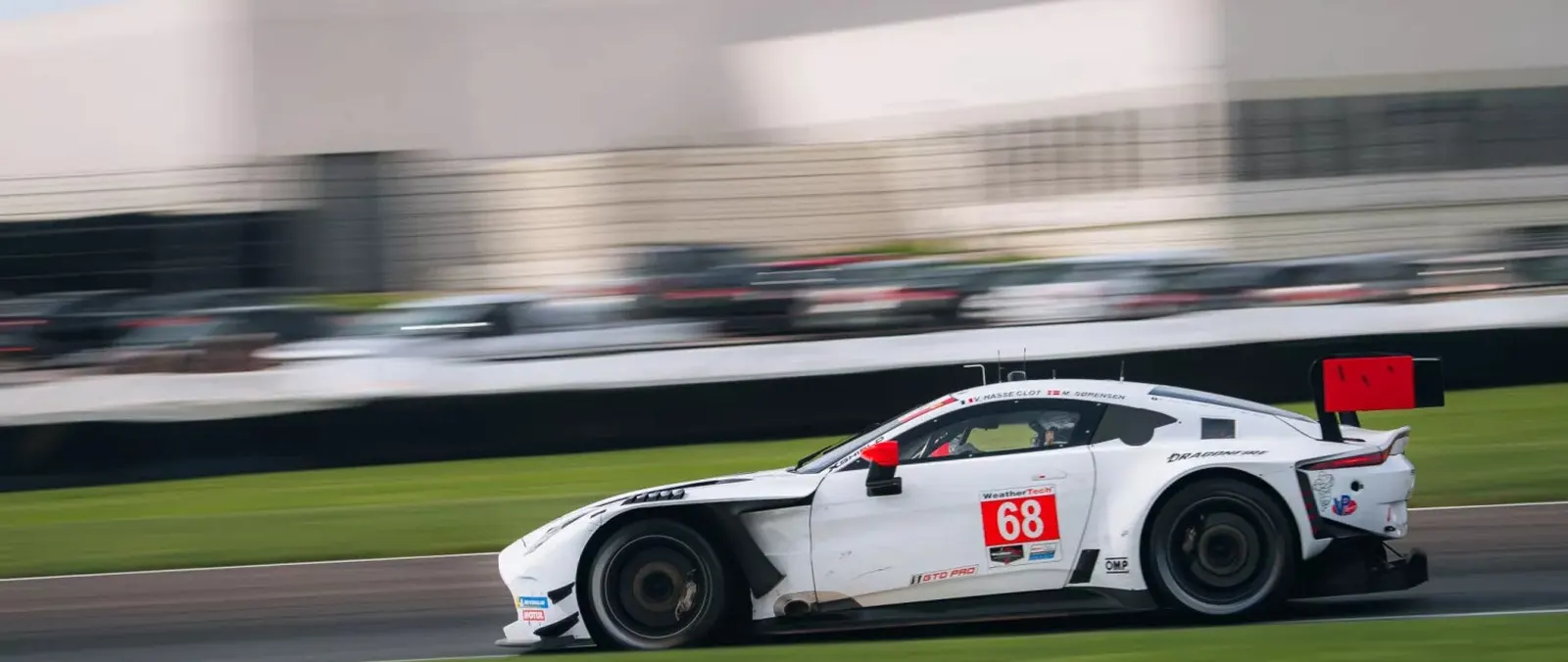
Aston Martin’s Valkyrie has returned to Road Atlanta for the 2026 Motul Petit Le Mans, closing its IMSA WeatherTech SportsCar Championship season at the circuit where the programme achieved its first podium one year earlier. The ten-hour race gives the THOR Team another opportunity to convert the car’s growing competitiveness into a major result.
The Valkyrie occupies a unique position in top-level endurance racing because it is the only hypercar competing simultaneously in IMSA and the FIA World Endurance Championship in 2026. It is also the first Le Mans Hypercar rules car to compete in IMSA’s premier GTP category and the only entry there derived from a road-legal hypercar.
Road Atlanta is where Valkyrie first proved its potential
Aston Martin finished second at the 2025 Petit Le Mans, narrowly missing a maiden victory. Returning to the same circuit gives the team a useful benchmark because it can compare the car’s current performance with the version that first demonstrated genuine podium pace twelve months earlier.
The 2026 season has produced six top-ten finishes from eight IMSA races, including a fifth at Road America after running as high as second. Since the programme’s IMSA debut at Sebring in 2025, Valkyrie has finished in the top ten in fourteen of sixteen starts, demonstrating reliability even while outright victories remain elusive.
Momentum has also been building in the World Endurance Championship
The THOR Team arrived in Atlanta after a competitive appearance at the 6 Hours of Fuji, where Valkyrie narrowly missed pole and led the race. That performance reinforced the value of running the same core concept across two major championships because knowledge gathered in one programme can support development in the other.
Alex Riberas joins IMSA regulars Ross Gunn and Roman De Angelis for Petit Le Mans after scoring WEC points in Japan. The three-driver line-up is important in a ten-hour race where traffic, changing light and strategic variation place different demands on drivers across the day.
The race car keeps a direct connection to the road Valkyrie
The competition version uses a carbon-fibre chassis and a modified form of the naturally aspirated 6.5-litre V12 found in the production Valkyrie. The road engine can produce more than 1,000 bhp, while racing regulations limit the LMH car to 500 kW, or approximately 671 bhp.
That regulatory reduction means performance comes from the complete package rather than headline engine output. Aerodynamics, tyre management, energy deployment, traffic management and reliability determine whether the car can remain in contention through the final hours.
Petit Le Mans rewards patience before speed
Team principal Ian James has emphasised the importance of remaining on the lead lap until darkness before positioning the car to exploit late-race opportunities. That philosophy reflects the nature of long-distance racing, where an early sprint can be less valuable than preserving tyres, avoiding contact and keeping strategy flexible.
Road Atlanta’s compact layout makes traffic particularly intense as faster prototypes repeatedly encounter GT cars. A hypercar can lose significant time through poorly timed overtaking or contact, so execution becomes as important as raw lap pace.
Valkyrie remains an unusual bridge between road and race programmes
Modern endurance racing increasingly uses purpose-built prototypes whose visual links with production cars are limited. Valkyrie stands apart because the LMH project grew from one of Aston Martin’s most extreme road cars and retains its naturally aspirated V12 identity.
That makes the programme relevant beyond motorsport alone. For collectors of modern hypercars, the racing campaign gives the road Valkyrie an active competition history, while for Aston Martin it creates a technical and emotional connection between the brand’s most ambitious road project and the world’s leading endurance championships.