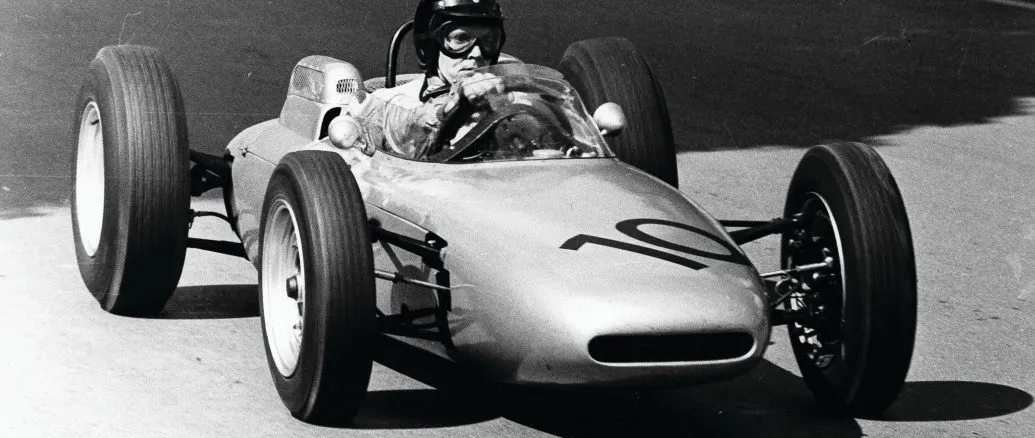
Porsche has revisited one of the most unusual chapters in its racing history: the Type 804, a compact Formula One single-seater that delivered the company's only world-championship Grand Prix victory as a constructor. Published on 18 November 2026 as part of an official Porsche Newsroom heritage series, the story examines the technically ambitious car of 1962, its celebrated victory with American driver Dan Gurney in France and the reasons Porsche subsequently withdrew from Formula One as a works constructor. For collectors interested in historical competition cars, the 804 is compelling precisely because its significance exceeds its limited racing record. It captures a moment when engineering ingenuity, ambition and the realities of Grand Prix competition came together in a distinctive machine.
A brief but important period in Formula One
Porsche has enjoyed extensive racing success in sports cars, endurance competition and other disciplines. Its time as a full Formula One constructor during the early 1960s was much shorter. The 804 was developed specifically for the 1962 season after earlier experience with cars that had not originated as pure Formula One designs. The new machine was intended to demonstrate that Porsche could apply its engineering methods to the sport's highest level. Its achievement was historic, but the project did not lead to an enduring factory team. Understanding that contrast gives the car its importance: it represents both the ambition to compete and the difficulty of sustaining a programme against rivals who were advancing rapidly.
The Type 804 was built around a flat-eight
According to the Porsche historical account, the 804 used a 1.5-litre air-cooled eight-cylinder boxer engine. It was rated at approximately 180 brake horsepower, or 180 PS in the manufacturer's summary. Those figures may appear modest compared with modern racing vehicles, but they need to be considered within the technological and regulatory context of 1962. The car weighed around 461 kilograms, and its performance depended on the relationship between power, weight, gearing and chassis behaviour. Its engine architecture also reflected Porsche's existing engineering expertise. A historic machine should not be judged simply by comparing its headline horsepower with that of a modern road-going sports car.
A tubular frame beneath aluminium bodywork
The chassis employed a tubular steel frame with aluminium bodywork, rather than the carbon-fibre monocoque familiar in modern Formula One. The structure was designed under the influence of engineer Helmut Bott, while the bodywork was associated with Ferdinand Alexander Porsche. The car illustrates a period when different philosophies of construction were being tested and refined. Its layout offered certain engineering advantages but also met strong competition from new developments elsewhere in the field. A museum visitor looking at the machine today can appreciate the exposed simplicity of its architecture, but the apparent elegance of a historical chassis should not obscure the demanding calculations involved in making it sufficiently light, rigid and repairable.
The importance of suspension design
Porsche's 804 incorporated double wishbones, torsion-bar springs and inboard dampers. Such a system allowed engineers to explore the relationship between wheel movement, springing and aerodynamic packaging. The Porsche article notes that the torsion bars were operated through extensions of the upper wishbones and that Koni dampers were used during development. These details mattered to drivers because suspension affects how a car responds under braking, acceleration and cornering. Technical refinement required testing, driver feedback and continuous adjustment rather than reliance on an elegant drawing. For collectors, preserved suspension components can reveal how engineers approached problems before the arrival of contemporary materials and simulation tools.
Braking and steering show the period's experimentation
The car used a ZF rack-and-pinion steering system, described in the source as a first for Porsche, and an unconventional arrangement of disc brakes. The brake discs were mounted in a way that differed from the more familiar modern configurations, with the caliper acting from within the annulus. Dan Gurney was not completely convinced by the design, according to the historical account. Such details explain why racing machines can become important engineering artefacts. A solution may be innovative without proving universally successful. Engineers learn through testing and competition, and the eventual development of other methods does not erase the originality of the earlier attempt.
A difficult first impression in the Netherlands
The Type 804 arrived at Zandvoort for the Dutch Grand Prix under considerable pressure to be competitive. Porsche's account recalls an instruction from Ferry Porsche that the team should return home if qualifying results were sufficiently disappointing. Gurney managed a qualifying performance that kept the programme in the contest, though rival cars had clear advantages. The episode demonstrates the fragility of a major competition project in an era when resources and expectations were tightly controlled. A manufacturer's decision to race was not only a question of engineering enthusiasm. It also depended on whether the investment produced convincing results against opponents using different design approaches.
Rouen delivered the historic French Grand Prix victory
The defining moment came at the 1962 French Grand Prix at Rouen, where Dan Gurney took victory for Porsche. The official history acknowledges that difficulties affecting other leading cars played a part in the race, but that does not diminish the significance of finishing in a position to win. Motorsport often rewards the combination of performance, reliability and the ability to respond when circumstances change. For Porsche, the result provided evidence that a purpose-built single-seater could compete at the highest level. It remains the marque's only victory as a Formula One constructor in a world-championship Grand Prix. The distinction is precise and should not be confused with later achievements as an engine supplier in the sport.
Another victory followed at Solitude
Gurney also won a non-championship race at Solitude in 1962, giving the team another reason to believe the 804 could fulfil its promise. The distinction between a championship Grand Prix and a non-championship event is important in historical records. Both races mattered to competitors and spectators, but they do not carry identical statistical weight. A serious collector or historian should preserve the difference when describing a car's results. That clarity allows an accurate appreciation of the project's success without inflating its record. For Porsche's technicians, the additional win provided encouragement after an intense period of development and uncertainty.
The Nürburgring brought a dramatic pole position
The season's next celebrated moment came at the Nürburgring, where Gurney secured pole position for the German Grand Prix. The Porsche account notes that weather affected final practice, but it also emphasises the driver's underlying speed. A large crowd arrived with heightened expectations after the victory in France. On the circuit, however, the race proved less straightforward. A battery came loose, forcing Gurney to cope with an unexpected problem while trying to remain competitive. The incident illustrates how small components could compromise a sophisticated racing machine. Modern observers may focus on aerodynamic design and power, but operational reliability was equally important in a period of rapid technological experimentation.
A driver's improvisation could not solve everything
Gurney managed the battery problem while continuing to race, yet the lost time and the challenge of passing rivals in wet conditions affected the outcome. The historical account describes him using his foot to help hold the battery in place. Such an episode would be astonishing in a modern racing environment, where safety expectations and vehicle design are very different. It should not be romanticised as an acceptable technique for contemporary drivers. Its significance lies in showing the improvisation sometimes demanded by early Grand Prix competition. A collector studying the 804 can appreciate the courage and technical knowledge of the era while recognising how far safety and reliability have advanced.
Development continued throughout the season
Porsche engineers introduced changes to the bodywork and aerodynamics as the 1962 campaign progressed. The official review refers to a glass-fibre nose and cockpit surround, wheel discs and shaped suspension elements, as well as an arrangement for disengaging the cooling fan to obtain additional power. These measures show a team trying to find performance in numerous small areas rather than expecting one breakthrough to solve every problem. They also demonstrate the engineering tensions associated with an air-cooled racing engine. The desire to recover power had to be balanced with the practical demands of cooling and reliability. Not every experimental modification delivered the hoped-for result on a racetrack.
Competition was moving quickly
Other constructors were advancing their chassis designs at considerable speed, and the 804 did not consistently provide a winning advantage. In particular, the lightweight monocoque approach introduced by competitors represented a significant change in how racing structures could be designed. Porsche's traditional strengths in engineering and execution could not automatically overcome every shift in the sport. Its history provides a useful lesson for those who collect machinery: technical sophistication must be understood relative to its time. A beautiful or ingenious solution can still be overtaken by a competing design philosophy. The 804 is valuable as an illustration of that moment rather than as proof that every Porsche design choice was superior.
The decision to withdraw was consequential
Despite its French Grand Prix success and continued development, Porsche ended its works Formula One constructor programme after 1962. The car's last season did not become the opening chapter of a sustained championship campaign. The manufacturer's historical account notes that the absence of the factory team from the final South African round anticipated the end. That decision does not mean Porsche abandoned competition or high-performance engineering. The company continued to build its reputation in other categories where it would enjoy remarkable success. The 804's brief existence makes its sole championship victory more distinctive and gives the car a significance not dependent on a long sequence of later models.
A very different object from a road-going Porsche
The Type 804 weighs around 461 kilograms and uses a six-speed manual transmission, a spaceframe and a purpose-built flat-eight engine. These details help distinguish it from a classic Porsche road car, even though certain engineering values and design approaches connect the two. Its cockpit, running gear and operational demands were created for single-seater racing, not everyday transport. A collector should not infer that an example can be driven on public roads or maintained like a conventional classic sports car. Restoring and preserving competition machinery requires specialist knowledge, accurate documentation and careful attention to original components. Even routine operation may involve procedures outside the experience of most road-car enthusiasts.
Historical photography is part of the record
Porsche's 2026 feature was published with images of the restored or preserved car and historical material, with specific photo credits distinguishing Porsche archival photographs from work by Jonathan Bushell for Motorsport Magazine. The photographs can help readers understand the machine's proportions, cockpit and distinctive engineering features. Their provenance should be maintained rather than treating them as interchangeable illustrations. The present article's lead image is an official Porsche-supplied historical photograph, with credit retained in the image record. Collectors and publishers alike benefit when documentation identifies when an image was made, who owns it and what it actually depicts.
What yacht owners may recognise in the story
The worlds of historic racing cars and classic yachts share an interest in mechanical heritage. Both can involve specialised materials, intricate engineering, demanding maintenance and a concern for originality. A yacht with a remarkable voyage in its history may attract collectors for reasons beyond its dimensions or speed, just as the 804 is remembered for one exceptional season rather than a broad commercial career. In both cases, provenance, restoration records and informed interpretation help preserve the significance of the object. The comparison should not obscure the different operating and safety demands of marine and automotive machinery. It instead highlights the pleasure of understanding how ambitious machines were created and used.
An enduring legacy beyond a single win
Porsche's account of the 804, published in November 2026, gives today's enthusiasts a way to revisit the 1962 campaign with a clearer sense of both achievement and limitation. The flat-eight engine, unusual chassis solutions, victory at Rouen, Solitude success and dramatic Nürburgring episode all belong to a car that raced for only a brief period. Its significance lies in the conjunction of engineering imagination and competitive reality. For collectors of historic vehicles, the Type 804 is a reminder that a machine need not dominate a sport for years to deserve careful preservation. Sometimes a single season, accurately documented, is enough to secure an enduring place in the history of technical ambition.
Sources and image credits
Reporting based on Official original press announcement — https://newsroom.porsche.com/en/2026/history/porsche-single-seater-history-804-formula-1-43753.html.
Lead photograph: Porsche 804 Formula 1 with Dan Gurney at Solitude, Stuttgart, 1962, original Porsche AG archival photograph. Porsche AG archival photograph: Porsche 804 Formula One car with Dan Gurney at Solitude in 1962; Porsche AG retains image copyright. Official Porsche Newsroom editorial press image. Original official image source.