Recognition for a specialist monitoring business
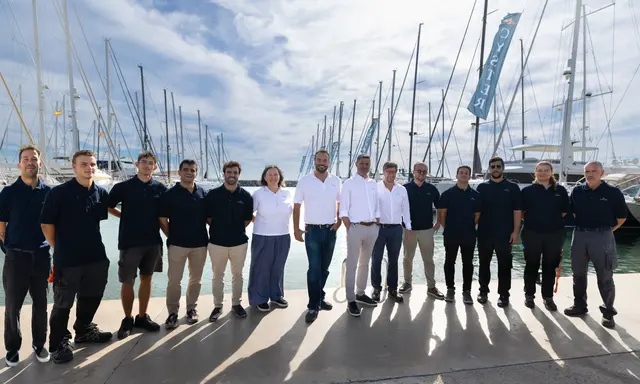
British Marine reported on 23 November 2026 that Deborah Fry, co-founder and director of marine technology company Yacht Trace, was named among five finalists in the Entrepreneur of the Year category at the Women's Yachting Awards. Organised by Yacht Femme, the ceremony took place on 17 November during METSTRADE in Amsterdam. The recognition concerns the work of establishing a company focused on monitoring tenders, chase boats and other support craft associated with larger yachts. Fry was a finalist, not a reported category winner, and the distinction should remain clear. The story is significant because operational challenges that can appear minor beside a large yacht may have considerable safety and insurance consequences.
The problem began with a valuable tender
Yacht Trace's original focus was the risk associated with towing expensive superyacht tenders. A tender separated from its mother yacht, drifting unexpectedly or taking on water may be difficult to notice quickly, particularly when the main vessel is underway or operating at night. Standard location tracking may provide only part of the picture. Owners and crews also need to understand the tender's condition and movement relative to the yacht. British Marine describes the company's development from that narrow operational need into a broader monitoring platform. The account is a company-supported case study, not an independently audited claim that a particular number of losses has been prevented.
Two founders with complementary experience
The firm was established by Fry and engineer Dr Dan Rogers. British Marine says they built the business without outside investment and developed hardware, embedded systems and software in-house. That background is relevant because a specialised product must often integrate practical experiences at sea with reliable electronics and programming. In-house development does not automatically prove a better outcome than licensed or purchased technology, but it may give a supplier more direct control over integration and changes. For yacht managers, the appropriate question is how well the system performs in their operating context, with adequate support and transparent limitations, regardless of the business model behind it.
Monitoring is different from tracking
The company describes monitoring of position, separation distance, bilge levels, battery condition, pitch, roll and movement. These measurements serve different purposes. A vessel can be in approximately the expected location while experiencing a battery problem, or it can move beyond a chosen separation threshold while its onboard systems remain healthy. Combining signals may enable a crew to investigate changing conditions earlier, provided the measurements and alerts are reliable. Owners should ask which sensors are installed, how frequently data are refreshed and what thresholds trigger a warning. A dashboard showing many values is valuable only when its information is interpretable and when operators understand what action to take.
Why independent communications can matter
British Marine says Yacht Trace uses two-way encrypted radio communications that operate independently of AIS, cellular service and Wi-Fi, with satellite capabilities for wider-area tracking and recovery. These are claims about the company's architecture rather than proof of coverage in every geographic location or sea state. The distinction matters to yachts operating far from coastal mobile networks. Crew should understand the normal link range, installation requirements, how satellite coverage is used and what happens if either connection is interrupted. A communications system with multiple possible routes can improve resilience, but reliable operation still requires testing and a sensible response plan for missed transmissions or alarms.
AIS has a different primary purpose
Automatic Identification System data can help vessels exchange information about identity, position and movement where the relevant equipment is installed and operating. It is not a complete solution for monitoring the condition of a small tender being towed behind a large yacht. The Yacht Trace system is positioned as a separate operational tool, not a replacement for required navigation practices or AIS obligations. The manufacturer says its radio-based monitoring works independently of AIS infrastructure. Operators should avoid treating one technology as proof that the other is unnecessary. Navigational safety, tender condition monitoring and recovery planning are different functions that may complement one another.
The operational challenge of a moving fleet
A large yacht may deploy tenders, chase boats, personal watercraft and other support craft during a single guest programme. These assets can be located in different places and may be operated by separate crews. Keeping track of their condition and location requires reliable procedures even if sophisticated electronic systems are available. The company says its platform has expanded beyond a towed tender to wider fleet monitoring. Managers should consider how an electronic view fits into the vessel's existing logkeeping, radio procedures and safety briefings. A digital display should reduce uncertainty, not displace clear communication among the people responsible for each craft.
The bridge becomes a shared information point
Yacht Trace reports integration with TimeZero chartplotters, allowing compatible bridge displays to show multiple monitored assets. Such integration may be convenient because crew members can consult information where they already navigate and manage the operation. The value depends on clarity, compatibility and the treatment of alerts, especially when several electronic systems compete for attention. A busy bridge can suffer from too much visual information as well as too little. Captains should understand how a display is configured and whether information remains accessible if one screen or network element fails. Supplier claims should be checked against the actual version and installation proposed for the yacht.
Loss prevention has an insurance dimension
British Marine notes growing conversations with marine insurers and brokers, including arrangements aligned with the monitoring of towed tenders. This suggests an area where operational data can contribute to risk management discussions. It does not mean every insurer provides a discount, approves towing in all circumstances or accepts a particular device as a substitute for safe practice. Insurance terms depend on individual policies, vessel use and the insurer's assessment. Owners should seek written confirmation when installing monitoring for a specific insurance requirement. A useful technology can support documentation, but its existence alone should not be described as transferring or eliminating responsibility for the tender.
The link to London insurance discussions
The company participated in discussions at the Joint Hull Committee Yacht Forum at Lloyd's of London in October, where Rogers contributed to debate about tender towing and loss prevention, according to British Marine. That engagement provides evidence that the operational problem is receiving attention beyond electronics suppliers. An industry forum does not issue a universal towing procedure simply by discussing a topic. Operators still need to consider towline arrangements, sea conditions, visibility and the suitability of the tender itself. Data from monitoring can support decision-making, but a safe tow involves practical engineering and seamanship. The best systems are integrated into a clear plan with responsibilities assigned before departure.
A small company at a large international show
The Yacht Femme awards were presented on the Superyacht Stage at METSTRADE, placing Fry among industry professionals from many regions. British Marine also says Yacht Trace appeared in three trade magazines distributed during the event and used the show to meet captains, managers, insurers and technical specialists. Such visibility can provide valuable introductions for a relatively young business. It should not be interpreted as a verified order book or a guarantee of profitability. For buyers, the more relevant follow-up is whether the supplier offers installation support, troubleshooting and an adequately documented product roadmap, including what will be maintained as future hardware and software versions evolve.
Independent development brings both strengths and risks
Building a platform from the ground up can make it easier to adapt a product to a specialist market, especially when founders work closely with experienced operators. Yet a small team may have fewer resources for worldwide service coverage or stockholding than an established multinational manufacturer. Neither conclusion follows automatically from the company's size. Yacht managers should evaluate response arrangements, spare components and long-term support before depending on any monitoring system for an essential function. They should also ask what data remain available during connectivity problems. Commercial recognition is welcome, but equipment selection should rest on practical verification and support commitments.
The privacy and security questions
A platform that collects positions and operational data about privately owned boats can handle sensitive information. Buyers should understand who can access records, how users are authorised and whether communications are encrypted end to end or only over particular links. British Marine describes encrypted radio communications, but the public article does not provide a complete independent security audit. Claims about data protection should therefore be verified through current technical documents and contractual terms. Captains may need separate roles for bridge crew, engineers and shoreside managers. A system that provides useful visibility can create new risks if users are granted broader access than the operation requires.
What a sensible tender trial should test
A practical evaluation can be conducted with the intended tender and normal crew in representative conditions. Operators might verify location updates at different distances, deliberately disconnect a sensor to observe the alert, and assess how clearly the system distinguishes loss of signal from an actual problem. They should understand battery consumption and the equipment's behaviour when the tender is stored or maintained. Controlled testing is safer than trying to create a dangerous situation for demonstration purposes. The results should be documented, especially if the owner is considering using the system in conjunction with insurer discussions. A trial confirms more than a marketing screenshot can.
A finalist rather than a declared winner
The Women's Yachting Awards nomination is meaningful because it recognises a founder operating in a specialist area that combines engineering, business development and marine risk management. The announcement is specific: Fry was selected among five finalists for Entrepreneur of the Year, and the award ceremony occurred on 17 November. No stronger outcome should be attributed without separate evidence. The distinction also reinforces an important principle in covering innovation: recognition, technical claims and observed operating results are different types of information. A careful report can acknowledge a company's achievement while leaving its product performance to be tested under appropriate conditions.
Why this development belongs in yacht operations news
Monitoring a tender can appear like a minor detail compared with the technology aboard the mother yacht, yet tender safety, accountability and loss prevention are important to owners, captains and insurers. Yacht Trace's development illustrates how a targeted operational issue can lead to a wider fleet-management product, and the award nomination shows that the business story has gained industry recognition. The company continues to seek relationships with operators and professional partners. For the wider yachting market, the useful lesson is to distinguish data collection from actionable monitoring and to evaluate each new technology against the practical decisions that crews must make every day.