Three output choices for larger cruising yachts
VETUS is promoting its BOW PRO Boosted 300 series of bow and stern thrusters, which brings fully proportional electric thrust to the upper end of the recreational-yacht market. The BOWB285, BOWB300 and BOWB320 units use 300-millimetre tunnels and provide nominal thrust ratings of 285, 300 and 320 kilogram-force respectively. A 2026 manufacturer product announcement sets out the family for yachts up to approximately 30 metres, with suitability depending on each model's specification.
For the Luxury Yacht Guide market, the BOWB285 is particularly relevant because the manufacturer's product listings position it for boats approximately 16 to 22 metres. The higher-output models extend into larger craft. Such size brackets are indicative selection guidance, not a substitute for a naval architect calculating required side thrust from windage, hull dimensions and expected operating conditions.
Proportional thrust instead of simple on/off control
Conventional electric tunnel thrusters often run at essentially full output when activated. VETUS's brushless systems allow the skipper to adjust the available force more gradually, giving finer control when manoeuvring alongside a pontoon or while entering a crowded marina. The system is intended to minimise abrupt surges that may make a yacht's final approach harder to judge.
Proportional operation can help in gusting wind or difficult cross-current conditions, but no thruster can substitute for planning the manoeuvre, understanding the vessel's pivot point and keeping clear communications with crew. The thrust available at the bow or stern must also be considered alongside main propulsion, rudder action and the distance from the yacht's centre of rotation.
A charging system built into the package
The Boosted 300 family incorporates a DC-to-DC charging function. VETUS says a yacht with a 24-volt supply can recharge the separate 48-volt battery bank used by the thruster, using a built-in three-stage charging process. That arrangement reduces the need for an entirely separate external charging design while enabling a high-power thruster battery system.
Electrical installers must still assess cable routes, protective devices, ventilation, battery chemistry and available charging current. The integrated charger does not eliminate the need to design appropriate battery capacity or to protect against faults. VETUS integrates control through its V-CAN system, opening options for compatible proportional joystick panels and docking-system interfaces.
Brushless motor and extended manoeuvring time
The series uses maintenance-free brushless induction motors controlled by proprietary electronics, which VETUS says support quieter operation and extended run times relative to conventional direct-current systems. The motor controller provides active thermal management along with low-battery safeguards, while the actual available operating period depends on the battery bank and installation conditions.
The manufacturer's expression 'unlimited runtime' should not be interpreted literally as continuous propulsion without energy constraints. Even a high-efficiency thruster cannot deliver full output indefinitely from a finite battery. A technically accurate installation assessment requires the unit's duty-cycle data, battery specifications and the energy available during a realistic docking sequence.
Matching equipment to a yacht rather than its length alone
Choosing a thruster is a design problem that includes hull profile, tunnel location, propeller efficiency, draft, electrical provision and the ability to maintain equipment once the yacht is afloat. Owners should also check the effect of tunnel openings on hull drag and whether fitting a retrofit unit requires structural reinforcement, particularly near the bow in a high-performance hull.
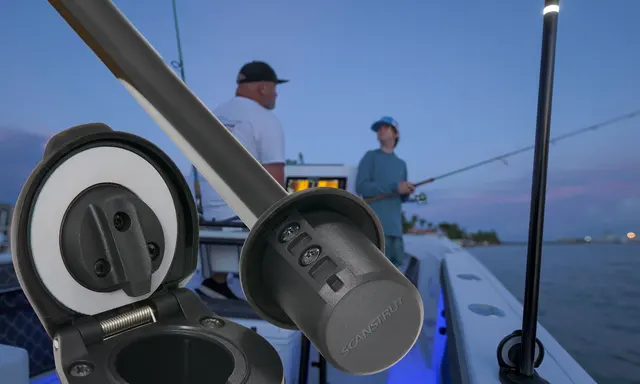
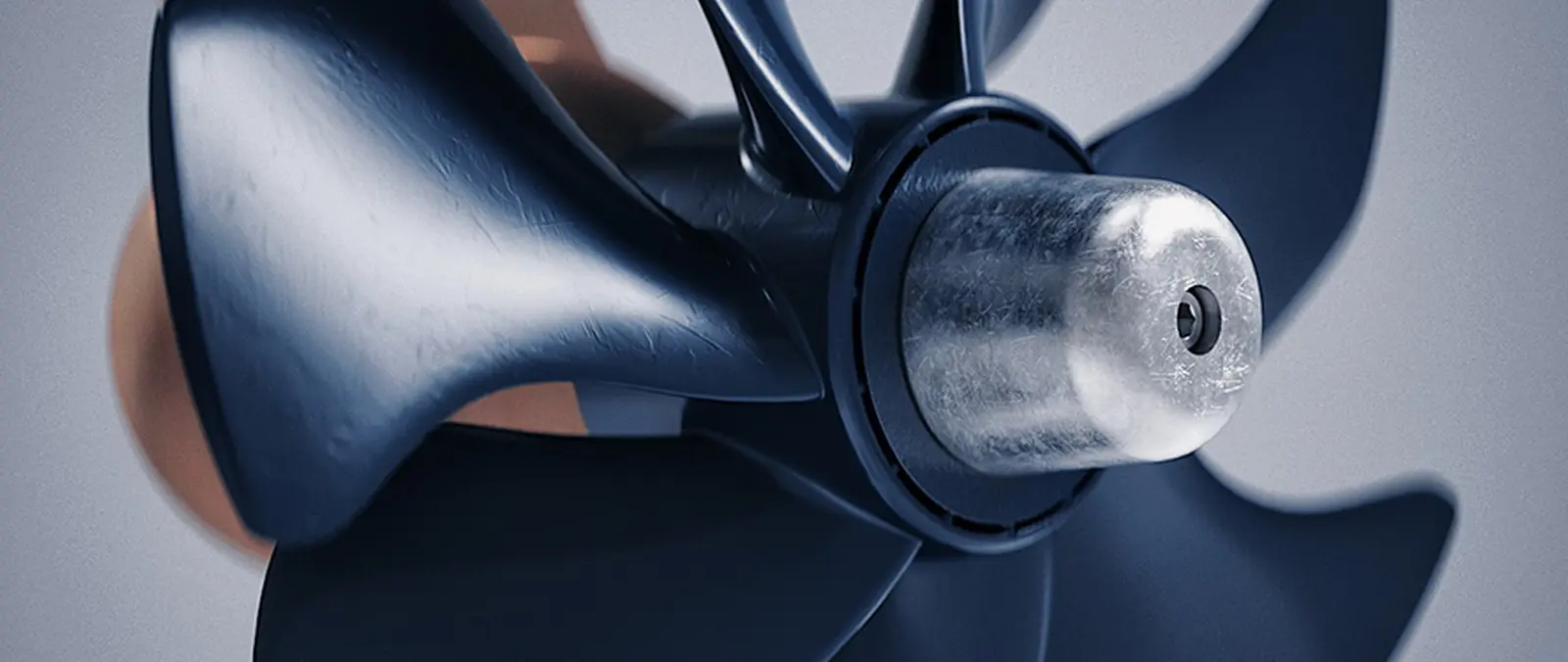
The original VETUS product photograph in this report depicts the BOW PRO 300 family itself. It is presented as manufacturer equipment, not as an installed component aboard a named vessel. The news concerns the product range's technical capabilities and current marketing, without inventing a specific new yacht installation.