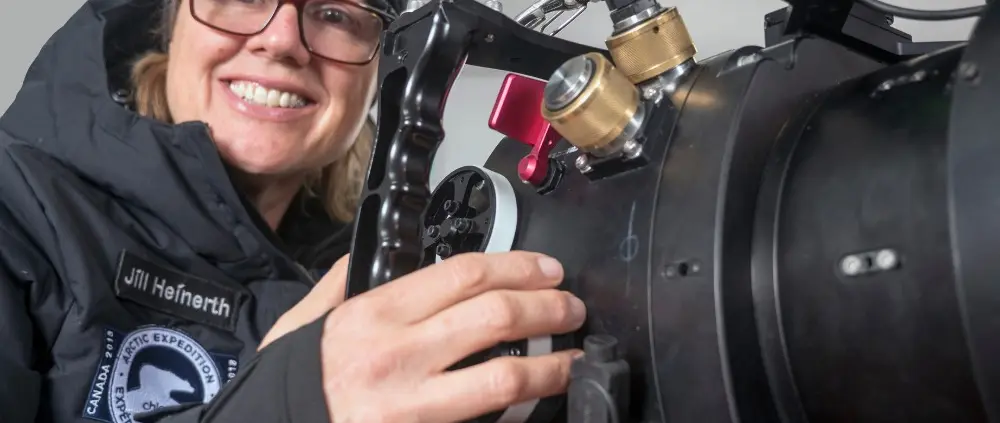
An explorer joins an electric boating programme
Torqeedo has named Canadian explorer Jill Heinerth as a new participant in its Electric Explorers brand ambassador programme. The September 2026 announcement connects the company's electric propulsion technology with the work of a diver known for expeditions into some of the world's least accessible underwater environments.
Heinerth has worked in cave systems and polar regions for decades, and her projects have been featured in documentary broadcasting and published research. The partnership places an experienced field practitioner alongside a manufacturer seeking to demonstrate how quiet propulsion can support exploration.
Why quiet movement is valuable in the field
An electric outboard can offer low-noise operation and no local exhaust emissions during use, qualities that may be attractive when approaching sensitive habitats or working near divers. Those benefits differ from the complete environmental footprint of a boat or battery system, which depends on manufacture and energy supply.
In remote locations, reliability, range and the availability of charging are practical constraints. An expedition team must assess them carefully before replacing proven equipment with a new propulsion arrangement.
A career built around underwater research
Heinerth is an author, filmmaker and experienced technical diver whose work has included exploration inside iceberg caves. She became the first Explorer-in-Residence of the Royal Canadian Geographical Society and was inducted into the International Scuba Divers Hall of Fame in 2020.
These credentials help explain why a marine manufacturer might work with her. Practical feedback from people operating in difficult places can reveal needs that do not always become apparent during a short promotional sea trial.
Relevance to smaller yachts and tenders
Torqeedo's electric propulsion systems serve a range of craft, including tenders, small workboats and auxiliary propulsion applications. On a 12-to-24-metre yacht, an electric tender could be attractive for quieter transfers over short distances, provided the charging and operational limits suit the actual itinerary.
An owner should calculate energy use under realistic loading and sea conditions rather than relying on a single advertised range figure. Reserve capacity, charging arrangements and weather contingencies matter especially when moving guests between a yacht and an unfamiliar shore.
Electric propulsion is part of a larger system
Motors, batteries, chargers and electrical protection equipment must be designed to work together and installed according to the manufacturer's guidance. Crews also need clear procedures for battery monitoring, isolation and storage.
The useful comparison is therefore between complete operating arrangements, not only the noise or emissions at the propeller. A good installation considers the mother yacht's own generating capacity and the crew's ability to maintain and troubleshoot the tender.
Field experience can guide product development
The Electric Explorers programme brings together people who use marine equipment in unusual circumstances. The company has not announced a new commercial engine specification in connection with Heinerth's appointment, so the announcement should be understood as a partnership.
For luxury yacht owners, the story illustrates where electric boating technology can be useful when matched to the task. Responsible selection begins with the intended journey and the conditions, then asks which propulsion system will accomplish that journey reliably.