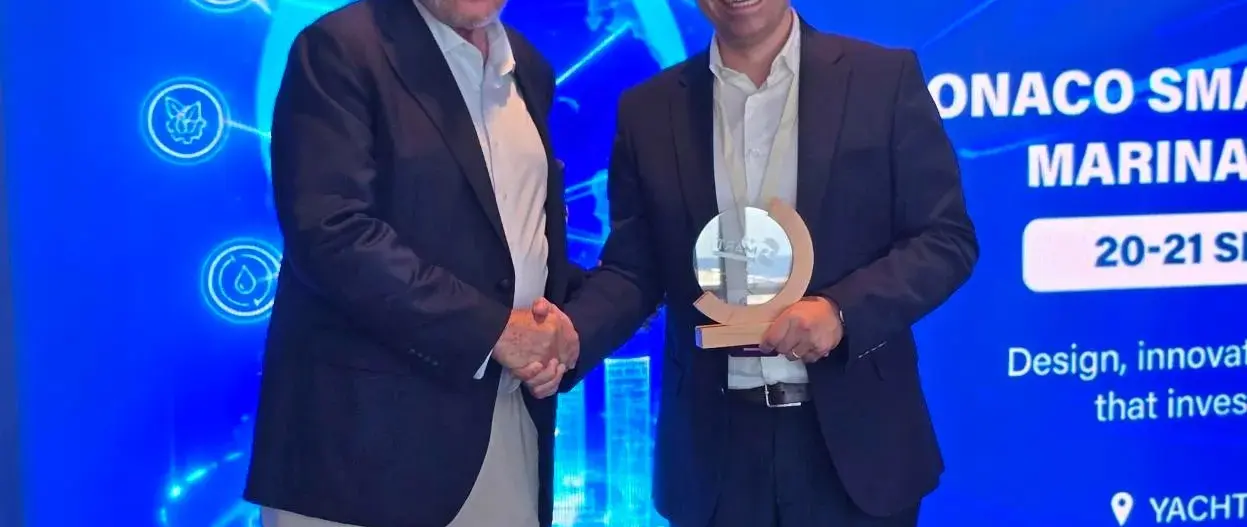
A pitch award focused on the marina
Seares was selected for recognition during the sixth Monaco Smart & Sustainable Marina Rendezvous at the Yacht Club de Monaco. The company presented its technology as a response to the mechanical stress exerted by waves and surges on boats and waterfront infrastructure.
Winning a pitch award indicates recognition by the event's judges; it is not proof of a guaranteed reduction in mooring incidents. The practical measure will be how installations perform across different marina layouts and prevailing conditions.
What a mooring damper is designed to do
Lines securing a yacht must restrain the boat while coping with movement from wash, swell and changing water levels. Damping systems are intended to moderate sudden loads rather than allow all that energy to reach cleats and fixed hardware.
A solution must match the yacht's displacement, the berth geometry and the line configuration. The correct equipment for a 15-metre cruising boat may differ significantly from the arrangement for a large superyacht.
Seares adds sensors to the mechanical system
The company says its dampers can measure loads and support around-the-clock connected monitoring. Its design also seeks to recover energy from wave motion to supply telemetry equipment, rather than depend entirely on externally provided power.
A monitoring dashboard can identify unusual patterns or changing stresses that operators might otherwise discover only during an inspection. It cannot replace proper line selection, chafe protection and physical supervision in deteriorating weather.
Environmental claims need context
Seares argues that its approach reduces dependence on conventional rubber-based damping systems and addresses the release of microplastic particles. Those are manufacturer assertions and should be assessed against independent material and lifecycle information.
A marina considering a replacement needs to look at the entire product: manufacturing, installation, maintenance and eventual disposal. A sustainability pitch is most useful when it supplies measurable outcomes and a practical service plan.
Benefits and limitations for yacht owners
For an owner with a permanent berth, better load control may protect deck fittings and make uncomfortable motion less severe in particular conditions. Whether it works well depends on the berth's exposure and the positions at which the lines attach.
No mechanical damper eliminates the need to respond to storm forecasts. Crew should inspect moorings after heavy weather and follow the harbour operator's procedures for severe conditions.
What to watch after Monaco
Seares says the Monaco prize supports its effort to grow deployment in ports and marinas. The next important evidence will be reference installations, quantified performance and how the system is maintained over multiple seasons.
For Luxury Yacht Guide's 12-to-24-metre community, mooring technology is a worthy subject because protection begins long before a yacht puts to sea. Systems that make loads visible could become a useful complement to experienced dockside practice.