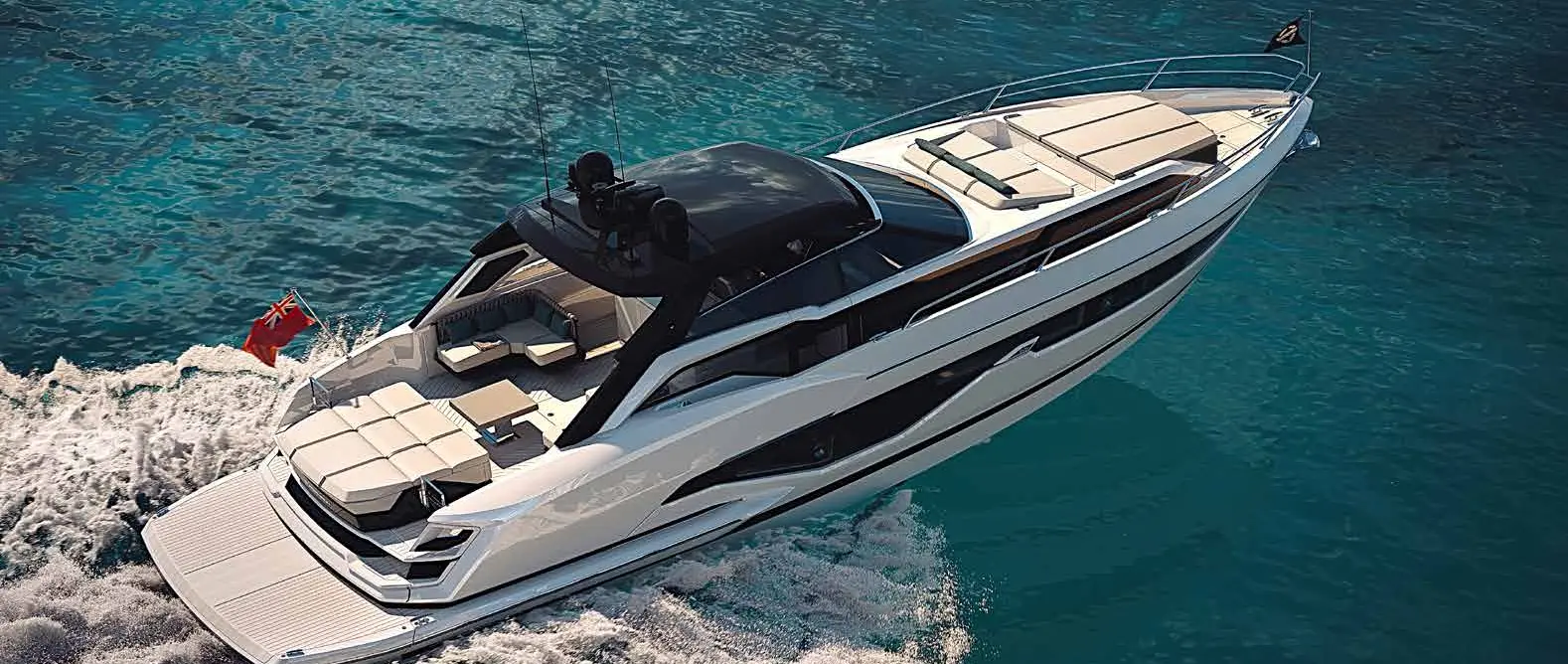
The Superhawk returns to the performance end of luxury cruising
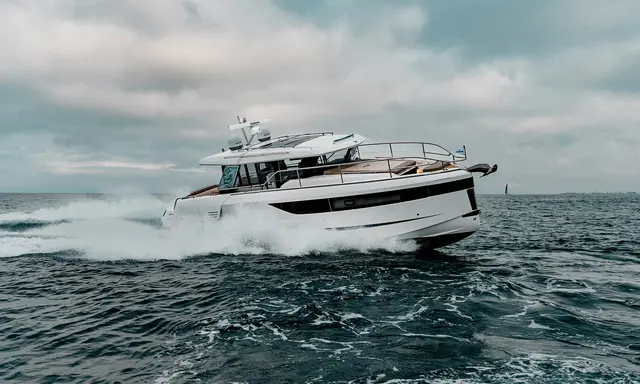
Sunseeker's Superhawk 55 remains one of the more purposeful open-deck choices in the British builder's current range. At 17.13 metres overall, the model places outdoor entertaining and fast coastal passages ahead of the accommodation count usually associated with a larger flybridge cruiser. The result is a striking profile with a sociable cockpit and a substantial performance specification. This is a look at an established model that continues to be offered, rather than a claim of a fresh 2026 launch. Its relevance lies in the balance between sporty handling and a comfortable place to spend a night aboard.
The hull measures 4.93 metres at its beam, with a stated draft of 1.43 metres and an approximate displacement of 26,100 kilograms. Those numbers create a useful context for the builder's stated performance of up to 38 knots. High speed can shorten a run between resorts or anchorages, but it is not an excuse to ignore the sea state, fuel load or the comfort of guests. An owner's assessment should cover the yacht's behaviour throughout the speed range, including displacement running, acceleration and close-quarters handling.
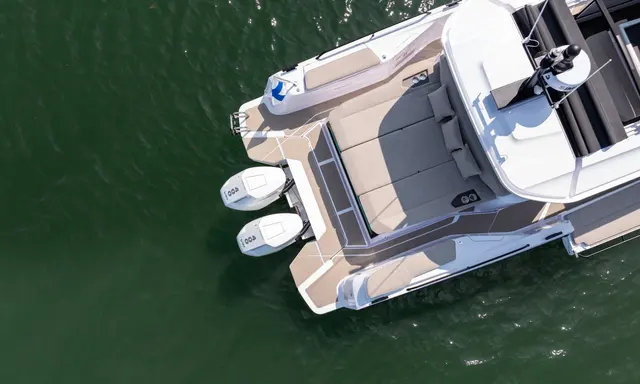
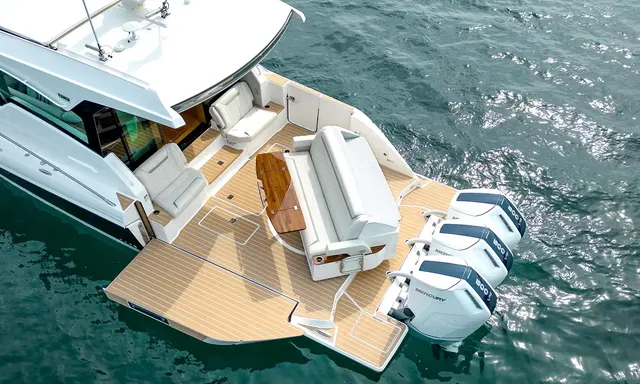
The Superhawk name carries a performance association, yet the 55's present design is as much about how its deck can be used when engines are stopped. Broad aft seating is arranged around a substantial wet bar, so guests have a central area for conversation and refreshments rather than being spread across disconnected spaces. The arrangement reflects a common priority among private owners: a capable run to a destination followed by several relaxed hours in sheltered water. The boat's best qualities are therefore likely to emerge over the course of a full day, not a single burst of speed.
An open cockpit that still demands careful seamanship
Sunseeker describes the aft cockpit as sculpted around generous configurable seating and service equipment. A central wet bar keeps refreshments and preparation close to the social area, while concealed appliances preserve the clean appearance of the deck. That arrangement suits a yacht frequently used for day trips with friends, but the way it performs underway deserves inspection. Guests need secure handholds, places to sit and a route to the cabin that remains safe when the boat encounters wash or changes direction suddenly.
The design also makes direct contact with the water part of the experience. Owners may be drawn to frequent swimming stops, short tender transfers or afternoons at anchor, yet an open sports yacht has practical responsibilities. Boarding arrangements, access to life-saving equipment and control of loose cushions and belongings all deserve more attention than they receive in promotional photography. Buyers should ask how quickly the yacht can be prepared for departure after a swim stop and whether crew can keep clear lines of sight while guests use the cockpit.
On the principal deck, the relationship between the helm and social spaces is particularly important. A vessel capable of high cruising speeds requires concentration from the skipper, so an attractive console must also provide clear instruments and visibility. The surrounding windscreen and hardtop can bring shelter without fully closing off the connection to the sea. During a practical trial, an owner should test sightlines in bright sunlight and low angles of light, then consider how wind noise and conversation change as speeds increase.
Two cabins create a genuine weekend retreat
The lower deck contains two cabins and two en-suite or day-head facilities according to Sunseeker's published specification. This is a different proposition from a sport yacht with three or four compact sleeping areas: the Superhawk prioritises space and finish for a smaller group. The forward VIP cabin and a separate owner's cabin give two couples a level of privacy that may be preferable to simply maximising the number of berths. It is a layout suited to a weekend passage or a relaxed stay at anchor, rather than trying to provide the functionality of a full-time floating home.
Sunseeker's description of the lower deck emphasises an open-plan lobby and galley, with carefully arranged lighting and material contrasts. Natural light reaches the interior through generous glazing above, while blinds allow guests to manage privacy and heat. In the owner's cabin, sliding berths can provide either a double bed or two singles, depending on how the particular boat is configured. These are useful details for owners whose guest groups change, although the operation and storage of movable components should be tested during a viewing.
Every enjoyable overnight cruise is supported by ordinary domestic services. The builder lists a 430-litre freshwater capacity, which helps explain how the yacht is intended to support time away from shore facilities without claiming unlimited autonomy. Cabin ventilation, sound insulation, shower water use and refrigeration should all be considered with the actual cruising party in mind. An owner may discover that the ideal boat for two couples is not necessarily the ideal boat for a large family, even when both share the same dramatic exterior.
What the propulsion figures reveal about ownership
Twin Volvo Penta IPS 950 installations, each rated at 725PS, underpin the Superhawk 55's performance brief. The drives combine engine power with steerable pod propulsion, a format intended to support agile running and manoeuvring. Sunseeker publishes a maximum speed of up to 38 knots, subject to conditions. A buyer should verify real fuel consumption at the speeds they intend to use, particularly because sustained high-speed travel creates a very different operating budget from occasional short bursts on a fair-weather sea trial.
The builder specifies 1,800 litres of fuel and an 11kW generator for 50Hz operation, with an 11.5kW alternative for 60Hz markets. These numbers are relevant for owners comparing shore-power needs, marina availability and comfort at anchor, but the precise installed equipment and its service intervals need confirming on each vessel. Digital controls, generators and pod drives bring convenience while adding maintenance considerations. Experienced owners will want to know who can service the package in their usual cruising area and which spares should travel aboard.
The Superhawk 55 is ultimately an argument for defining luxury through the quality of a particular experience rather than the volume of every room. It offers two proper cabins, purposeful outdoor hospitality and a brisk sporting character within a 17-metre hull. For buyers who prioritise long-distance autonomy or a large number of guests sleeping aboard, other formats may be more suitable. Those who value fast coastal movement followed by generous time outside will find a distinctive combination, provided the sea trial confirms that its lively performance matches their intended use.