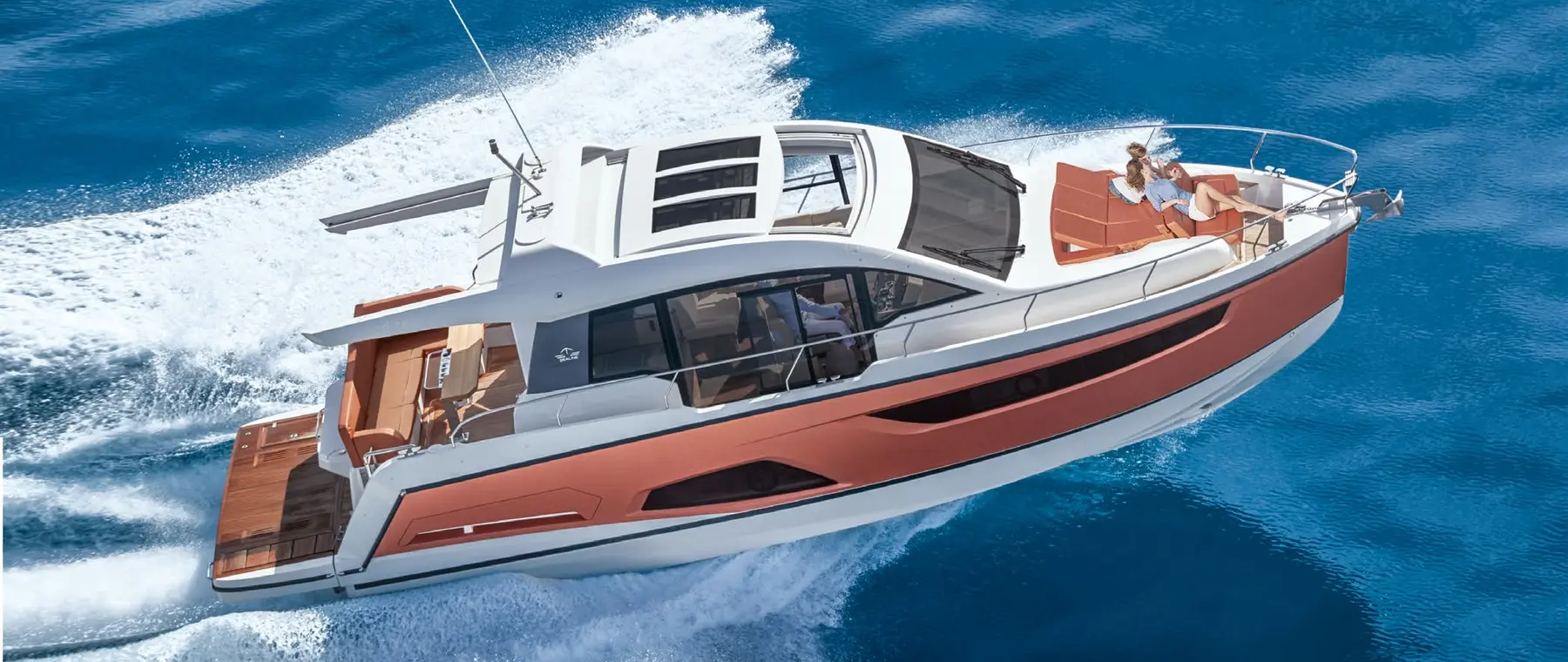
An unusual accommodation option in a 13.55m cruiser
Sealine's C430 illustrates how much an intelligently arranged 13.55-metre sports cruiser can achieve when interior volume and daylight are treated as major design priorities. The German-built model, documented in the manufacturer's 2026 brochure, is particularly notable for an optional three-double-cabin arrangement. Most boats of similar overall length ask buyers to accept a trade-off between a generous owner's suite and the number of separate sleeping rooms. Sealine instead offers a level of configuration that should interest families who regularly invite friends or older children on weekend trips.
The boat's overall length is 13.55 metres, with a hull length of 11.73 metres and a beam of 4.20 metres. Draft is stated at 1.15 metres and displacement at approximately 13.42 tonnes. These figures place the C430 firmly within the manageable owner-operated motor-cruiser category, but the photographs and layout drawings suggest a more expansive interior than those dimensions might imply. The manufacturer credits large areas of glazing for its bright saloon and uses a full-beam master cabin as a central element of the accommodation plan.
The third cabin is an option rather than a feature of every delivered boat, and that distinction is crucial for anyone searching listings or commissioning a new example. Two-cabin boats may devote the extra volume to different storage and living arrangements, while the three-cabin choice makes more sleeping space available at the cost of some flexibility elsewhere. An owner should inspect the actual general arrangement, door clearances and storage rather than assume a brochure's headline applies to every hull. More beds are valuable only when the people using them can move about comfortably.
A saloon designed to make shelter feel open
One of the most distinctive C430 details is the pair of powered roof openings described in the 2026 brochure. Combined with panoramic glazing, they allow the helm and saloon to feel much closer to an open boat in fine weather. Closing them converts the same area into a more protected environment when conditions deteriorate, helping the boat serve different seasons and cruising grounds. This flexibility is particularly useful for owners who move between sunny anchorages and cooler passages where maintaining a comfortable interior temperature becomes important.
Sealine places considerable emphasis on sightlines from the saloon. Broad windows and a largely unobstructed windscreen maintain views of the surroundings, while a sliding side door by the helm provides quick access to the starboard walkway. That is more than an aesthetic convenience: it can reduce the time needed for a skipper to step outside during an approach to the berth, provided the move is safe and crew responsibilities are clear. The double helm seat and swivelling furniture support a more inclusive main deck when the yacht is at rest.
The main seating space uses a U-shaped sofa, a retractable television and a galley arranged for service from several sides. Finishes can be personalised with different woods, leather colours and interior materials, according to the manufacturer. A buyer should place those choices below the fundamentals of circulation, ventilation and storage in the decision process. A luminous saloon is attractive at a boat show, yet the value of the design lies in how it handles bags, wet jackets, cooking and movement among guests during several continuous days aboard.
The cockpit and platform make water access part of daily life
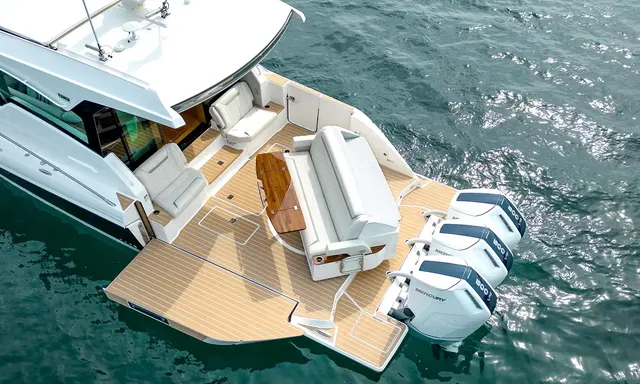
The C430's cockpit can be configured for dining or lounging, with an electrically operated sunshade to provide relief when temperatures rise. Sealine also describes a barbecue installation integrated towards the stern, allowing meals to be prepared without separating the cook from the main social area. An outdoor preparation surface and access to water make that feature more practical than a simple portable grill. On a vessel that may frequently anchor for lunch, placing food preparation near guests can help keep the interior cooler and less congested.
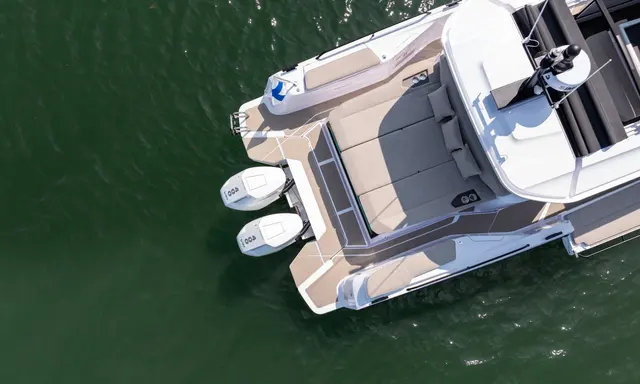
A hydraulic bathing platform lowers towards the sea, deploying steps to make entry and exit more comfortable. The builder also notes the option of carrying a smaller tender and provides an aft transom shower with warm and cold water. Such features are welcome aboard a family cruiser, but they demand a careful review of load ratings, safe operating procedures and the route from the platform back to the cockpit. The working limits of a hydraulic mechanism should never be inferred solely from the inviting imagery of a swim stop.
Forward, adaptable sunpads and bench-style seating offer a separate place for guests to relax. An optional Bimini adds shade, while low-profile lighting makes the deck useful at dusk. This combination gives the C430 multiple outdoor zones without requiring a flybridge, though it is especially important to distinguish lounging at anchor from seating intended for use underway. During a viewing, owners should consider wind protection, safe handholds and whether everyone can move back through the yacht quickly when weather or the planned itinerary changes.
Twin IPS propulsion and realistic weekend endurance
The manufacturer's 2026 brochure specifies twin Volvo Penta IPS500 pod drives as the standard propulsion package, with approximately 30 knots given as an indicative maximum. An upgrade to twin IPS600 units lifts the manufacturer's quoted maximum to about 33 knots. These speeds depend on the particular equipment, load and conditions, and should be independently checked during trials of a boat with the intended specification. Joystick-assisted handling can reduce stress in marina manoeuvres, but experienced skippers still need to account for wind, current and the yacht's momentum.
Sealine lists fuel capacity at 1,100 litres and freshwater at 450 litres, figures that encourage practical coastal itineraries rather than an assumption of unlimited range. Owners should request consumption figures at several speeds and use conservative margins when planning passages. The overall height of 4.80 metres including the mast also deserves attention in areas with bridges or restricted covered berths. The yacht's dimensions are not simply catalogue data; they directly affect the choice of home marina, lift capacity, maintenance facilities and reachable destinations.
The C430's central proposition is flexibility within a limited overall length. Two powered roof sections, a bright saloon, a hydraulic swimming platform and an optional third double cabin address different types of cruising day without requiring a much larger boat. The best choice between specifications will depend on who actually travels aboard and how they prefer to spend their time. The model deserves particular attention from buyers seeking a privately run yacht that feels welcoming both when anchored in sunshine and when crossing exposed coastal waters.