Simrad has released NEON OS 2.5 for its current generation of multifunction displays, adding new sonar support, wider third-party integration and more control over the way information is arranged at the helm. The update applies across NSX, NSX ULTRAWIDE, NSS 4 and NSO 4, giving existing owners new functions without changing display hardware.
The release is particularly relevant to larger owner-operated yachts where navigation, engines, switching and sensors increasingly converge on a small number of screens. Software therefore has a direct effect on helm usability long after a yacht leaves the factory.
Live sonar joins the NEON platform
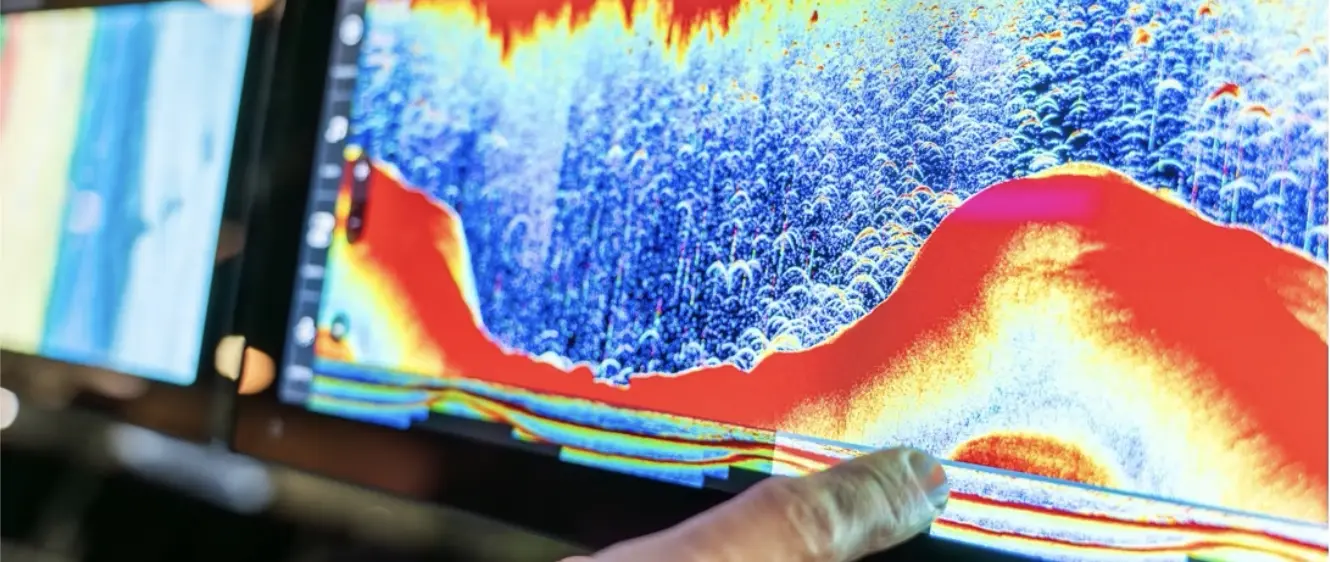
NEON OS 2.5 adds support for Lowrance ActiveTarget and ActiveTarget 2 live sonar, including the newer ActiveTarget 2 XL transducer. Simrad has also revised CHIRP, SideScan and DownScan presentation, with adjustable scrolling intended to make sonar information easier to interpret.
Those additions are most obvious for fishing-oriented boats, but the wider point is that a single Simrad display can now handle a larger mixture of navigation and sonar sources. That can reduce the need for separate dedicated screens on already crowded helms.
CZone and engine data move deeper into the display
The update adds native CZone digital-switching control and broadens the engine information available from Mercury and Yamaha installations. Owners can therefore bring more vessel systems into the same interface used for charts, radar and sonar rather than moving between unrelated control panels.
Integrated switching is useful only when it remains clear and predictable, so layout design becomes increasingly important as more functions are added. Simrad's six-way split-screen capability gives builders and owners more freedom to choose which information remains visible together.
Third-party integration continues to widen
EchoPilot forward-looking sonar can now be displayed inside the NEON environment, while Power-Pole integration is also expanded. These links show Simrad continuing to position the display as the centre of a broader onboard ecosystem rather than a closed navigation device.
For yacht builders, compatibility can reduce the number of separate interfaces required at the helm. For owners, it can simplify day-to-day operation provided installers configure the pages around the way the yacht is actually used.
Software updates increasingly shape ownership
Modern yacht electronics are becoming more like other connected technology platforms, with meaningful features arriving after the original installation. That can extend the useful life of expensive displays and improve integration without a refit.
It also makes update discipline more important, because new software should be tested against the yacht's existing sensors, engines and switching network before a major passage. NEON OS 2.5 is therefore both a feature release and another example of software becoming part of long-term yacht maintenance.