BAT grows the Combat range to almost 20 metres
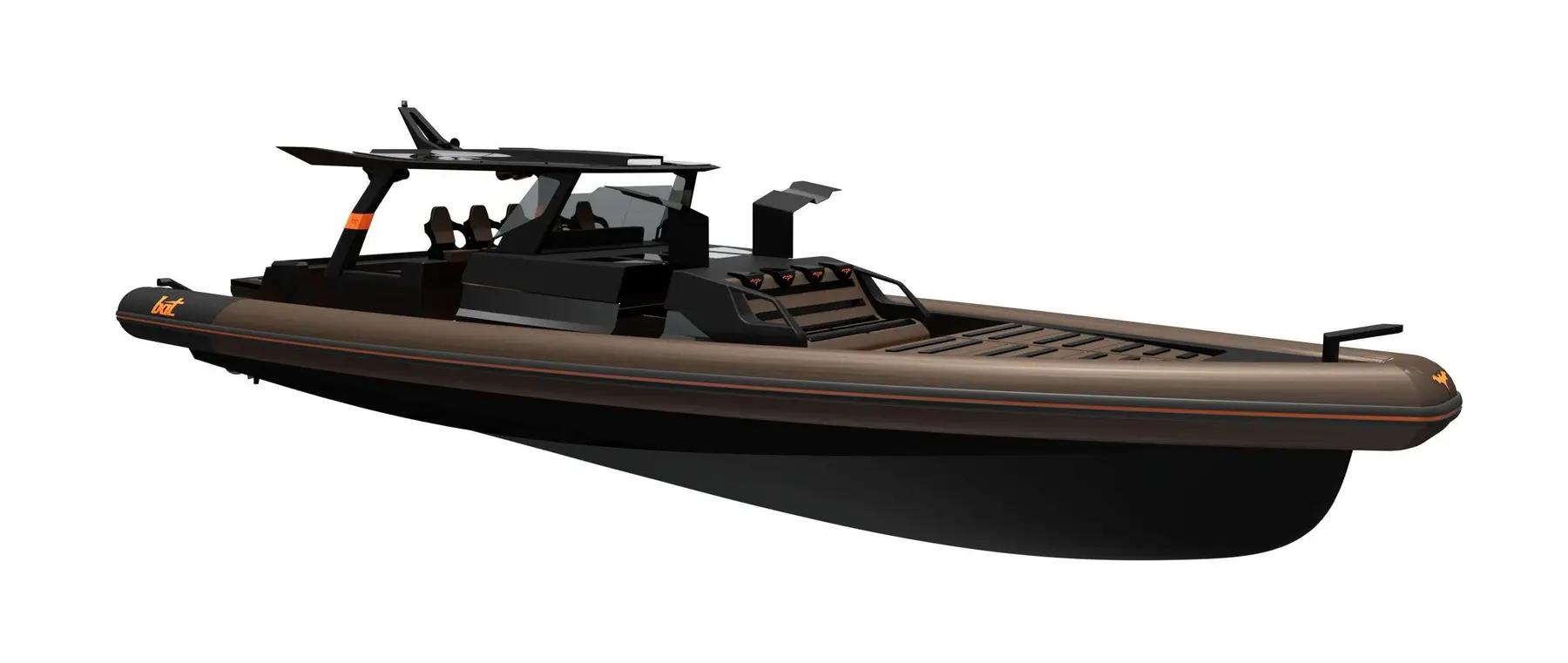
Rizzardi has outlined the BAT Combat 20, a 19.80-metre maxi-RIB planned as the new flagship of its Combat family. The project is being developed for a launch expected during 2027, and the builder says the success of the smaller Combat 14 has encouraged it to bring the original development plan forward by one year.
The design is by Gianluca Caputi and retains several recognisable elements of the Combat 14, including a distinctive hardtop and reverse-raked windscreen. Enlarging that formula brings new questions about structural loads, accommodation and propulsion rather than simply scaling every dimension proportionally.
A wide hull with significant deck space
The published design has a beam of 6.70 metres and inflatable tubes measuring about 0.85 metres in diameter. The layout includes a bow chaise longue, a large aft sunpad and a sheltered social area beneath the bat-shaped hardtop.
Such dimensions can create generous room for day cruising and entertaining, but prospective owners should also consider berth beam and the practicalities of moving around a large open vessel. The wider platform may be attractive for Mediterranean anchoring, although handling in confined marinas will remain an important consideration.
Twin gull-wing doors separate guest circulation
One of the design's most distinctive ideas is a pair of gull-wing doors leading below deck. Rizzardi says the access arrangement was requested by Corrado Rizzardi to allow guests to reach the bathroom without walking through the private accommodation.
The detail may appear theatrical in images, but it also addresses an operational issue for larger dayboats carrying guests. Circulation between open deck space and interior facilities can be awkward when a single narrow companionway serves everyone. The effectiveness of the new arrangement will depend on ergonomics and watertight detailing in the final vessel.
Two cabins and flexible onboard spaces
The BAT Combat 20 is planned with two cabins, positioned forward and aft, and a central dinette that can incorporate an additional galley. On deck, the concept also provides space for food preparation or bar service near the aft sunpad.
A compartment beneath the bow sunpad has been proposed for several purposes, including equipment storage, a crew berth or a garage for a personal watercraft. Such flexibility is appealing during initial specification, although each version would require attention to ventilation, access and weight distribution.
Surface drives or multiple outboards
Inboard versions are planned with Top-System surface drives and a combined rated output between 2,600 and 4,000 horsepower. A separate outboard version would use four or five 600-horsepower engines, producing up to 3,000 horsepower.
The builder quotes an estimated top speed range of 48 to 58 knots and an indicative range of 200 to 350 nautical miles depending on configuration. These figures are design targets rather than verified sea-trial results, and they will be affected by final displacement, fuel load, sea state and propeller selection.
A hybrid option remains under study
Rizzardi is also examining a hybrid arrangement with generators and electric propulsion, targeting cruising around 25 to 28 knots and an indicative range of up to 250 miles. Those numbers should be treated as preliminary while engineering and integration work continues.
For buyers considering the vessel as a substantial luxury dayboat, the Combat 20 belongs squarely in the 12-to-24-metre market. Its eventual appeal will depend on real-world handling, noise, onboard comfort and the quality of the completed build, all of which must be assessed after launch and testing.