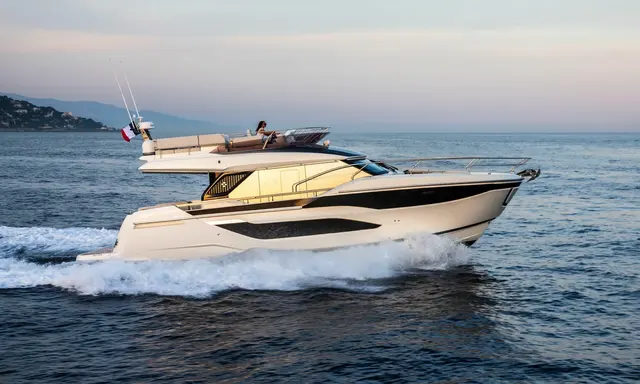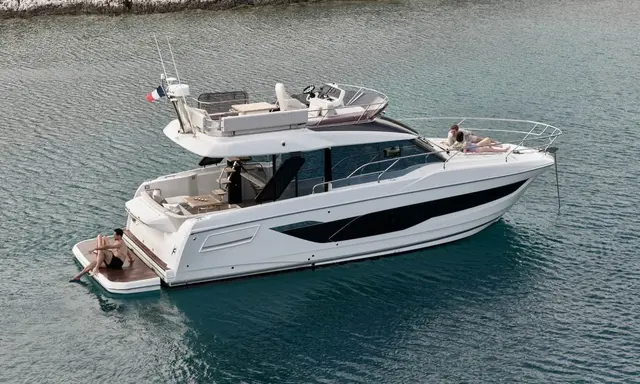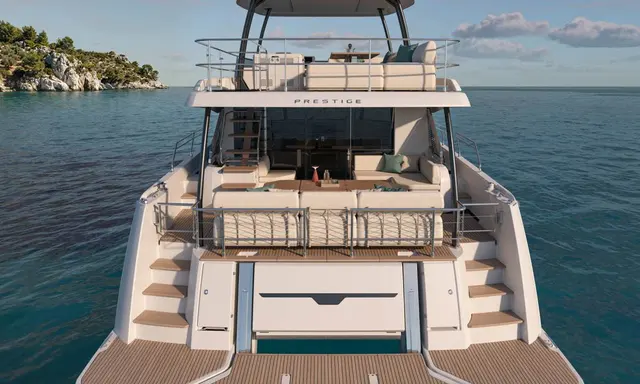
PRESTIGE is expanding the latest generation of its F-Line across Asia-Pacific, using a sequence of regional debuts to introduce the new flybridge family to markets with very different cruising cultures. The F4.9 has already established the design language in the region, while the F4.3 is following through shows in Auckland and Japan and larger F5.7 and F6.7 models extend the programme upward.
The strategy recognises that Asia-Pacific is not a single boating market. Owners in Japan, mainland China, Hong Kong and New Zealand operate in different marina environments and cruising grounds, yet they can share priorities around manageable operation, interior comfort and flexible social space.
The F4.9 created the first regional reference point
PRESTIGE says the F4.9 began the new generation's Asia-Pacific rollout with appearances including the Japan International Boat Show and exposure in mainland China. The model gave regional customers an early opportunity to understand the revised F-Line approach before the smaller and larger siblings arrived.
For a range launch, that sequencing helps. Dealers can build familiarity around one model, establish how customers respond to the interior design and deck organisation, and then use those lessons when explaining the similarities and differences of later arrivals.
F4.3 brings the concept into a more agile format
The F4.3 is being positioned as a more compact interpretation of the same philosophy, with regional appearances including the Auckland Boat Show and Japan International Boat Show. Its role is important because many Asia-Pacific marinas and cruising areas reward boats that combine useful accommodation with dimensions that remain practical for private ownership.
A smaller platform can also attract owners moving up from day boats or sport cruisers who want flybridge living without the crewing and berth implications of a substantially larger yacht. PRESTIGE's challenge is to preserve the sense of light and circulation associated with the new generation while working within that tighter footprint.
F5.7 and F6.7 extend the ownership ladder
PRESTIGE says the F5.7 will join the regional fleet later, while the F6.7 sits at the top of the generation after its 2026 launch programme. Together, the four models create a clearer progression from compact family cruising to a larger flagship experience.
That progression matters to dealers because existing owners often prefer to remain with a familiar brand when they move up in size. A complete model ladder gives them that option and allows service relationships, operating knowledge and brand loyalty to carry into the next purchase.
Regional cruising patterns shape the message
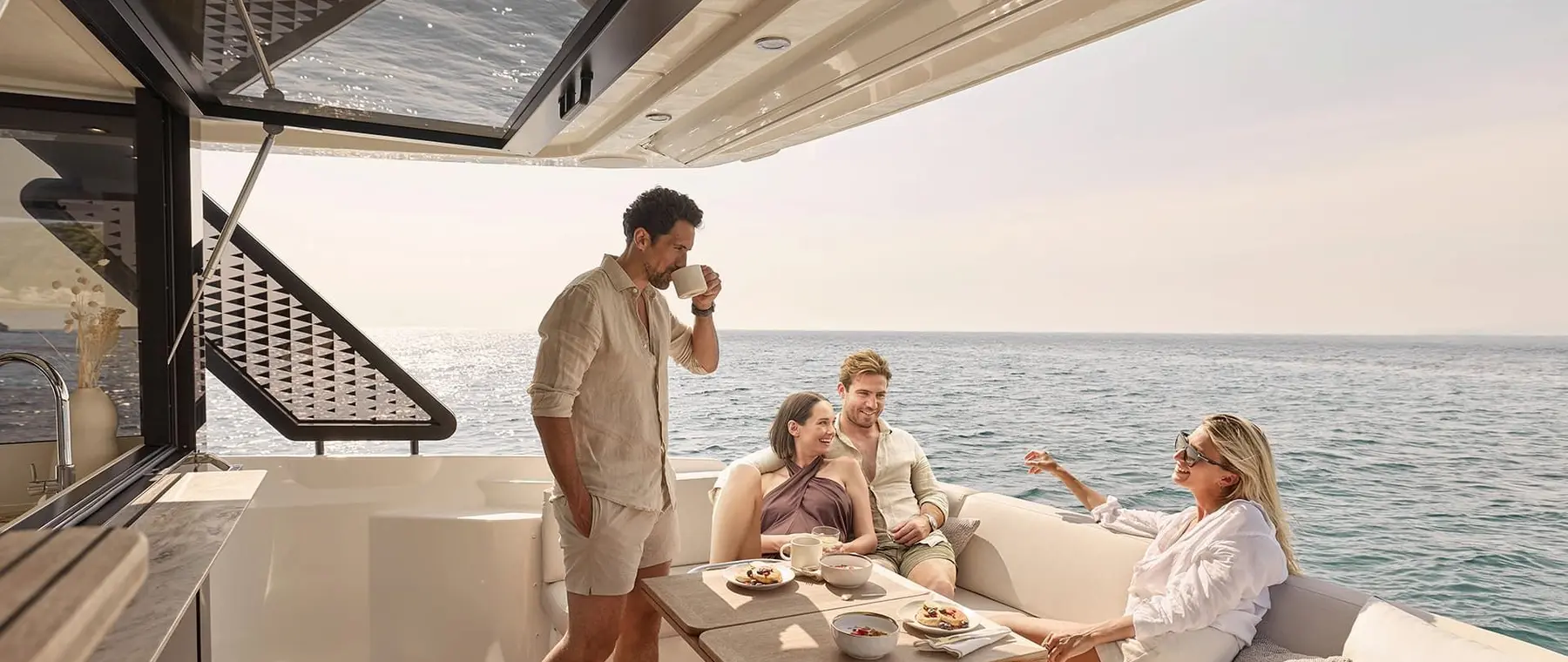
PRESTIGE's Asia-Pacific sales team frames the F-Line around weekends and longer coastal escapes, from island-dotted Japanese waters to metropolitan anchorages and Pacific cruising. The common thread is not a single route but the need for a yacht that can serve as a comfortable base once it reaches the destination.
That emphasis reflects how many owners actually use production flybridge yachts. Maximum speed may attract attention at launch, but shade, ventilation, storage, simple movement and the ability to host family or friends often become more important over repeated weekends aboard.
A global range needs local proof
Digital launches make it possible to reveal a yacht worldwide at the same moment, but physical regional debuts remain important for high-value products. Buyers want to inspect materials, test sightlines and understand whether the scale works for their local berth and cruising habits, while dealers need boats they can demonstrate rather than only explain.
PRESTIGE's staged F-Line expansion is therefore a practical market-building exercise as much as a product campaign. The company is taking a common design philosophy into several distinct Asia-Pacific markets and allowing each model to build recognition in sequence. The results should become clearer as the larger F5.7 and F6.7 arrive, but the strategy already shows the builder treating the region as a long-term part of the range's commercial future rather than an occasional export destination.
Asia-Pacific ownership also places unusual importance on dealer coverage because cruising grounds are geographically dispersed and service resources vary from one destination to another. A builder expanding several models at once needs not only sales representation but technicians, parts logistics and commissioning partners able to support owners after the launch events have finished. The strength of that infrastructure will ultimately determine whether the regional F-Line push becomes a lasting installed fleet.