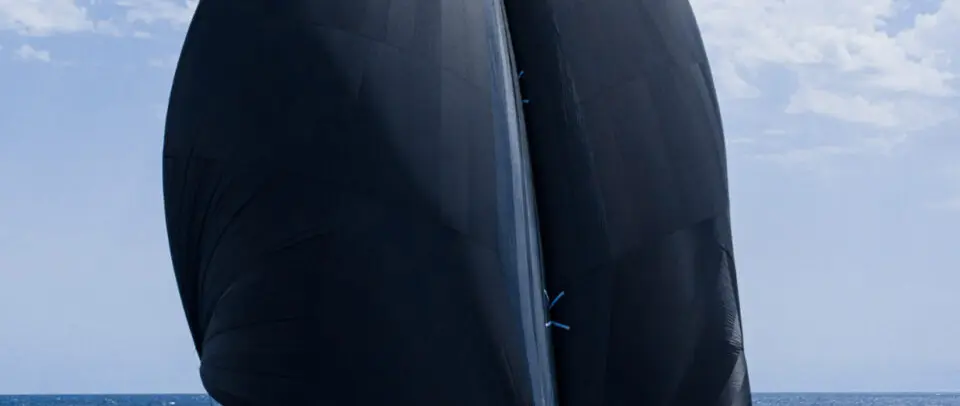
OneSails has published new guidance on its IFS Multi Tradewind Sail, a downwind system that revisits the familiar idea of two symmetrical sails flown wing-on-wing. The company combines that cruising concept with its Integrated Furling Structure technology to make deployment, control and recovery easier for crews.
The design is intended for sailors who want a stable broad-reaching and running setup without the handling demands associated with large conventional spinnakers. OneSails says the structure and materials have been developed around straightforward use rather than treating the sail as specialist race equipment.
A familiar downwind idea with modern structure
Twin sails set to opposite sides can create a balanced downwind arrangement, but conventional versions can be awkward to hoist, control and recover when conditions change. OneSails has retained the symmetrical concept while building the load-bearing structure into the sail itself so that the package can be furled and managed more like a modern cruising sail.
That matters particularly on larger cruising yachts where sail area rises quickly with boat size and physical handling becomes a limiting factor. Simplifying the deployment sequence can make a useful downwind configuration more realistic for couples and short-handed crews.
IFS removes the separate structural cable
OneSails uses its IFS, or Integrated Furling Structure, approach instead of relying on a conventional separate anti-torsion cable. The load path is incorporated into the sail structure, which allows the sail to maintain its intended shape while also supporting furling and reducing the number of separate components the crew has to rig.
Cableless structural furling has become increasingly common in modern reaching sails because it can reduce weight and improve the relationship between the sail and its furling system. The practical benefit depends on correct sizing and setup, but the concept is directly relevant to luxury cruising yachts where deck handling and storage space matter.
Handling is the central selling point
The new OneSails article emphasises ease of use rather than headline performance numbers. A downwind sail that can be deployed and recovered without a large foredeck operation is more likely to be used regularly, especially on yachts that spend long periods cruising with limited crew.
That does not remove the need for sound seamanship because sail area, apparent wind and rolling loads remain significant when running. The attraction is that the system aims to reduce unnecessary complexity around those loads rather than asking owners to accept a racing-style workflow.
A technology story with practical cruising relevance
For Luxury Yacht Guide readers, the IFS Multi Tradewind Sail is relevant because it applies materials and structural-sail technology to an everyday cruising problem. Owners choosing sails for long passages often gain more from systems that are easy to deploy consistently than from theoretical peak performance they rarely use.
OneSails’ latest explanation also reflects a broader trend toward integrated sail structures, lighter handling systems and hardware designed around short-handed operation. Those developments are increasingly shaping the specification of modern sailing yachts below 24 metres.