A professional extension of the Rig-Sense concept
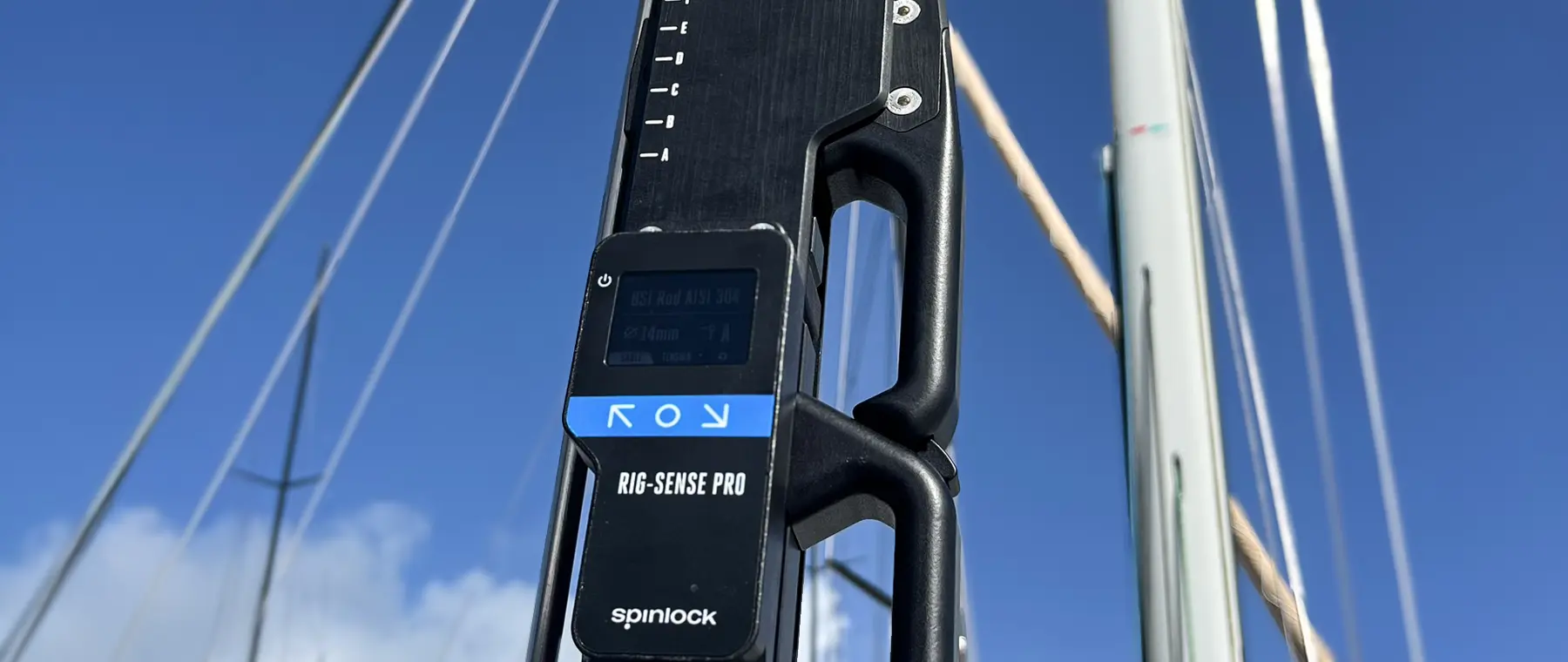
Rig Sense Pro expands Spinlock's established rig-tension product line toward professional installation and commissioning work. The company says the new model is intended for users who need to demonstrate that standing rigging has been set to a defined load rather than relying only on feel or turnbuckle position.
That is increasingly relevant on performance cruising yachts where rig tune affects mast shape, sailing loads and long-term component life. A repeatable measurement also gives owners a baseline that can be revisited during routine inspections.
Wire and rod measurement in one instrument
Spinlock specifies the Pro for wire diameters from 5mm to 20mm and rod from 5mm to 16mm. Maximum measured tension is 6,000kg, extending the device into the load range encountered on substantial yacht rigs.
The instrument uses a high-contrast readout and is intended to provide accurate numerical measurements rather than comparative markings alone. That makes the result easier to log against the rigger's commissioning sheet or the mast manufacturer's target values.
Recording loads improves maintenance decisions
A rig can settle after installation and loads can change as terminals bed in, structures move or tuning is adjusted. Having a known commissioning value allows later readings to be compared with the original setup rather than starting from an unknown reference.
For owners, those records can also improve conversations between the yacht, rigger and mast supplier. A change in measured load does not automatically indicate a fault, but it gives the inspection process a quantitative starting point.
Measurement does not replace rigging expertise
Standing rigging is a structural system, so a tension gauge should be used alongside the yacht's approved tuning data and a competent understanding of mast geometry. Applying a target load without considering the complete rig can create problems elsewhere even if the instrument reading is accurate.
Rig Sense Pro is therefore best viewed as a verification tool rather than a substitute for setup knowledge. Its value lies in making professional rig tuning more repeatable, recordable and easier to audit over the life of the yacht.