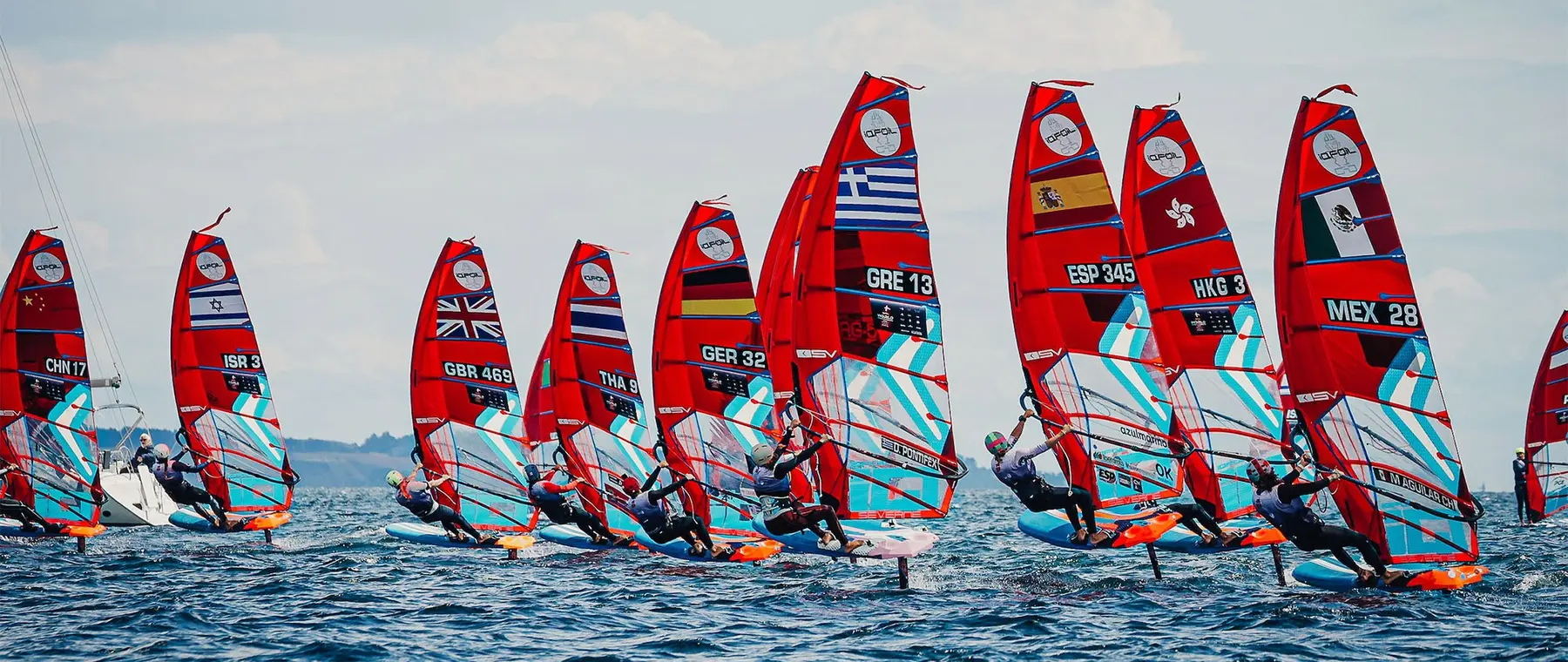
Musto's Flexlite Dynamic collection uses feedback from high-performance sailing athletes to develop apparel intended for freedom of movement and protection during demanding time on the water. The Royal Yachting Association documented the collaboration around the September iQFOiL World Championship at Weymouth and Portland.
Although the cited competition uses foiling boards rather than 12–23.99-metre yachts, the report concerns a technical marine-apparel supplier and its development process. It does not present the boards as LYG production yachts or claim the garments replace required yacht safety equipment.
What the athletes contribute
World champion Andy Brown and other foiling competitors have provided experience of repeated movement, speed and long sessions on the water. That feedback is useful to an apparel maker testing fit, seams and materials under active conditions.
A professional athlete's preferences do not determine the correct protection for a cruising-yacht owner or crew member. Garments should be matched to conditions, role and appropriate safety equipment.
Clothing has separate jobs
The collection is intended to give flexibility while limiting exposure during watersports activity. Thermal protection, abrasion resistance and ease of movement are separate properties that should be checked against the exact version selected.
A wetsuit is not a certified lifejacket or an automatic substitute for impact protection. An owner arranging gear for a yacht's sailing programme should follow current equipment rules and the skipper's safety plan.
A wider industry development
Musto's support of the 2026 championship places the company close to users who test equipment during competition. The original association feature is a product-development story rather than the announcement of a new yacht or a measured sea-trial result.
The accompanying event photograph is an official RYA image connected to this exact programme. Specifications, sizing and stock must still be confirmed with the maker.