One V8 engine, five distinct specifications
Mercury Marine produces five 300-horsepower outboard variants built around a naturally aspirated 4.6-litre V8 powerhead. A technical interview published by PressMare on 16 October explains how the FourStroke, Verado, Pro XS, Racing 300R and SeaPro differ in configuration and intended service.
The shared architecture includes dual overhead camshafts and 32 valves with electronically managed port fuel injection. Common capacity and horsepower do not make the products interchangeable because steering, lower units and engine calibration can change how a boat performs.
FourStroke and Verado take different approaches
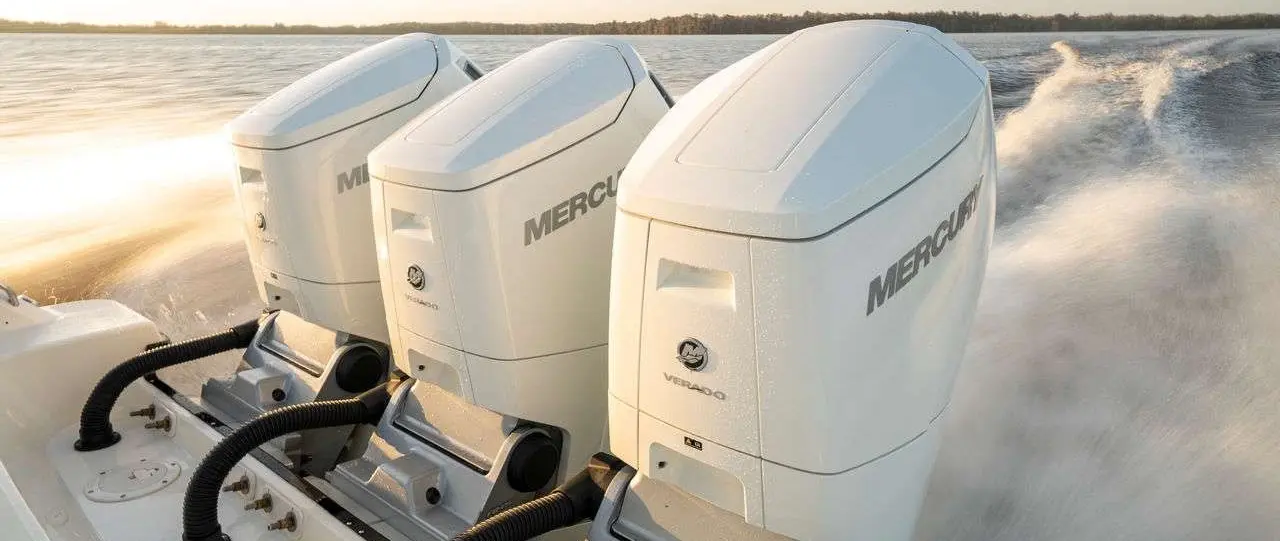
Mercury after-sales manager Stefano Arrigoni described the FourStroke as a more conventional, lower-cost arrangement well suited to repowering. Verado adds integrated electric steering, more elaborate engine mounts and an adjustable exhaust system.
Arrigoni indicated that the two engines can deliver broadly equivalent top-end performance when matched to suitable propellers. The Verado's advantage lies more in refinement, vibration control and steering response than in automatically producing more speed.
Performance engines demand suitable hulls
The Pro XS variant employs Mercury's TorqueMaster gearcase and a strengthened propeller shaft. It was developed for light, sporty hulls where mounting height, acceleration and hydrodynamic resistance become critical.
The 300R serves a specialised performance market, while SeaPro addresses more demanding commercial duty. Selecting a version solely because it carries a 300hp rating would overlook the different gearcases and operating requirements.
Multiple engines and controls
Mercury says its electronic controls can integrate installations of up to six outboards. For twin and triple-engine applications, the propeller rotation and steering arrangement need to be selected as part of a complete propulsion package.
Joystick manoeuvring is associated with the Verado's integrated steering architecture and should not be assumed available on every variant. Buyers should confirm that controls, shafts and mounting dimensions suit the intended yacht before ordering.
Implications for yacht owners
Propulsion affects cockpit layout, service access, noise, weight distribution and manoeuvring as well as maximum speed. The five-engine comparison shows why a specification sheet needs to be read alongside the operating purpose of the vessel.
These observations arise from a manufacturer technical interview rather than independent trials on a particular yacht. Owners considering a new build or repower should seek measured performance data for their hull and advice from a qualified installer.