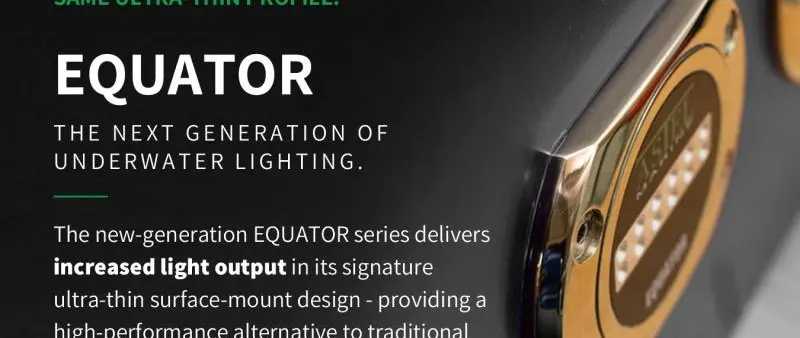
An updated underwater lighting range makes its trade-show debut
Astel Marine is presenting a new generation of its EQUATOR underwater LED lighting range during the autumn 2026 marine exhibition season. The Slovenian manufacturer says the updated products provide increased light output while retaining the ultra-thin surface-mount design that distinguishes the range.
The product announcement identifies two trade-show presentations: IBEX in Tampa, held from 6 to 8 October, and METSTRADE in Amsterdam, scheduled for 17 to 19 November. The exhibitions provide opportunities for equipment specialists and yachtbuilders to evaluate the design and discuss future installations with the manufacturer.
A surface-mounted light can appeal to owners seeking a particular approach to hull fitting, although the mounting method alone does not establish suitability for every hull type. Installation requirements should be checked against the selected product and the vessel’s construction.
The trade-off between output and installation
The updated EQUATOR range is being positioned as a higher-performance alternative to conventional through-hull underwater lighting systems. Astel has not provided a universal performance figure in its public announcement for every model, so individual light output and consumption must be checked against the precise unit offered.
Underwater lighting selection involves more than maximum brightness. Beam pattern, colour, surrounding water clarity, placement and the intended effect can influence how a boat appears when alongside a pontoon or at anchor.
For a luxury cruiser, the appropriate number and location of fittings also depend on hull geometry, access for service and the capacity of the electrical system. A carefully planned installation can produce a more consistent result than simply adding greater numbers of high-output fixtures.
Surface mounting still requires marine engineering
The slender housing is intended to limit how far the light projects from the hull surface, but the correct fixing, cable entry and sealing arrangement remain critical. Installers need to account for immersion conditions, local structural material and any manufacturer requirements on mounting orientation.
Owners should not assume that a surface-mount system can be fitted without any change to the yacht. Even where a large through-hull opening is avoided, protected electrical cable passages and suitable waterproof connections may still be required.
Routine inspection and access should be considered during the design stage, especially on boats that are frequently used or where fittings are located close to appendages or vulnerable areas of the hull. That planning can reduce the disruption of later service visits and help identify any early signs of damage.
Equipment buyers can assess the new models in Amsterdam
The next scheduled showing is at METSTRADE in the SuperYacht Pavilion, where Astel lists stand 08.163. Although the pavilion serves a large-yacht audience, the same lighting considerations can be relevant to smaller luxury yachts where reliable operation and restrained installation dimensions are valued.
The manufacturer has not presented the release as evidence of a completed installation on a named production yacht, nor has it supplied a universal price for the entire series. Buyers should ask for model-specific documentation, warranty terms and any appropriate installation approvals.
As yacht owners prepare winter refits, the EQUATOR update provides another technology to compare with existing lighting systems. The key questions will be suitability for the individual hull, quality of the installed result and reliable support after the yacht returns to service.