An Oyster 595 becomes a test platform
Oyster Yachts is evaluating variable-capacity Frigomar climate-control equipment on an Oyster 595 sailing yacht as part of a pilot project reported on 13 October 2026. The units are being supplied through UK distributor Advance Yacht Systems, with a particular emphasis on reducing electrical demand and noise when owners cruise in warmer climates.
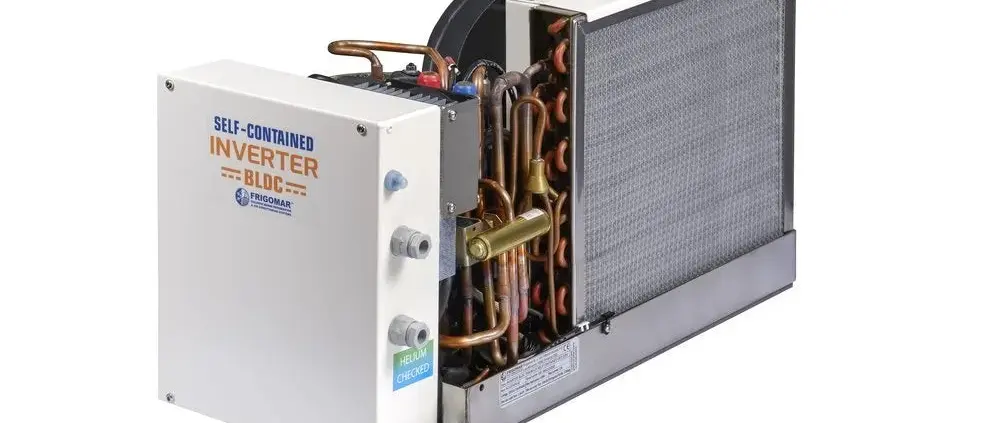
The equipment includes the SCU12VFD and SCU16VFD models, self-contained seawater-cooled systems rated at 12,000 and 16,000 British thermal units per hour. Each unit is designed to provide both cooling and reverse-cycle heating, making it relevant to owners who sail in different seasons rather than only in summer.
Variable-speed compression changes the operating profile
Conventional air-conditioning systems often cycle their compressors on and off, creating a short surge in electrical demand at each start and changes in cabin temperature. Frigomar’s inverter-driven compressors vary their operating speed more gradually, allowing capacity to respond to the space’s actual heating or cooling requirement.
Advance Yacht Systems says the SCU16VFD can operate at approximately 200 watts in its most economical mode and draws less power than many older comparable systems. Those figures relate to specific conditions and should not be treated as an all-weather guarantee for a yacht exposed to strong sun, high humidity or heavy onboard activity.
The pilot project has been promoted with a low starting-current figure, making reduced generator and inverter loads part of its appeal. The total electrical requirement still depends on all equipment aboard, seawater circulation, fans, installation and the temperatures expected in the cabins.
Comfort and silence are important to cruising owners
Owners choosing a bluewater sailing yacht may value climate control in the tropics but prefer to avoid running a large generator continuously at anchor. Reducing compressor starting loads and matching output to actual demand can be attractive when the boat relies on batteries, solar charging or other constrained energy sources.
The Frigomar SCU16VFD is offered through Advance Yacht Systems as a compact unit with reverse-cycle heat, digital climate controls and a quoted cooling capacity of 16,000 BTU per hour. The distributor lists the system as a suitable option for larger cabins and salons, although the size and thermal characteristics of the space must guide selection.
Quiet operation also matters in sleeping accommodation, where cycling compressors and fans can be more intrusive than they seem during a daytime marina demonstration. Owners considering a retrofit should examine vibration isolation, ducting, airflow and the location of condensate drains as carefully as the headline efficiency.
A pilot is not a fleet-wide equipment announcement
The announcement concerns a trial aboard an Oyster 595, not a blanket commitment to fit the units as standard on every yacht the builder delivers. Decisions about wider adoption will depend on the experience of the test, integration requirements and the builder’s specifications for different vessels.
Frigomar and its UK distributor have also been promoting lower-voltage air-conditioning solutions for smaller boats, where battery capability and available installation space may be especially restrictive. The needs of a 12-metre weekend cruiser, however, differ materially from a professionally equipped 18-metre offshore sailing yacht.
For an owner comparing climate-control options, the useful next step is an energy budget based on actual cruising conditions, supported by a qualified marine installer. The Oyster trial is an example of efforts to reduce onboard power demand while preserving comfort; it should be judged by independently checked operating performance rather than marketing figures alone.