MarineMax reports a difficult finish to fiscal 2026
MarineMax, a major US boat and yacht retailer with marina and marine-service operations, reported fourth-quarter revenue of $520.1 million for the period ended 30 September 2026. That was lower than the $552.2 million recorded in the equivalent quarter of the previous financial year. The company’s 4 November earnings release, filed with the US Securities and Exchange Commission, also disclosed a quarterly net loss attributable to MarineMax of $13.0 million.
The headline numbers matter beyond the listed company’s shareholders. MarineMax participates in the market through dealerships, boatbuilding businesses, marinas and specialist services. Its performance therefore offers a snapshot of several parts of the recreational boating economy, including the infrastructure used by owners of twelve- to twenty-four-metre luxury yachts. One operator’s figures should not be mistaken for a measurement of every national or international yacht market.
The difference between sales and profitability
MarineMax reported that same-store sales declined 5.7 per cent in its fourth quarter. At the same time, its gross margin rose to 37.4 per cent, a gain of 270 basis points compared with the prior-year quarter. Gross profit increased to about $194.3 million from $191.4 million. Taken together, these figures show why a decline in top-line revenue does not automatically translate into a proportionate fall in gross profit.
Management attributes the margin development to better boat profitability and stronger contribution from higher-margin activities, including marina operations and parts and servicing. That is a company explanation of its own results. It does not establish what happened to the sales of every yacht model sold by its dealer network, and it should not be used to infer price movements for an individual vessel without separate market evidence.
Why the quarterly net loss widened
The quarter’s net loss attributable to MarineMax was $13.0 million, versus roughly $0.9 million a year earlier. The company also reported selling, general and administrative expenses of $196.1 million, compared with $177.6 million in the previous period. Its earnings statement says a substantial part of the rise was associated with costs relating to a pending acquisition by Safe Harbor Marinas.
Reported profit and adjusted metrics differ because companies may exclude certain items from their adjusted calculations. MarineMax reported adjusted EBITDA of $21.8 million for the quarter, up from $17.3 million. It also reported an adjusted net loss of $1.8 million. Readers should not confuse adjusted EBITDA with cash generated or earnings attributable to shareholders, and should consult the company’s reconciliation tables for definitions and excluded items.
A full-year picture with different moving parts
For the full fiscal year, MarineMax reported revenue of approximately $2.164 billion, down from roughly $2.309 billion in fiscal 2025. Same-store sales fell 5.5 per cent. Despite that decline, the full-year net loss attributable to MarineMax narrowed to $8.2 million from $31.6 million. Gross margin for the year reached 34.9 per cent, up 240 basis points from the previous year.
This creates a more nuanced picture than a single negative headline. The final quarter was comparatively weak in earnings terms, while the annual loss was smaller than the previous year’s. Different expense patterns, margins and periods can all contribute to that contrast. The responsible reading is to state both sets of figures and their periods accurately, without extrapolating an automatic recovery in the following year.
Inventory levels and dealer conditions
MarineMax reported inventory of $812.8 million at the end of September 2026, a decline of $54.6 million, or 6.3 per cent, from the previous fiscal year-end. Boat inventory matters because dealers must manage expensive, weather-exposed goods whose sales can be seasonal. A reduction may reflect sales, purchasing decisions or changes in product mix; the published aggregate figure does not prove the availability of a particular model at a particular dealer.
Owners considering a new or brokerage yacht should therefore use live dealer information to establish actual availability, specification, warranty and delivery arrangements. Industry-wide conditions can influence negotiations and lead times, but a public company’s inventory balance is not a reliable guide to the value of one vessel. For buyers of 12–24-metre yachts, model-specific documentation remains the key reference.
The marina and services element
MarineMax’s portfolio extends beyond selling boats. The company describes operations that include marina and storage facilities, service businesses and specialist yacht services. Its SEC-filed release identifies marinas and parts and service as areas that helped support results while boat sales were softer. That diversification is important because a yacht remains an ongoing service relationship after the initial purchase.
A motor yacht owner may need seasonal berthing, scheduled maintenance, mechanical repairs, electronics support, insurance assistance and eventually brokerage services. Businesses serving these recurring needs can have different economic patterns from a dealer reliant on new-boat transactions. The published numbers support the conclusion that the company’s mix is changing; they do not provide a separate profit figure for every marina, vessel size or service category.
The pending Safe Harbor acquisition
MarineMax’s 4 November filing confirms that it has a definitive agreement to be acquired by Safe Harbor for $53.00 per common share in cash, with an enterprise value described as approximately $1.5 billion. The company says the agreement was announced in August and is expected to close by the end of calendar 2026, subject to the required conditions, including shareholder approval.
That transaction remains pending at the time of this report. It would be inaccurate to say the companies have already been fully combined or that every customer contract has changed. For owners, any eventual consolidation may lead to questions about service continuity, marina networks and dealership arrangements, but those outcomes cannot be promised from the announcement alone. Existing customers should rely on direct official notices rather than assume immediate changes.
A connected portfolio across recreational boating
MarineMax’s release describes a network with more than 120 locations worldwide, including more than 70 dealerships and over 65 marina and storage facilities. It identifies businesses such as IGY Marinas, Fraser Yachts Group, Northrop & Johnson, Cruisers Yachts and Intrepid Powerboats within the wider organisation. Not all the boats sold by these operations fall within Luxury Yacht Guide’s length range, and the conglomerate also participates in larger-yacht and different boat segments.
For 12–24-metre readers, the relevance lies especially with luxury motor yachts, service relationships and marina access. The figures provide an unusually broad look at a company dealing with many stages of boat ownership. But it would be wrong to assign the $520.1 million quarterly revenue specifically to this size segment; the company’s financial disclosures aggregate a much wider business.
What the results imply — and what they do not
The earnings release is evidence of pressure in a portion of the US recreational boat retail market alongside stronger contributions from other marine activities. It is not a forecast of the price of a fifteen-metre sports cruiser or a nineteen-metre motor yacht. Nor does it establish how Mediterranean yards, European charter operators or all American marinas performed over the same dates.
Owners who follow market reports should keep business categories separate. New-boat volume, used-boat transactions, berth fees, service revenue and superyacht brokerage commissions respond to different demand patterns. A diversified group can improve its gross margin while one channel contracts. That is a useful observation about the business model, not a reason to draw unsupported conclusions about the whole yachting industry.
The next reporting milestones
MarineMax says it does not intend to provide fiscal 2027 guidance or hold an earnings conference call for these results because of the pending Safe Harbor acquisition. The next important developments therefore include regulatory and shareholder steps associated with the transaction, any official completion notice and subsequent information about operational arrangements for owners and customers.
Until an acquisition is formally complete, buyers and berth holders should treat both companies as operating under their existing contracts and published conditions. Business reporting remains most valuable when dates, figures and legal status are kept distinct. For yacht owners, continuity of reliable service and clear communication are the practical matters to watch.
Sources and contextual image
Primary source: MarineMax Inc., fiscal 2026 fourth-quarter and full-year earnings release dated 4 November 2026, Exhibit 99.1 to its US Securities and Exchange Commission filing. Revenue, margins, net losses, inventory and transaction status are reported from that filed release. Editorial interpretation of implications for mid-size yacht owners is identified as analysis.
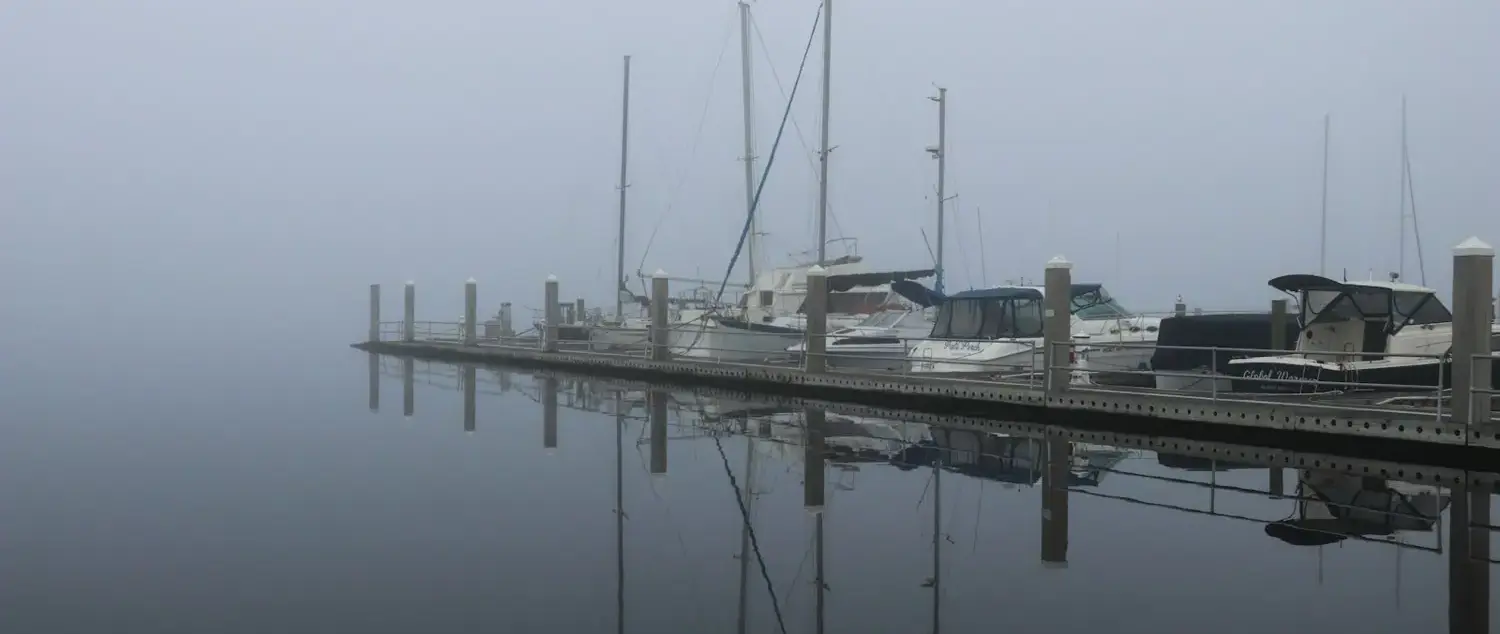
The image shows a real Florida marina scene photographed by Debby Hudson under the Unsplash License. It is a contextual illustration of recreational boating, not a MarineMax facility, an image of the proposed acquisition or a representation of the company’s financial results.