An economist joins the scientific committee
One Ocean Foundation announced on 2 November 2026 that financial economist Ralph Chami has joined its Scientific Committee. The appointment formalises a collaboration focused on the relationship between healthy marine ecosystems, financial systems and the economic value of nature. The foundation's own announcement identifies Chami's research into blue natural capital as central to the move.
This development has potential relevance to yacht owners because the value of a cruising destination depends partly on the condition of the sea and coastline. Marine finance and conservation can sound distant from leisure boating, but damaged habitats affect tourism, fisheries and the quality of coastal experiences. The appointment itself is a governance change, not a new tax, marina charge or mandatory environmental rule.
A background in economic policy
Chami has more than three decades of experience as a financial economist, including 25 years at the International Monetary Fund, according to One Ocean Foundation. He is also associated with Blue Green Future and Rebalance Earth. His current work examines ways that ecosystems and the services they provide might be reflected more accurately in economic decisions.
The idea challenges a familiar limitation of financial accounting: some benefits delivered by healthy natural systems are economically important even when they have no straightforward market price. The health of a coastline, for example, supports tourism and local businesses, yet much of that value may be absent from conventional project comparisons. Establishing such relationships rigorously is complicated and demands care.
Existing research forms the basis
The foundation says it has already worked with Chami on blue-economy discussions, including its Blue Economy Summits and a study titled Building equitable and nature-positive blue natural capital markets. The paper examines how private investment might support marine conservation while maintaining scientific integrity and attention to the communities involved.
A committee appointment can help bring this research into a continuing institutional programme. But the announcement does not establish that a particular financial instrument has been launched, that funds have been raised or that a named marine habitat has been restored as a consequence. Those would require separate evidence and project-level reporting.
What blue natural capital means
Natural capital is a way of describing the stocks of living systems and environmental resources that underpin benefits to people and economies. In the ocean, these may include marine habitats, biodiversity and ecological functions that support fisheries, coastal resilience and tourism. Financial researchers attempt to understand how protecting or damaging those systems affects future economic outcomes.
The term can be useful, but it should not imply that every living creature or shoreline can be reduced to a reliable monetary figure. Ecological systems are complex and values change with assumptions and context. The foundation emphasises that finance must work alongside sound scientific measurement and public-interest safeguards, rather than replacing conservation decisions with a simple price tag.
Coastal tourism provides an example
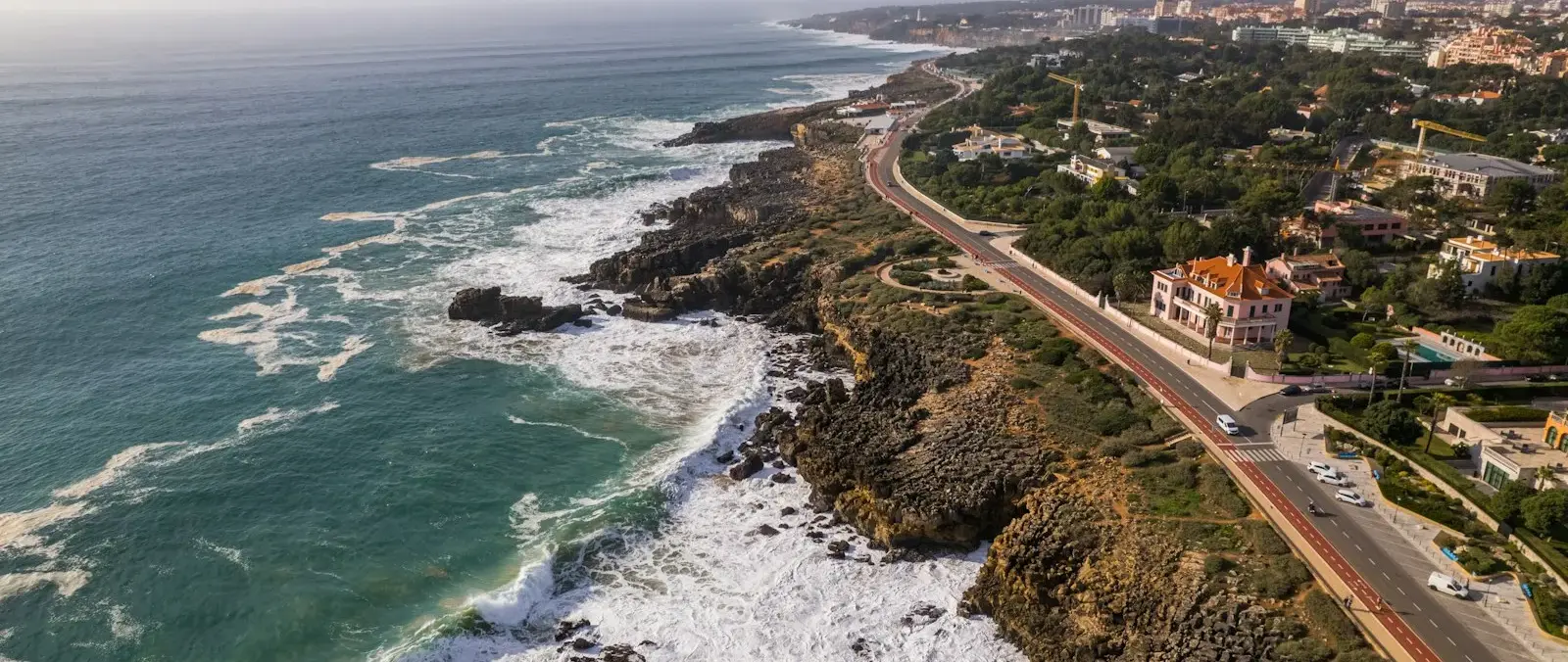
For the luxury-yacht sector, a practical connection is the attractiveness of cruising destinations. Clear water, healthy seabeds and distinctive marine life can form part of why owners choose a region. If those assets deteriorate, the effects may be felt beyond environmental organisations, reaching marinas, local businesses and the broader visitor economy.
That connection is not a licence to claim a particular conservation project will increase yacht values or charter rates. To support such a claim would require data on visitor demand, habitat condition, local economic activity and alternative explanations. What the research suggests is that natural systems deserve explicit consideration when governments and investors assess the long-term future of coastal areas.
Finance has to be matched by evidence
Chami's approach explores the relationship between ecological knowledge and mechanisms that direct investment toward nature-positive results. The ambition is to make ecosystem protection part of financial and policy thinking rather than treating it as a cost separate from economic development. That framework relies heavily on the quality of underlying scientific observations.
An investment mechanism presented as conserving the ocean should identify the habitat, baseline condition, expected intervention and method for measuring results. It must also address who owns the relevant rights and who benefits from the project. Without those safeguards, a funding label could become a promotional exercise rather than a reliable account of ecological improvement.
Communities are part of the equation
One Ocean Foundation's summary of the research stresses meaningful engagement with local communities and scientifically sound measurement. Coastal residents often depend on the same waters used by visiting yachts, commercial tourism operators and fisheries. A conservation project that disregards those communities can create conflict or fail to deliver lasting benefits.
For yacht tourism, this is a reminder that responsible cruising involves more than keeping waste off the deck. Visiting boaters may use local businesses, shared anchorages and sensitive coastal spaces. How they interact with residents and small operators matters. Larger financial initiatives will be more credible when they recognise such relationships rather than treating the coast as an empty asset.
The risk of exaggerated claims
Natural-capital finance is an evolving field, and the prospect of linking environmental improvement to financial returns may attract strong marketing language. A project can claim to be ocean-positive before there is robust evidence that an ecosystem has improved. Chami's appointment should not be taken as verification of every investment product that uses similar terminology.
Independent monitoring, clear governance and realistic reporting periods are essential. Marine habitats may take years to respond to interventions, and changes may be influenced by factors far beyond one project. Consumers and industry businesses should therefore seek evidence of actual outcomes and avoid equating a polished sustainability label with confirmed ecological recovery.
Possible implications for marina planning
Marinas and waterfront developers make decisions that interact with coastal ecosystems. Dredging, construction, waste management and vessel movements can all have environmental implications that vary by site. Incorporating better evidence about ecosystem benefits and risks into planning may help decision-makers compare options more intelligently.
This is a possible application of natural-capital thinking, not a reported agreement between One Ocean Foundation and a named marina. Specific environmental obligations depend on local laws and project conditions. The value of such research for yacht infrastructure will be judged by whether it improves assessment, mitigation and accountability in real developments.
What yacht owners can do now
Owners do not need to wait for a new financial system to adopt practical habits: comply with local protected-area rules, use suitable waste facilities, reduce avoidable pollution and choose anchoring methods that minimise habitat damage. They can also ask marinas and charter providers for evidence behind environmental promises.
These actions are conventional good seamanship and responsible travel, not measures newly ordered by Chami or the foundation. They should be tailored to the cruising ground and the rules in force. Environmental information is most useful when it helps an owner make a specific, well-informed decision about where and how to operate a yacht.
The research agenda ahead
The foundation's Scientific Committee will now include a researcher whose work centres on integrating ecological information with economic decision-making. Potential future outputs might involve publications, convenings and methods for evaluating nature-positive finance. The announcement itself does not commit to dates, budgets or individual project outcomes.
Observers should watch for transparent studies and practical case examples showing how measurements are made, how communities participate and how financial claims are independently assessed. Those details will tell us more than the size of a proposed market or the popularity of a fashionable term. Responsible reporting should separate demonstrated conservation from aspirations for future funding.
A connection between finance and the sea
One Ocean Foundation's appointment of Ralph Chami brings financial-economics expertise into its ongoing marine research programme. It is a concrete step in the foundation's effort to connect ocean protection with economic resilience. For a leisure-yacht audience, the broader significance is a reminder that the waters supporting recreation and tourism also provide ecological benefits that need protecting.
The next test will be how that work is translated into sound science, accountable investment and genuine habitat outcomes. For now the confirmed news is the committee appointment and the existing research relationship, not a new policy imposed on owners or a guaranteed commercial opportunity.