A European ambition with a specific date
Honda Marine has set out an ambition to lead the European outboard market by 2030, according to an interview published by PressMare on 5 November 2026 with Vincenzo Paduano, its EU Country Sales & Boat Builder Manager. The objective is a stated corporate ambition, not a projection independently established by industry sales data. It arrives as higher-horsepower outboards appear on increasingly substantial premium motorboats and as builders seek closer integration between propulsion, steering and electronic control. For the Luxury Yacht Guide readership, the interesting question is how a supplier traditionally associated with smaller craft is positioning its technology for larger, sophisticated owner-operated yachts.
A dedicated division in Rome
Paduano said Honda created a dedicated European Marine division on 1 April 2024 and placed its headquarters in Rome. He described Italy as a particularly important market for the brand and a source of commercial experience. A dedicated regional structure can be significant for manufacturers because boatbuilding relationships require more than centrally distributed engine catalogues. Builders need engineering access, predictable product planning, local commercial decisions and support when a propulsion installation raises new questions. The interview establishes Honda's organisational move, while the extent to which it delivers measurable improvements for each boatbuilder will depend on contracts, service execution and future product releases.
Why the BF350 matters to luxury buyers
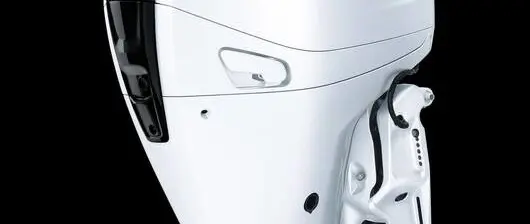
One of the central products in Honda's expansion is the BF350 V8 outboard. Paduano said its arrival allowed the company to enter a higher-power segment that had previously been outside its offer. On premium yachts, propulsion choice influences design from the beginning: transom structure, cockpit access, deck space, engine serviceability and fuel capacity all need to be planned together. In multi-engine configurations, the accumulated rated power can be substantial, but it is not automatically the right answer for every hull. A well-designed installation must match propulsion, weight, intended operating profile and manufacturer recommendations instead of simply maximising the horsepower number.
Systems integration becomes the differentiator
The interview places strong emphasis on integrating propulsion with steering and control systems. In practice, yacht owners experience such integration through the helm, which may combine engine information, navigation displays and manoeuvring controls. Smooth coordination can reduce workload, particularly when operating a premium motor yacht with limited crew. Yet any integration raises questions about reliability, software support, compatibility and what happens when one electronic component fails. Manufacturers often present a seamless experience in marketing; a buyer should ask to see the exact functions demonstrated on the boat under consideration. Honda's statement is a direction of development, not a promise that future features are already installed.
The boatbuilder relationship
Paduano described cooperation with major boatbuilders as a centrepiece of the European strategy. This matters because an outboard package is selected well before a boat appears in a showroom. Naval architects and builders must consider hull balance, water flow, transom geometry, servicing access and controls in concert with the engine supplier. A close partnership can simplify this work and support predictable production, though the interview does not provide a comprehensive list of contracted luxury-yacht builders or a verified count of future installations. For buyers, the relevant questions are whether the chosen boat's propulsion installation was validated for that hull and who will support it after delivery.
A renewed range without claiming a new launch
Paduano also spoke about the renewal of Honda's inline-four and V6 outboards and the V8's contribution to the current range. The interview does not announce a new 2026 BF350 successor, nor should the discussion of future product plans be treated as an unveiled engine. This distinction matters in marine journalism, where strategy interviews are sometimes retold as product-launch news. Honda is articulating a programme of range development and deeper technical integration. Owners with an imminent purchase decision should evaluate the engines and control systems available to order now, with future improvements treated separately unless the manufacturer confirms a delivery and compatibility schedule.
What higher-power outboards change on board
Larger outboards can alter the layout equation on an owner-operated yacht because engines mounted externally may release internal space that an inboard machinery compartment would otherwise occupy. However, this can be offset by the structural and access needs of the transom arrangement, fuel storage and specialised maintenance systems. Tender handling, cockpit length and noise are equally important. Different owners will prioritise different outcomes: quick day passages, low-speed coastal touring, offshore fishing or an occasional longer route. No design approach removes the need for a carefully matched hull. The Honda interview is therefore relevant to yacht planning, but does not itself provide comparative performance tests.
The size boundary matters
Honda's discussion of branded boat packages also references a collection of smaller craft. Those boats sit outside Luxury Yacht Guide's principal 12–23.99-metre editorial scope and are not the subject of this analysis. The relevant connection to luxury yachts is the supplier's high-power propulsion technology and its ambition to build relationships with manufacturers designing more substantial premium vessels. Readers should also note that fitting an outboard does not by itself make a boat suitable for offshore passages or define a particular regulatory category. Length, design standards, loading and operating limits must be established for each individual vessel.
Service coverage becomes a competitive test
Market leadership cannot be judged solely by an ambitious date or a headline horsepower figure. An owner considering a multi-engine premium yacht will also ask how quickly a qualified technician can attend, whether parts are stocked near the home port, what diagnostics a dealer can perform and how warranty claims are handled when cruising abroad. Those realities are particularly important for Mediterranean owners moving between national territories during a season. Honda's interview outlines the commercial direction, but it does not publish uniform service response times or geographic coverage guarantees. Buyers should obtain current local answers rather than infer them from the global brand.
Economic conditions and entry barriers
The conversation also addressed challenges facing recreational boating, including the cost of participation and changing demand. That wider context should not be confused with a forecast for every yacht category. High-end buyers may have different budgets from first-time boaters, yet they still care about the total cost of running an engine package over many seasons. Fuel consumption at a chosen cruise speed, servicing intervals, haul-out arrangements and resale expectations belong in an ownership comparison. Those costs will depend heavily on the specific boat and usage. The strategy suggests that Honda sees growth opportunities, but numerical European market-share outcomes remain unverified.
Environmental questions deserve evidence
Propulsion manufacturers increasingly discuss efficiency and future technologies, and Honda referenced bringing expertise from other industries into marine development. Such ambitions can encourage innovation, but individual environmental claims must be supported by comparable test conditions. A more powerful engine is not automatically less efficient or more efficient than an alternative once hull load, speed and duty cycle are considered. Premium-yacht owners evaluating emissions and running costs should ask for measured consumption curves, realistic seasonal operating profiles and service-life information. The November interview does not supply independent lifecycle emissions figures for the BF350, so it cannot support sweeping conclusions about environmental superiority.
What to ask at the helm
Prospective customers can translate this strategy discussion into a useful sea-trial checklist. How does the particular yacht respond when manoeuvring slowly? How easily can the skipper see engine data and warnings? Can all crew members understand the controls without a long learning curve? What is the procedure for an electronic fault, and who is responsible for software updates? With multiple engines, how accessible are individual units for service and inspection? Answers should come from the yacht's builder and authorised engine network. A declared long-term objective offers context, but an observed demonstration of the current installation provides a stronger basis for purchasing decisions.
Competition will be determined over several seasons
Honda's planned European expansion enters a segment where established suppliers also invest heavily in outboard power, controls and builder relationships. The balance will be influenced by dealer confidence, product availability, long-term reliability and the experience of owners who operate the engines day after day. A 2030 leadership ambition is therefore best viewed as a strategic marker against which later evidence may be measured. There is no basis in the interview to assert that Honda already leads the European high-horsepower market or that a particular competitor has lost share. The next milestones would be confirmed partnerships, new product details and independently measurable performance.
The takeaway for luxury yacht design
The significance of Paduano's November 2026 interview is its emphasis on complete propulsion packages rather than isolated engine launches. Honda is attempting to combine an expanded high-power range, a dedicated European organisation and deeper cooperation with boatbuilders into a competitive proposition. For owners of premium yachts in the 12–23.99-metre class, the likely effect will be more choices to evaluate at the specification stage. Those choices should still be assessed through real vessel design, properly matched power, demonstrable controls and dependable support. That is a concrete editorial interpretation of a corporate strategy whose ultimate 2030 outcome remains to be seen.