Berthon International has published an account of the Great Loop voyage completed by British yacht owners Andy and Catherine Todd aboard their 43-foot Mainship, SEAS THE MOMENT. The article, issued on 11 November 2026, features photographs supplied by the owners and discusses the attraction of undertaking this extensive North American cruising circuit in a motor yacht. It was written by Peter Houghton, whose experience includes professional operation of both sailing and motor yachts. For owners considering a boat in the approximately 13-metre class, the voyage provides a specific example of a cruising programme in which the dimensions, accommodation and propulsion arrangements of the vessel are closely connected to the nature of the waterways being explored.
A completed voyage aboard a 43-foot Mainship
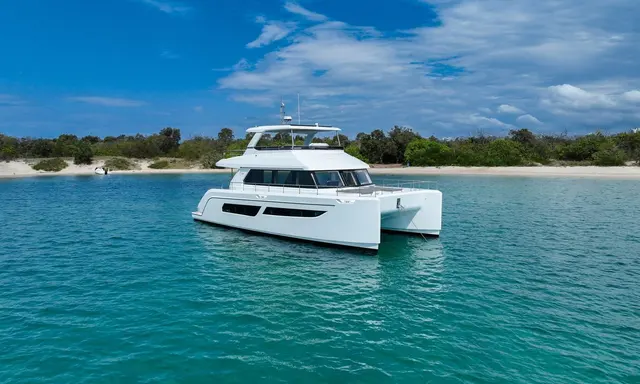
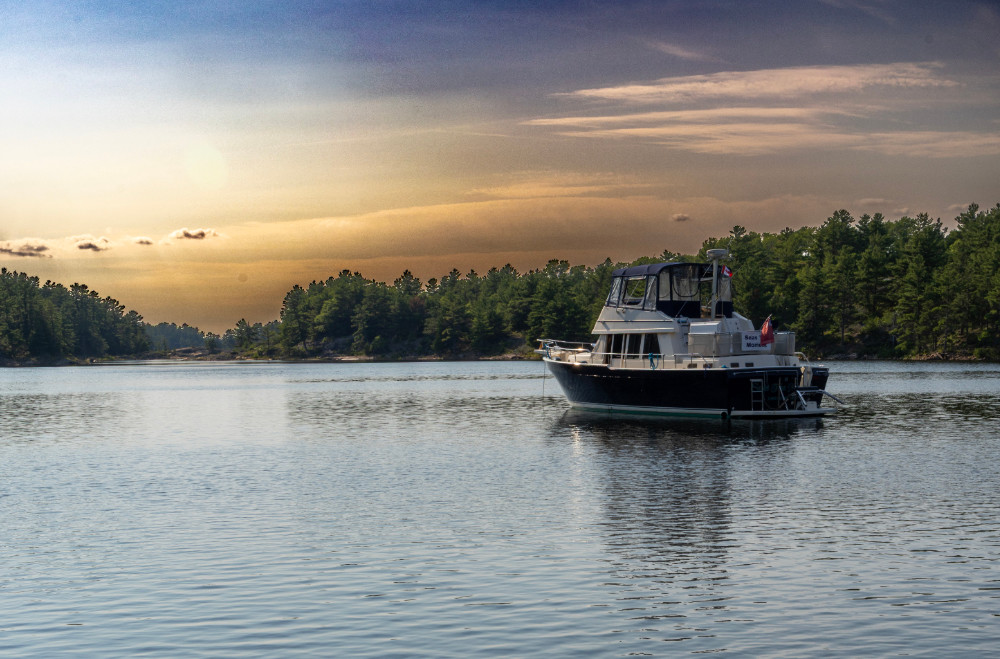
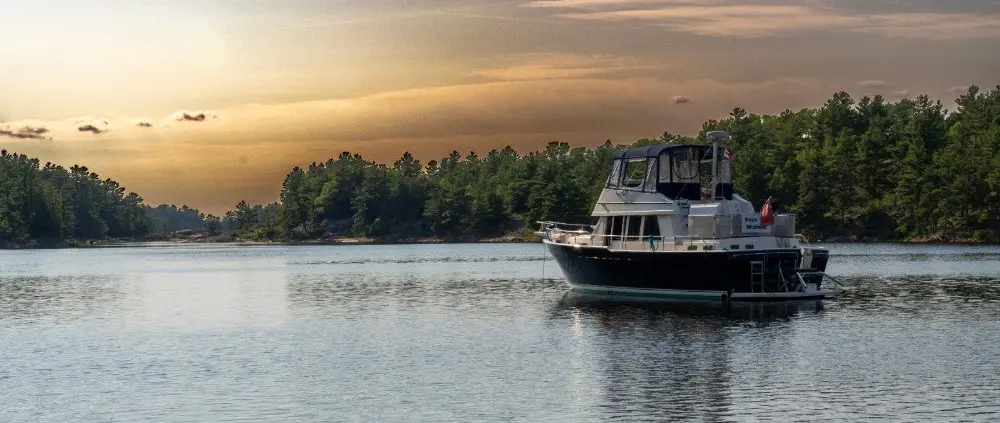
The Todds' yacht is identified as SEAS THE MOMENT. Berthon reports that the couple have completed their Great Loop adventure and reproduces a selection of images they supplied. The photograph accompanying this article shows the vessel at anchor in McGregor Bay. It is an important distinction that the story concerns a named boat and a completed voyage, rather than a general proposal for an itinerary that has yet to be undertaken.
The announcement does not provide a complete technical specification of the individual Mainship, a detailed passage log or a confirmed record of its fuel consumption. Those omissions mean that the story is best considered an account of a cruising experience rather than an engineering assessment of the yacht. The ability to follow a broad inland and coastal programme aboard a vessel of this size is nevertheless of interest to potential owners who wish to undertake extended cruising with a relatively small complement of people.
The scale of the Great Loop
Berthon describes the Great Loop as a circuit of approximately 6,000 nautical miles through eastern North America. The route can encompass inland rivers, canals, extensive freshwater lakes and sections of coastal waters. Unlike a voyage undertaken principally to reach a single distant port, the attraction of the circuit lies in the variety of destinations and operating environments encountered along the way.
The quoted distance is an indication of the scale of the wider cruising programme and should not be treated as a verified measurement of the precise route followed by SEAS THE MOMENT. Individual yachts may take different routes or undertake additional excursions. The duration of a voyage also depends on the time the owners wish to spend at their destinations. The logistical arrangements for a continuously progressing delivery passage would be quite different from those of a cruising programme in which the owners regularly remain at a particular location.
A different approach to sailing and motor yachting
The Berthon report approaches the subject partly through the experience of sailors who subsequently acquire motor yachts. Houghton describes his own transition between professional operation of a Swan 77 and a Marlow 80. The example helps explain why a cruising programme may influence an owner's choice of vessel more substantially than an earlier preference for a particular form of propulsion.
The characteristics of a suitable yacht for extended inland cruising differ in some respects from those of a yacht developed primarily for ocean sailing. The availability of suitable propulsion when moving through relatively confined waters, the arrangement of the working helm and the accessibility of the deck can become especially significant. For owners who intend to spend much of their time exploring different destinations, the balance between travel and time spent aboard at rest may also influence the selected accommodation and equipment.
The Hudson River and canal systems
The report describes a commonly used sequence in which yachts travelling from the Atlantic coast reach the Hudson River and subsequently enter canal routes towards the Great Lakes. These waterways offer a distinctly different setting from open-sea cruising. The boat must be operated in relation to the facilities and requirements of the particular waterways, and the nature of the passage may change over relatively short distances.
For a yacht owner evaluating the suitability of a vessel, overhead clearance, underwater dimensions and the availability of manoeuvring space are important considerations. The relevant dimensions and restrictions should be established from current authoritative information for the route chosen. A yacht's overall length alone does not determine whether it can navigate every part of a canal system. The configuration of equipment above the deck may be particularly relevant to a boat that was originally specified for a different operating environment.
The Great Lakes and Georgian Bay
The owners' photographs reproduced by Berthon include locations in Georgian Bay, as well as the Mackinac Bridge in the Lake Michigan region. The image at McGregor Bay illustrates a more secluded cruising environment than that of the urban and commercial waterways elsewhere on the circuit. The report identifies the opportunity to remain in such locations as an important part of the experience.
Freshwater cruising can present requirements quite different from those encountered in a relatively sheltered marina or a coastal holiday itinerary. The actual conditions of the large lakes must be considered in their own right, irrespective of their classification as inland waters. Owners should obtain appropriate local navigation and weather information before undertaking a passage. The images provide an account of particular places visited by the Todds rather than a detailed set of navigation instructions for another yacht.
The transition into inland river cruising
Continuing south from the Great Lakes, the report describes the wider system of rivers and waterways leading towards the Gulf Coast. The Illinois, Mississippi, Ohio and Tennessee rivers, together with the Tennessee-Tombigbee Waterway, form important elements of the general route described. This introduces a different relationship between a cruising yacht and commercial marine activity.
An owner preparing a vessel for this environment needs to consider the practical arrangements for communicating with appropriate authorities and other vessels, as well as the facilities available at intended stopping points. The required navigation information and operating procedures should be obtained from current official sources. A general account of a completed voyage cannot establish whether every location will be accessible under the conditions encountered by a later yacht. The changing nature of the waterways is one of the reasons why advance preparation must be combined with the ability to adapt the programme.
Reaching the Gulf and Atlantic coasts
Berthon's description follows the general circuit through Mobile Bay and onwards into the coastal cruising areas of Florida. Depending on the route chosen, yachts can subsequently reach the Atlantic Intracoastal Waterway and continue northwards towards their original cruising region. These coastal stages differ from the inland river sections, particularly in relation to the exposure of the vessel to open water.
Owners should consider the boat's suitability for the full range of anticipated conditions, rather than select equipment exclusively with the inland portion of the programme in mind. A yacht intended to undertake extended coastal passages may require a different level of preparation from one used principally for local harbour cruising. The availability of suitable places to stop, fuel and arrange maintenance is a practical part of the overall plan. The actual route should reflect the capability of the individual boat and the experience of its crew.
Accommodation and everyday life aboard
A 43-foot motor yacht represents a relatively compact platform for a voyage extending across a large part of a continent. Its suitability as a long-term home depends on the actual arrangement of accommodation, storage, galley and working areas. A couple undertaking an extended cruise may place different priorities on these spaces from those of an owner expecting to carry a larger group of guests.
The value of an enclosed living environment can become particularly apparent where the yacht is used across different seasons and climates. The boat must also provide convenient access to the systems that require regular attention during the voyage. A prospective owner should examine the maintenance accessibility of the actual vessel and establish how comfortably it can accommodate the equipment and personal items required for extended living aboard. The reported voyage demonstrates the use of one Mainship for that purpose, not a guarantee that every boat of the same model offers an identical experience.
Ownership decisions beyond the purchase price
An extended cruising programme requires planning for expenditure throughout the voyage. Fuel, marina use, maintenance and the possible need for replacement equipment are significant considerations when comparing a motor yacht with a sailing yacht. A purchase decision should be based on the requirements of the proposed operation and the condition of the individual vessel rather than a general assumption about the cost of cruising on a particular type of boat.
The Berthon feature does not disclose the Todds' actual voyage budget or provide verified fuel figures for SEAS THE MOMENT. An owner considering a similar programme should therefore prepare a separate assessment using the specifications and operating information of the chosen boat. Appropriate allowances for work identified during inspection and for interruptions to the intended programme can help establish a realistic financial picture. The value of the reported experience is primarily in identifying the kind of voyage for which the boat was used.
An individual example of long-distance cruising
SEAS THE MOMENT's completed Great Loop provides a specific example of a 43-foot motor yacht being used for an extensive cruising programme encompassing diverse inland and coastal settings. The official article from Berthon combines the broker's perspective with photographs contributed by the people who completed the voyage.
Luxury Yacht Guide has not independently inspected the vessel, verified the route log or established the precise dates of each stage of the trip. The information reported here comes from Berthon's 11 November account, and the image of the yacht at McGregor Bay is attributed to Andy and Catherine Todd through that publication. Owners considering a similar venture should evaluate their intended route and vessel individually. The experience illustrates the importance of choosing a yacht for the places and manner in which its owners actually intend to use it.
Related Luxury Yacht Guide reporting
- ILIAD 53F Syndicate Offers Two Australian Cruising Bases
- Princess C48 Deck Saloon Brings a Sheltered Option to Sports Cruising
- Maritimo Maps Dubai Island Cruising for Luxury Motor Yacht Owners
- Archipelago Delivers Second 47-Foot Explorer Catamaran
Primary reporting and image credit
Primary source(s): https://www.berthoninternational.com/berthon-blog/trading-the-wind-for-the-waterways-the-great-loop/. Andy and Catherine Todd / Berthon International; owner photograph supplied for the published Great Loop feature, showing SEAS THE MOMENT at McGregor Bay. Image is used only for correctly attributed factual editorial coverage and never represented as open-licence stock photography. Original source image.