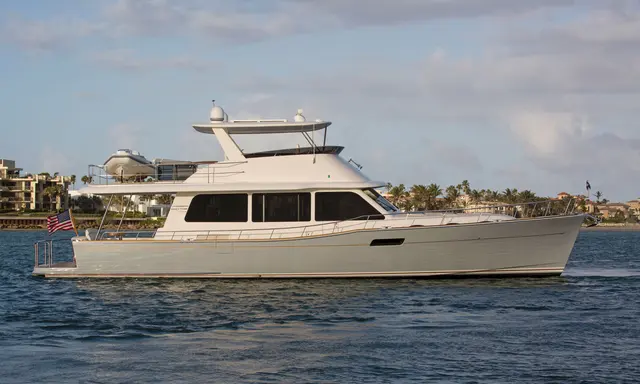
Overall growth hides a split between large yachts and mainstream boating
Total industry revenue increased from €8.60 billion to €8.72 billion in 2025, keeping the Italian sector in positive territory. Much of that resilience came from superyachts, exports and marine equipment rather than from the smaller and medium-sized craft bought by a broader owner base.
Confindustria Nautica reported declines of 9.2% for RIBs and outboard-powered boats and 7.5% for sailing yachts. Those figures matter to builders in the 12-to-24-metre market because they point to pressure on discretionary purchases among European middle- and upper-middle-income customers.
Exports and equipment remain major supports for the industry
Italian marine exports reached a record €4.4 billion, rising 2.6% compared with 2024. The equipment and instrumentation sector generated €2.03 billion, representing 23% of total industry revenue and showing how strongly the supply chain contributes beyond finished boats.
Roughly half of equipment-sector demand comes from Italian yards and half from foreign builders. That balance gives component manufacturers some insulation from weakness in any one domestic segment while keeping Italy closely integrated into international yacht production.
Production is concentrated in a handful of specialist regions
The report identifies five main production hubs: the Liguria-Tuscany cluster, the Adriatic area, Lombardy, Naples and Turin. Together they account for about 90% of Italian marine production, combining boatbuilding, engineering, interiors and specialist component suppliers.
Industry leaders also highlighted constraints on yard space and skilled labour, both of which can limit expansion even when demand exists. Direct employment has nevertheless doubled from about 16,000 people in 2013 to more than 32,000 today.
Companies still expect a better year ahead
Despite the weaker figures in mainstream segments, an internal industry survey found that companies serving the small-boat market expect growth of 5.3% next year. Engine and equipment companies were more cautious but still forecast expansion of 4.4%.
For LYG’s 12-to-24-metre sector, the numbers suggest a market that is not collapsing but is becoming more selective. Builders will need to compete harder on value, financing, efficiency and ownership costs while continuing to invest in design and technology.
Official sources: pressmare.it.