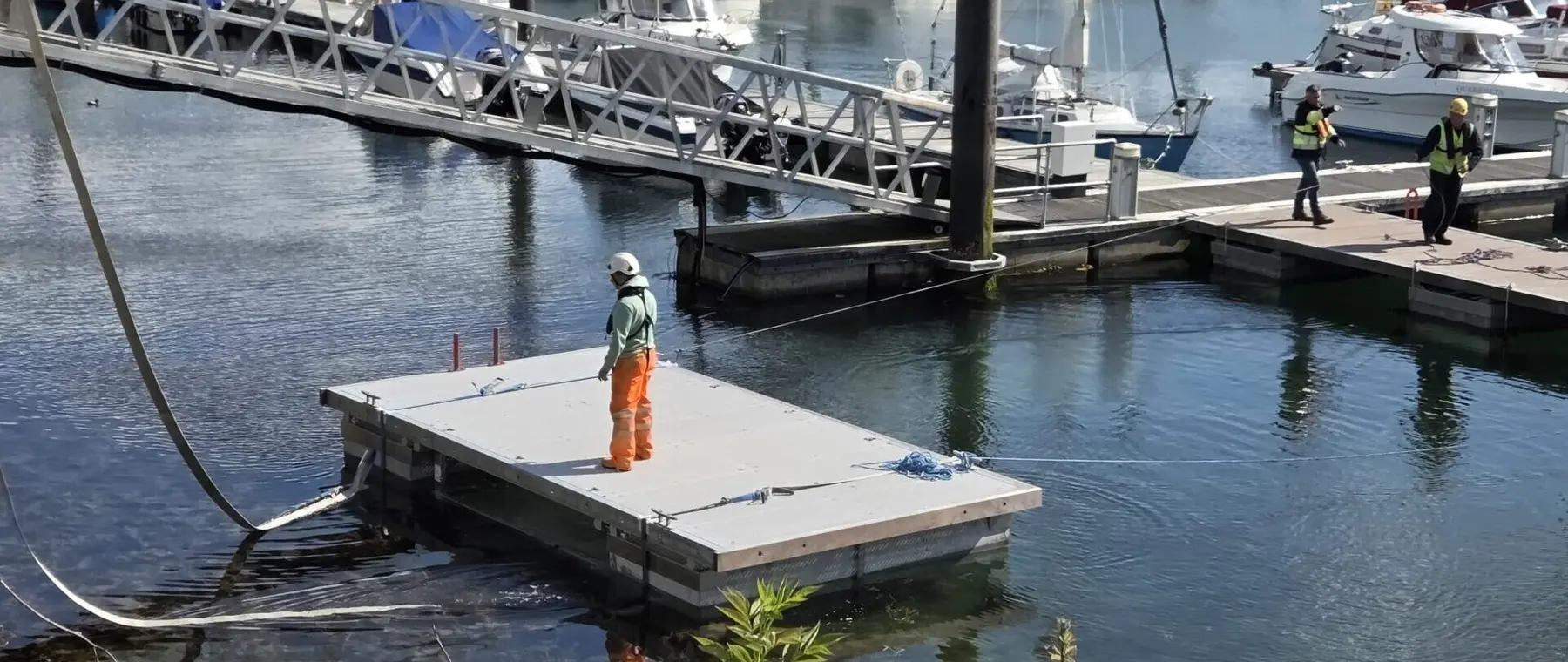
Inland and Coastal Marina Systems has outlined a programme of pontoon and waterfront products for the Southampton International Boat Show, taking place from 18 to 27 September 2026. The company will exhibit alongside The Yacht Harbour Association at stand H208 in the New Wave Hall, placing marina infrastructure alongside the boats and equipment normally associated with the event.
The announcement focuses on adapting floating structures to perform additional functions rather than only giving people a route to their berth. An oyster-supporting pontoon, habitat-enhancing seawall panels and glassfibre-reinforced concrete decking form the principal examples, each addressing a different aspect of the working waterfront.
A pontoon that can also support native oysters
The company's oyster pontoon was developed in collaboration with Ulster Wildlife for native-oyster restoration work. A submerged platform is incorporated beneath the deck to give juvenile native oysters a place to establish, while the structure continues to serve as a normal piece of marina infrastructure above the waterline.
The claim concerns the design's potential to support restoration rather than a published measurement of oyster population growth at every installation. Any project would need to consider local environmental conditions and appropriate restoration partners, because a platform alone does not guarantee that the species will thrive in every harbour.
Living Seawalls add habitat surfaces
The Southampton presentation will also include Living Seawalls, described by Inland and Coastal as textured panels for marine structures. Complex surfaces are intended to offer habitat for invertebrates, seaweeds and small fish, in contrast with the relatively uniform surfaces found on some conventional walls and pontoons.
For marina operators, the practical proposition is to integrate habitat features into infrastructure they already maintain or plan to build. That is different from claiming that any single wall panel compensates for wider environmental impacts; the installation, maintenance requirements and local ecological objectives still need independent assessment for each site.
Decking receives a durability focus
Above the waterline, the company will present glassfibre-reinforced concrete, or GRC, decking with a timber-effect finish. It positions the material as a hard-wearing alternative to traditional timber intended to resist demanding marine conditions while reducing the routine maintenance associated with exposed decking surfaces.
Decking decisions affect walking comfort, grip, loading, replacement programmes and long-term maintenance costs for berth holders and harbour managers. The announcement does not supply a universal service-life figure or an installed price, so buyers should ask for project-specific specifications instead of treating a broad durability claim as a procurement guarantee.
The show includes a technical talk
Inland and Coastal says it will sponsor daily exhibitor drinks on the Yacht Harbour Association stand and host a hub talk on Tuesday 22 September. The talk will examine how innovative pontoon design may help marinas derive more use from their waterfront infrastructure, extending the stand's product displays into a technical discussion.
The company's head of business development, Jon Challis, identifies oyster restoration, habitat provision and durable surfaces as examples of additional roles a well-designed pontoon can perform. The stated aim is to prompt discussions with marina operators about individual projects, not to announce that every harbour will adopt the same configuration.
Existing marinas are included
The firm's invitation covers new marina developments, pontoon extensions, improved access and upgrades to existing structures. That broadens the relevance beyond large new-build projects: owners may encounter such changes during the routine refurbishment of facilities where their vessels are already berthed.
Changes beneath and around berths can affect access arrangements and the timing of work, so operators need to plan installations around everyday marina use. The release offers potential solutions but does not specify disruption schedules or completed performance results for a particular Southampton customer, and those details must be resolved separately.
Environmental benefits require local context
Oyster-supporting platforms and Living Seawalls address different forms of habitat, with distinct environmental requirements and stakeholders. Their inclusion in a show programme indicates that marina suppliers are increasingly presenting ecological functions as part of equipment design, but it is not evidence that installation alone will restore an entire coastal ecosystem.
Marina managers evaluating the products should therefore consider water quality, native species, cleaning methods and permissions alongside conventional engineering requirements. Owners can ask whether ecological features change how pontoons are maintained or used, while leaving technical suitability and any environmental claims to project-specific evidence.
What visitors can inspect at Southampton
Inland and Coastal will be available at stand H208 throughout the 18–27 September show to discuss these products and other floating-infrastructure projects. The scheduled 22 September discussion offers a separate opportunity to explore design principles beyond the images and descriptions presented at the exhibition stand.
For Luxury Yacht Guide readers, this is a marina-equipment story rather than a yacht launch or a claim of completed restoration results. The confirmed development is the company's show programme, with clearly identified products and a dated technical presentation for waterfront operators and interested berth holders.