Django 7X prevails in a close offshore battle
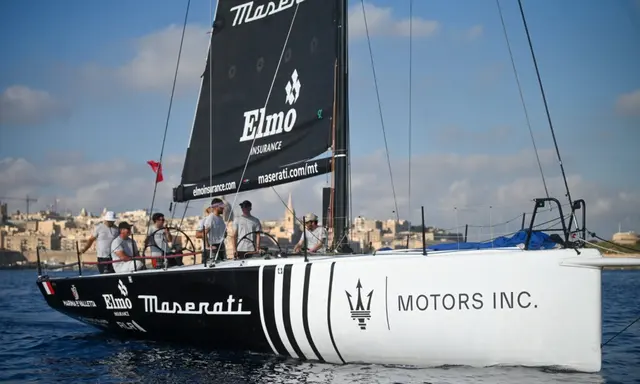
Giovanni Lombardi Stronati's Wallyrocket 71 Django 7X has crossed the finish of the 2026 Rolex Middle Sea Race in Malta ahead of rival Balthasar after an extraordinary duel around Sicily. The Italian yacht reached Marsamxett Harbour at 21:02 on October 19, roughly 39 minutes before the Mills 72 that won the race overall in 2025.
The result was documented in the Royal Malta Yacht Club's October 20 update, which emphasises that the main overall IRC prize had not yet been decided. The finishing order between these two yachts was a confirmed on-water result, not a declaration of the winner of the entire 107-boat fleet.
Two high-performance yachts trade the advantage
The Wallyrocket 71 and Mills 72 raced in close company around much of the 606-nautical-mile course, sometimes sailing within sight of one another. After the first major landmarks, their corrected-time separation remained small enough to make tactical decisions and changes in wind strength particularly important.
At Capo Passero, Django held a seven-minute advantage on corrected time, extending it to 19 minutes around Messina. Balthasar reduced the margin to about three minutes and 36 seconds between Messina and Stromboli, showing how quickly a contest can shift around the island.
Favignana becomes a turning point
During the passage toward Favignana, Balthasar took the initiative on the water as both crews worked along Sicily's western sector. Near San Vito lo Capo, Django was able to exploit a change in conditions and regain the upper hand heading farther south.
The Royal Malta Yacht Club says Django's corrected-time advantage increased again at Favignana and Pantelleria and approached one hour by the Lampedusa transit. These intermediate calculations explain the strength of the final result but do not replace the official handicap standings issued for the class.
Vasco Vascotto explains the stronger-wind advantage
Vasco Vascotto, serving as tactician aboard Django 7X, said the stronger breeze suited their boat particularly well after Favignana. The comment is consistent with a race in which small differences in hull form, trim and sail selection can create meaningful changes in pace over many hours.
Bouwe Bekking aboard Balthasar likewise acknowledged Django's speed advantage in stronger conditions and on reaching legs. Both crews had to combine tactical judgement with physical endurance while moving quickly around the offshore course.
A race within the broader Malta competition
The Rolex Middle Sea Race begins at Malta's Grand Harbour and follows a counter-clockwise route around Sicily, passing Stromboli, the Egadi islands, Pantelleria and Lampedusa before returning to Malta. The varying exposure of these legs creates opportunities for strong winds, calms and abrupt changes in sea state.
Black Jack 100 had already taken monohull line honours on October 19, but that 100-foot yacht sits outside Luxury Yacht Guide's normal twelve-to-twenty-four-metre fleet category. Django 7X and Balthasar are approximately 21–22 metres, making their close result more directly relevant to this publication.
Class result becomes clearer before the overall title
By the October 20 update, officials said two yachts remained to finish in IRC 1 but neither could beat Django 7X on corrected time, securing its position at the top of the class. The wider overall title remained unsettled because many yachts across other divisions were still at sea.
Provisional overall standings can change substantially as smaller boats complete the race in different weather. Readers should distinguish a division win from line honours and from the overall IRC award, which are based on different measures of performance.
Endurance matters as much as pace
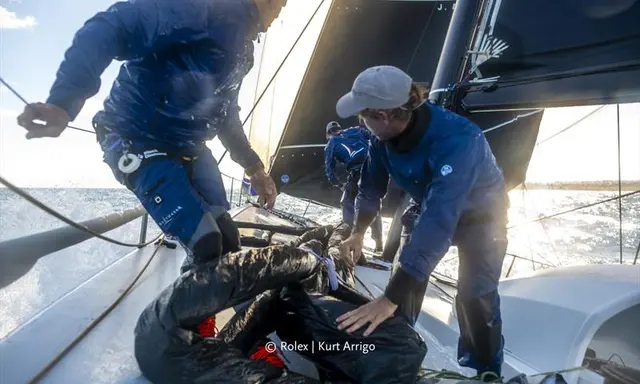
Racing for hundreds of miles in changing wind and swell places significant pressure on crews, who must maintain sail handling and decision-making through limited rest. Offshore preparation includes checking rigging, communications, safety equipment and the ability of the crew to respond to changing conditions.
The close Django–Balthasar contest illustrates the challenge of using a fast 70-foot yacht efficiently over a course much longer than a short coastal regatta. Performance depends on routing, equipment reliability, team coordination and endurance, not merely the theoretical top speed of the hull.
Official results and original race imagery
The Royal Malta Yacht Club's October 20 report confirms the time of Django's finish, its narrow margin over Balthasar and the class standings at that stage. The accompanying image comes from the event organiser's 2026 media photographs.
The overall competition was continuing when this report was issued, so its final winner is not stated here. Subsequent classification updates should be taken from the race committee's published results rather than inferred from the first yachts to return.