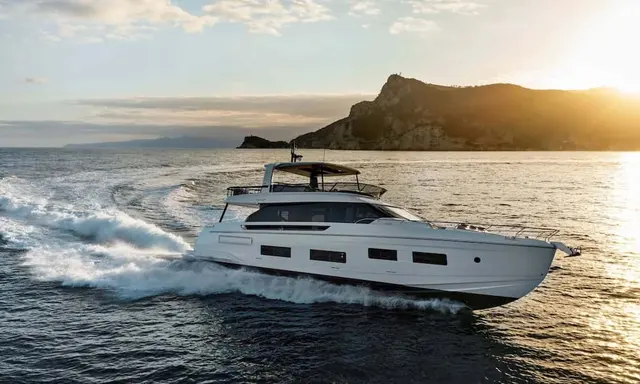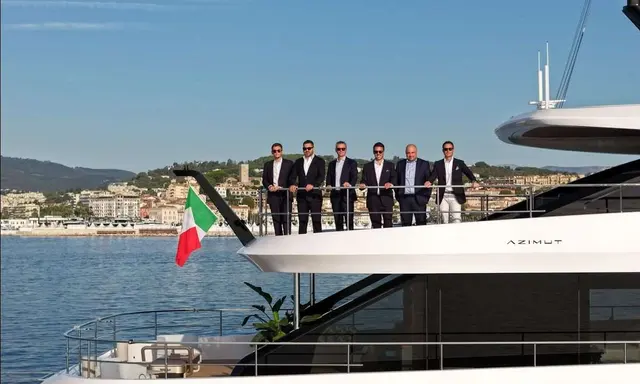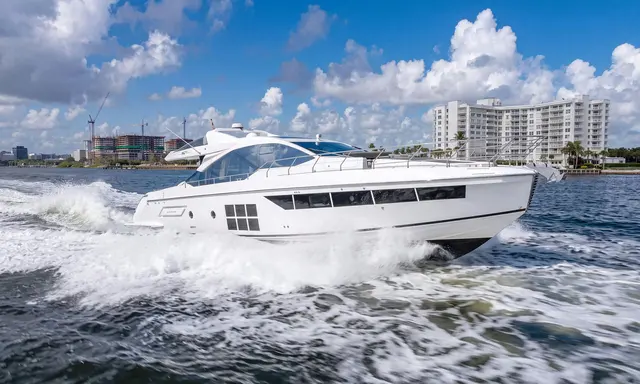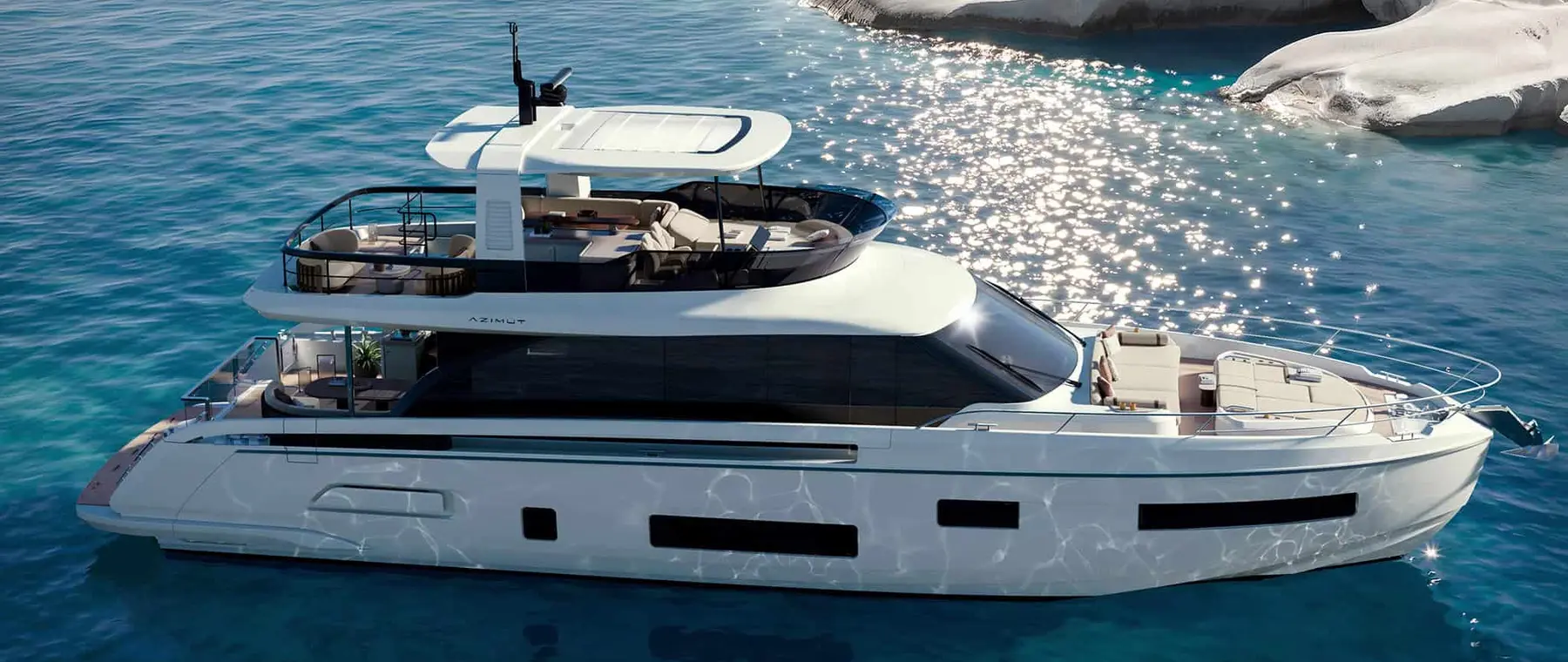
Azimut has expanded its Fly series with the new Fly 70, which makes its world premiere at the Cannes Yachting Festival 2026. At 21.47 metres overall and 5.46 metres in beam, the model sits firmly inside the large luxury-yacht market below the 24-metre threshold.
The new model brings together exterior design by Alberto Mancini and interior architecture by Fabio Fantolino, continuing a collaboration already seen elsewhere in the Fly range. Azimut is positioning the Fly 70 around family use, social spaces and closer contact with the water rather than simply adding volume to an established flybridge formula.
A new point in the Fly range
The Fly 70 slots between the 20.98-metre Fly 68 and the 22.69-metre Fly 72 in Azimut's current line-up. That positioning gives buyers another step in the range while keeping the yacht comfortably below 24 metres overall.
The hull was developed by P.L. Ausonio Naval Architecture with Azimut's research and development department, while the structure combines GRP with carbon fibre in selected areas. Azimut quotes a full-load displacement of 44.85 tonnes and CE Category A certification for the model.
Two cockpit layouts for different styles of use
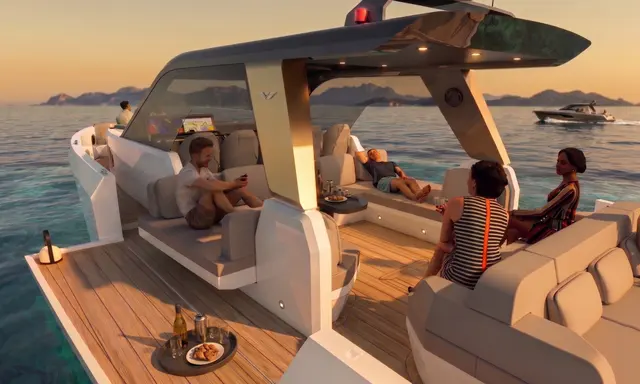
One of the Fly 70's defining features is the choice between two aft cockpit concepts. The Terrace Cockpit shown at Cannes uses a transparent aft parapet, a stern-facing arrangement and a dining table for eight to create an elevated social area with an uninterrupted view over the water.
The alternative Beach Cockpit takes a more direct approach to waterside living by opening the transom and lowering the aft bench to create a sunpad close to water level. The two layouts give owners a meaningful choice between a more conventional terrace-style dining space and a stern configured around swimming and access to the sea.
A three-zone flybridge and open main deck
Above, the flybridge is divided into three functional areas rather than treated as a single open deck. A forward sunpad sits beside the helm, a central C-shaped dinette is paired with a serviced wet bar, and the aft section is kept free of fixed structural constraints so it can take freestanding furniture.
On the main deck, Fantolino's interior architecture separates conversation and dining areas without breaking visual continuity through the saloon. A slatted screen in wood and brushed bronze partially shields the galley, allowing it to remain discreet without becoming completely enclosed.
Four guest cabins below deck
The lower deck accommodates eight guests in four cabins, with separate quarters for up to two crew. The full-beam owner's suite is positioned amidships, while the wider arrangement gives the Fly 70 the accommodation expected of a substantial cruising yacht without crossing into the 24-metre-plus category.
Azimut lists three guest head compartments plus a dedicated crew head, together with 1,000 litres of fresh-water capacity. The layout is therefore aimed at owners who expect to spend meaningful periods aboard rather than use the yacht only for short day trips.
Twin IPS 1350s and a 31-knot maximum speed
Propulsion comes from twin Volvo Penta IPS 1350 units, each rated at 1,000hp. Azimut quotes a maximum speed of up to 31 knots and a cruising speed of up to 25 knots, with fuel capacity listed at 3,900 litres.
The Fly 70 also becomes the first model to receive a new element of Azimut's Silent Technology programme for generator operation. The builder says the system combines a particulate filter, silencer, ceramic blocks and a nitrogen-oxide catalyst to cut particulate emissions by 95 percent while reducing sound pressure by more than 5 dBA.
Why the Fly 70 matters below 24 metres
The Fly 70 arrives in a part of the market where owners increasingly expect the outdoor living areas, crew separation and accommodation once associated with larger yachts. Its two cockpit concepts and flexible flybridge are therefore as important to its positioning as the headline performance figures.
For Luxury Yacht Guide, the model is also a clear example of how much capability is now being packaged below 24 metres. At 21.47 metres, it remains well inside this publication's remit while offering four guest cabins, professional crew accommodation and multiple exterior living zones in a production platform.