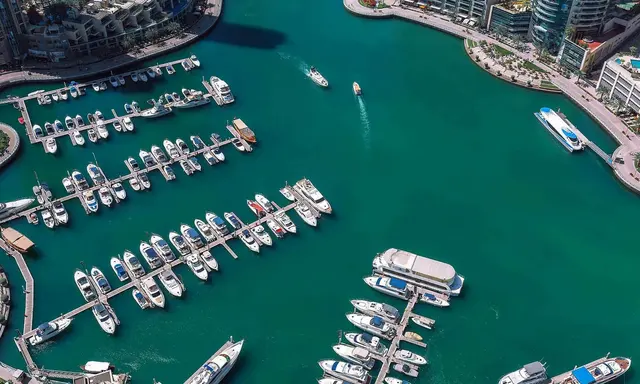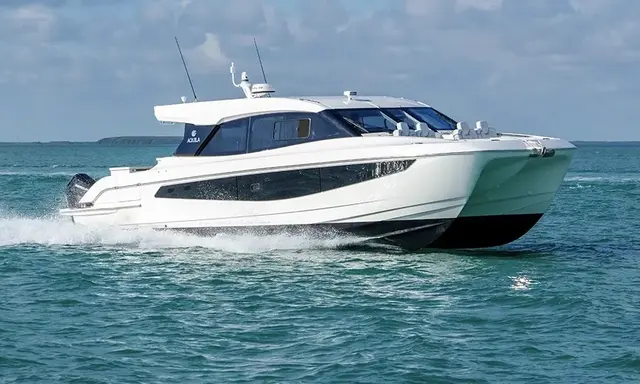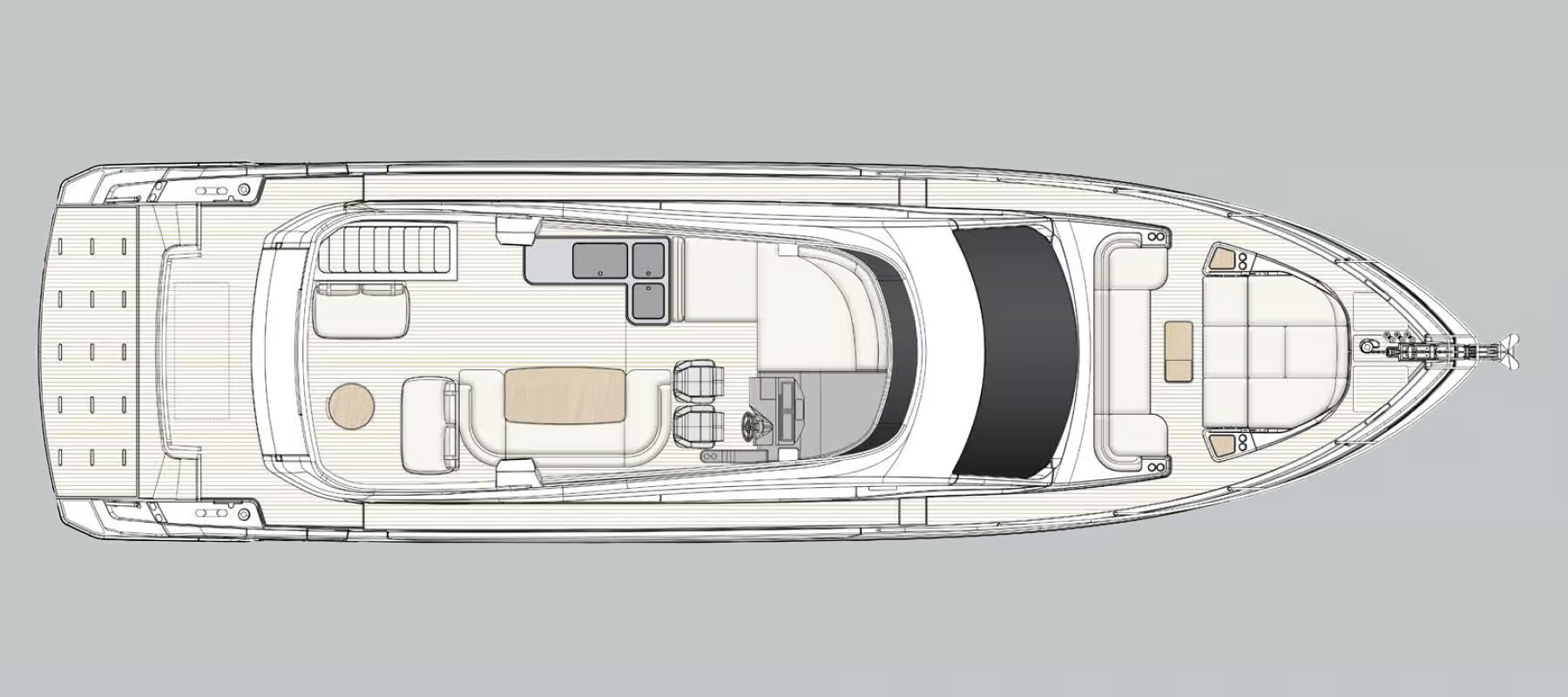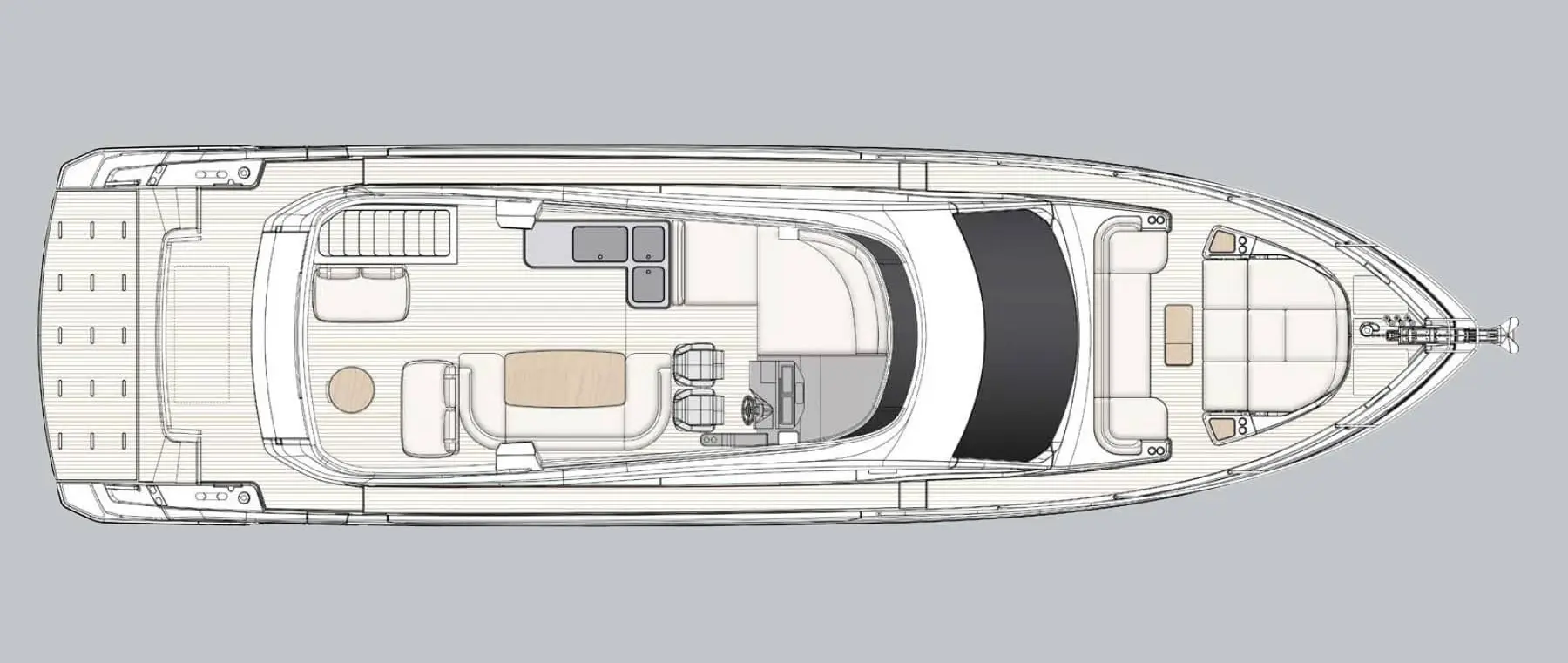
Azimut Yachts has confirmed a four-model display at the Dubai International Boat Show, running from 25 to 29 November 2026 at Dubai Harbour. The Italian builder's official exhibition page names the Seadeck 6, Fly 53, Fly 62 and Fly 82, giving prospective owners a comparatively broad view of how Azimut approaches mid-size motor yachts and larger flybridge designs. Three of these vessels sit in the 12-to-23.99-metre sector at the heart of Luxury Yacht Guide: the Seadeck 6 measures 17.25 metres, the Fly 53 16.78 metres and the Fly 62 19.22 metres. The Fly 82, at 24.79 metres, is a larger companion in the display and should not be confused with a sub-24-metre yacht. The distinction makes the show unusually useful for buyers assessing where extra size, accommodation and operational complexity begin to alter the ownership proposition.
The builder's verified line-up
Azimut's own Dubai exhibition page identifies the four models by name and places the show at Dubai Harbour. It also lists afternoon and evening opening times rather than suggesting that all-day access is automatic: 15:00 to 20:00 on Wednesday, Thursday and Sunday and 15:00 to 21:00 on Friday and Saturday. Visitors should check the organiser's current access arrangements and obtain any necessary appointments. The official page is proof that the models are in the builder's announced display programme, not evidence of any sale or new launch during the exhibition. It does not supply an individual sale price for each yacht, a guarantee of immediate delivery or a list of equipment installed on the displayed hulls. Those questions need to be answered separately by authorised representatives. The show provides the opportunity to compare boats in person; it does not remove the need for written technical diligence.
Seadeck 6: the alternative to a conventional flybridge
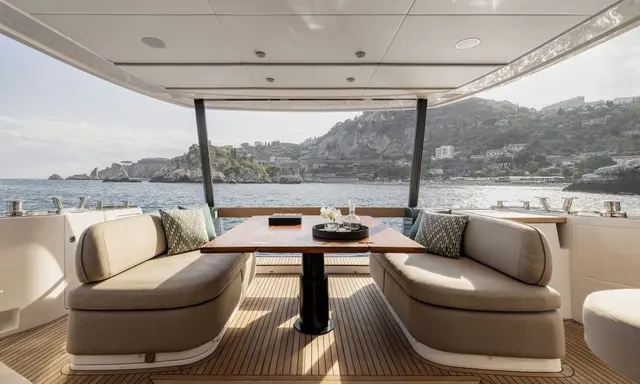
The Seadeck 6 occupies a distinct part of the builder's range. At 17.25 metres overall, it combines three guest cabins with a separate crew space in the manufacturer's standard published data. Its maximum beam is 5.05 metres. Azimut uses the Seadeck name to communicate a stronger connection to the water and a modern approach to leisure space, particularly around the aft social areas. For an owner who places a high value on time at anchor, easy access to swimming and entertaining beside the water, this configuration is worth inspecting against the more traditional flybridge alternatives. A buyer should ask how the exterior spaces work with a tender deployed, where equipment is stowed and how guests move between cockpit and interior when the vessel is loaded for a cruise. The attractiveness of the aft deck is only part of the question; its practical access and serviceability count just as much.
Fly 53: three cabins in a different package
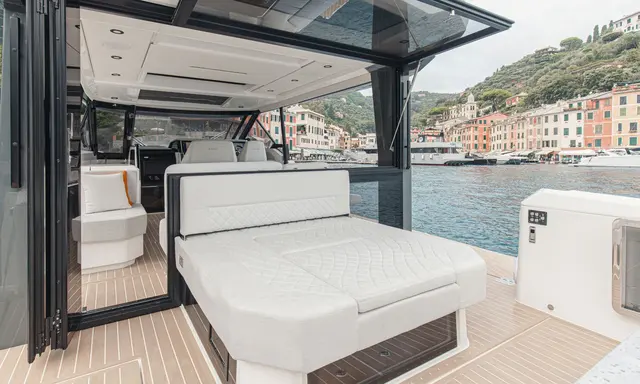
The Fly 53 has a published overall length of 16.78 metres and beam of 4.95 metres, putting it close to the Seadeck 6 in length while offering a different spatial arrangement. Azimut's model information lists three cabins plus a crew space, so the distinction is not simply how many people can sleep aboard. The location of exterior seating, flybridge amenities, galley, steering positions and circulation paths can change the owner's experience. Visitors comparing the two boats should assess how the interior feels in direct sunlight and how effectively the yacht protects guests in difficult weather. Check where the lower helm sits relative to the saloon and whether the upper helm remains comfortable for long periods. Because these yachts are relatively close in nominal length, the difference in use may be larger than the numerical dimensions suggest.
Fly 62: a step toward greater volume
At 19.22 metres overall, the Fly 62 moves into a larger category for private ownership without leaving the sub-24-metre segment. Azimut lists a beam of 5.09 metres and a three-cabin arrangement plus crew space. The additional length compared with a 53-foot model can create opportunities for more generous living areas or different deck circulation, but it should not be assumed to deliver every conceivable advantage. Extra length can also influence berthing options, lift-out availability, maintenance costs and crew workload. Owners should examine what additional volume is actually gained in the cabins, saloon, flybridge and technical spaces. It is especially valuable to inspect side-deck widths, service compartments and tender arrangements side by side. A sales presentation that focuses only on overall size may fail to identify the operational difference between the models.
Why the Fly 82 belongs in the comparison
Azimut's Dubai line-up includes the larger Fly 82, which the manufacturer's model information places at 24.79 metres overall. That is outside Luxury Yacht Guide's normal vessel-size boundary, but its presence at the same display offers a useful comparison. Buyers can see the point at which cabin arrangements, crew expectations, machinery, deck systems and operating requirements may shift toward a different ownership model. The fact that a yacht is slightly longer than 24 metres does not, on its own, determine all of its legal obligations, which depend on the applicable jurisdiction and certification. However, it is a practical reminder to obtain independent advice about registration, coding, crew and berth requirements before selecting a size. For readers concentrating on the Seadeck 6, Fly 53 and Fly 62, the Fly 82 functions as a larger reference rather than the subject of this report.
Published performance figures need their context
Azimut's public model comparison data includes fuel consumption and range figures for several yachts under stated cruise conditions. For example, the manufacturer lists the Seadeck 6 at a slow-cruise condition of 18.5 knots with a specified range of 315 nautical miles and a faster cruise condition of 24.8 knots with a shorter published range. Such figures should be treated as manufacturer's reference points, not as guaranteed outcomes for every customer. Fuel usage depends on load, trim, hull condition, weather, installed propulsion and cruising style. An owner planning passages in the Gulf should calculate a reserve policy that accounts for sea conditions, temperature and alternative ports. When comparing two yachts, it is essential to use consistent assumptions and the same definition of fuel reserve. A difference that looks impressive in a brochure may narrow or widen substantially in actual service.
Handling at Dubai Harbour is a useful test
The exhibition setting has practical relevance beyond the display of beautiful boats. The region's marinas, high temperatures and seasonal weather impose requirements on climate control, deck surfaces, machinery cooling and operation in busy waters. Prospective buyers should ask about helm visibility, camera placement, docking aids and access to lines at bow and stern. A longer flybridge yacht may offer additional living space while requiring more planning for berthing and manoeuvring. The manufacturer's representatives should be able to identify the propulsion and handling systems on each displayed yacht and explain how they respond if an electronic controller fails. Owners should also clarify whether they intend to operate with professional crew, particularly if the yacht will host frequent guests or undertake extended passages. Ease of handling should be demonstrated rather than assumed from a product description.
The energy and comfort questions
Air conditioning and domestic electrical demands can dominate the at-anchor experience in a hot climate. Compare installed generator arrangements, electrical distribution, refrigeration and battery capacity across the three core LYG models. Ask which systems can operate while shore power is unavailable, how long they can run and what alarms alert the crew to a developing fault. It is also worth examining exterior shade, glazing treatments and ventilation throughout the yacht. A larger window can increase the sense of space while adding solar heat gain, so the suitability of the cabin environment should be judged in actual operating conditions. If owners will cruise outside the Gulf, they should consider the different demands of Mediterranean or northern European seasons. The most luxurious choice is the one whose equipment suits the planned programme, not automatically the longest hull.
Ownership costs are not linear with length
A buyer moving from a 16.78-metre to a 19.22-metre yacht should not calculate the annual budget by scaling every expense proportionally. Some charges depend on length bands, others on beam, gross tonnage, installed power, berth location or actual use. Crew costs can change abruptly if the owner decides that additional help is needed. Haul-out facilities may be scarce for certain dimensions, and a particular marina may offer limited annual berth availability for wider yachts. Obtain actual quotes for the intended home port and compare the same annual cruising profile across models. Ask about the servicing of stabilisers, air conditioning, machinery and exterior equipment, and identify any specialised items requiring factory support. A thoughtful model comparison includes all of these operating factors alongside the initial purchase and equipment budget.
What to request from Azimut at the show
The best outcome from a Dubai visit is a set of accurate, dated documents for each yacht under consideration. Ask for general arrangement drawings, the installed engine and propulsion configuration, a list of standard and optional equipment, detailed tank capacities and current dimensions. Obtain an indicative delivery schedule and confirm whether a quoted price refers to the exact display hull or a new production slot. Inspect machinery spaces, helm arrangements, cabin privacy and tender handling. If possible, arrange a separate sea trial with a representative vessel, recording the load and conditions under which any performance data are gathered. Clarify service arrangements in the region and abroad, including warranty procedures and the availability of spare parts. An exhibition can simplify an owner's shortlist, but professional inspection and contractual checks remain essential.
Dubai's place in the international yacht calendar
The 25–29 November event gives Azimut an opportunity to present different styles of ownership at the same Middle Eastern venue, from the social Seadeck arrangement to conventional flybridge cruising. For buyers operating boats between Dubai, nearby Gulf destinations and overseas seasonal bases, the presence of authorised representatives provides a practical forum for discussing configuration and support. The confirmed facts are the dates, venue and four listed yachts. No unannounced regional premiere, commercial order or final performance achievement should be inferred from the exhibition listing. The news is the manufacturer's actual display programme and the opportunity it creates for meaningful side-by-side comparisons. Among the yachts below 24 metres, the Seadeck 6, Fly 53 and Fly 62 present three distinct points on the luxury motor-yacht spectrum.
Sources and image credits
Reporting based on Azimut Yachts official Dubai International Boat Show 2026 event page names the four yachts and dates.
Lead photograph: Azimut Fly 62 as photographed for the builder's official model gallery; manufacturer archive image, not a photograph taken at the November 2026 Dubai exhibition. © Azimut Yachts / Azimut-Benetti Group and original photographer. First-party official model image with original rights retained. Original official image source.