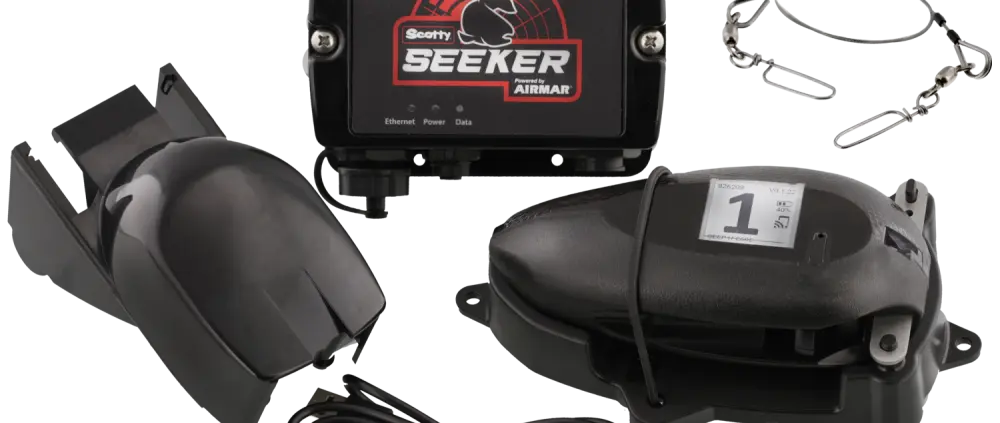
AIRMAR and Scotty Fishing Products have expanded the Seeker probe system with Environmental Optics channels that add light intensity and water-colour information to the existing depth, speed and temperature data. The new measurements are delivered through the Seeker app on compatible multifunction displays and mobile devices.
The probe now looks beyond depth and temperature
The new light-intensity channel measures how much light reaches the probe at fishing depth, while the colour-rating channel reports the dominant light character in Kelvin values. Together they give anglers a more direct view of the conditions in which a lure is actually being presented.
Environmental light changes with depth, cloud, water clarity and time of day, so surface conditions can be a poor guide to what is happening beside the downrigger ball. The additional data is intended to help anglers make more informed lure-colour and presentation choices.
Existing Seeker data remains central
Seeker continues to report probe depth, speed-through-water and fast-response water temperature, including thermocline information as the probe descends. AIRMAR’s Gen2 paddlewheel supplies the speed measurement, while the hydrophone link sends probe data back to the vessel.
The system can update core measurements rapidly and supports multiple probes for anglers working several target depths. Combining environmental optics with those existing channels gives the operator a richer record of why one depth or presentation may be producing more fish than another.
The update is available without new probe hardware
AIRMAR says the Environmental Optics capability is being unlocked without increasing the price of new systems and is available to existing Seeker owners. That approach makes the feature expansion more like a platform update than a replacement-product cycle.
For owners who already have compatible displays, the ability to add information without another dedicated screen also keeps helm clutter under control. Seeker integrates with a range of Garmin, Lowrance, Simrad, B&G, Furuno and Raymarine displays as well as mobile devices.
Fishing electronics continue to become more contextual
The update illustrates a wider trend in marine electronics toward combining sensor data rather than presenting isolated numbers. Depth and temperature are useful individually, but their value increases when they can be compared with speed, light and water-colour conditions at the same moment.
For luxury-yacht owners who use tenders or sportfishing platforms, this type of specialist sensing can turn the electronics package into a more analytical fishing tool. The feature remains niche compared with core navigation equipment, but it shows how rapidly onboard sensor ecosystems are expanding.