A Hudson River destination built for the Gilded Age
The Hudson Valley gives a luxury-yacht itinerary a very different rhythm from the Riviera or the Caribbean. River scenery, wooded slopes and historic estates are the attraction, and few houses explain the ambitions of America's Gilded Age as clearly as Vanderbilt Mansion at Hyde Park, New York. For guests interested in architecture, design and social history, the National Park Service property offers a rewarding excursion after a carefully arranged shoreside transfer from the yacht.
The estate sits above the eastern bank of the Hudson River, so the house and its landscape should be considered together. Its river-facing setting was part of the pleasure of owning it, not an incidental view added to the property. The experience is especially appealing to travellers who want to understand the origins of modern luxury and the people who made it possible. It is a curated historic site, however, not a contemporary private residence available for exclusive yacht visits.
Frederick and Louise Vanderbilt's more restrained world
Frederick Vanderbilt bought the Hyde Park property in 1895, when his surname was already associated with extraordinary American wealth. He and his wife Louise used it as a seasonal home, one in a broader collection of residences stretching from New York City to other established summer resorts. Although their family was famous for imposing homes, the National Park Service describes Hyde Park as unusually restrained in its exterior composition, even while the interiors displayed costly furnishings and sophisticated craftsmanship.
That distinction makes the mansion interesting to anyone who enjoys thoughtful design. Rather than producing luxury through sheer size alone, the architects used proportion, a commanding site and a disciplined arrangement of rooms. The Vanderbilts entertained through house parties, outdoor leisure, tennis, golf and visits to neighbouring estates. Their understanding of comfort included the freedom to move between homes, a private household organisation and an extensive landscape maintained by people whose work rarely appeared in glamorous accounts of the era.
The architecture of McKim, Mead & White
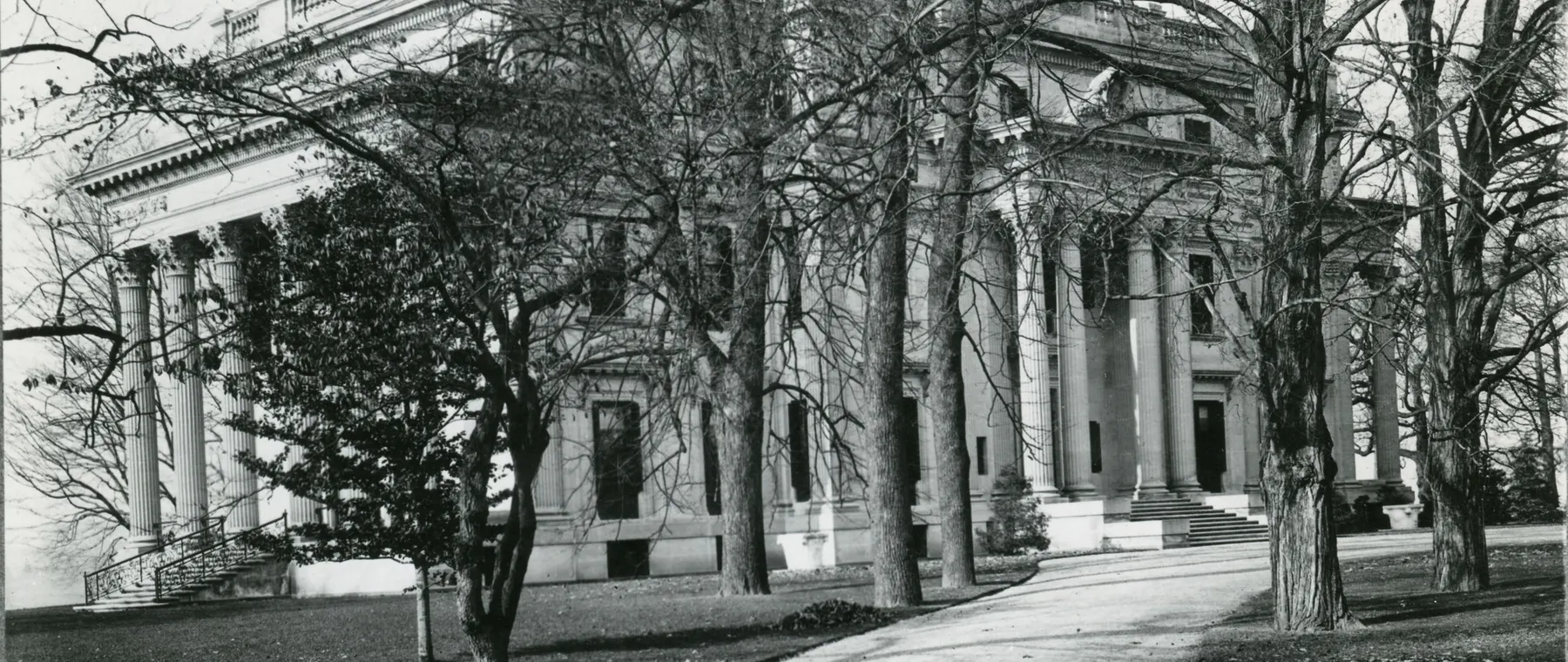
The distinguished architectural firm McKim, Mead & White designed the house for Frederick and Louise, drawing on a classical language of ordered forms rather than an extravagantly irregular silhouette. The principal rooms were organised around an elegant elliptical hall and a semicircular portico with views of the river and Catskill Mountains. This relationship between circulation, formal entertaining and scenery is one of the most revealing things to look for during the guided visit.
Inside, the house moves beyond outward restraint. The National Park Service describes exotic timber panelling, imported marble, textiles, French tapestries and architectural features acquired in Europe. Several specialist decorating firms contributed under the architects' direction, including Herter Brothers, A. H. Davenport, Ogden Codman and Georges Glaenzer. A guest with an interest in the materials and suppliers behind luxury design can spend an entire hour considering how that degree of finish was selected, purchased and assembled.
An interior made for receiving and living
Modern luxury can be measured through flexible, open-plan spaces and seamless technical systems; Gilded Age luxury was often expressed through a formal hierarchy of rooms. The reception spaces, dining room, living room and private quarters at Hyde Park show how social functions were separated and staged. The NPS guided tour presents approximately eighteen rooms across three floors, although some may be unavailable during preservation work. The experience is a rare opportunity to see historical furnishings in the places for which they were chosen.
Frederick and Louise also made choices that were personal rather than simply fashionable. The NPS history notes that they consulted designers about changes even after the mansion had been completed. For a design-minded visitor, that detail is particularly engaging: the creation of a lavish interior was an evolving process, subject to taste, comfort and the sometimes conflicting advice of specialists. Observing the house in this way avoids treating the rooms as a static display of expensive objects.
What the grounds add to the experience
The landscape is an essential part of the visit. Hyde Park's river views, garden areas and former estate grounds reflect a time when leisure, agricultural production and formal hospitality were intertwined. The Vanderbilt household relied on greenhouses, gardens and a model farm to provide flowers and food for their entertaining. Seen alongside the house, those spaces broaden the story from how the owners lived to how a large staff sustained that way of life.
Walking the grounds can also restore a sense of scale after the concentration of the interior tour. The river remains the great visual counterpoint to the mansion's formal rooms. Visitors may prefer a short scenic walk and time to photograph the exterior rather than trying to cover every path. Accessibility, weather and seasonal maintenance should determine the exact route, and park notices should be respected where sections are closed for conservation or other work.
The people behind the splendour
Vanderbilt Mansion deserves attention as social history as much as an architectural showpiece. National Park Service interpretation recognises the household employees whose work made the Vanderbilts' lifestyle possible. Around eighteen servants were normally employed inside the mansion, organised under the butler, housekeeper and chef, with additional staff brought in for larger occasions. Grounds and agricultural operations required still more work beyond the principal domestic rooms.
Keeping the working household in mind changes what visitors see. A grand dining room represents not just decorative ambition but preparation, service, purchasing and cleaning; a flourishing garden represents skilled horticulture and ongoing maintenance. This is not a reason to diminish the craftsmanship or pleasure of the estate. It is a more complete appreciation of its sophistication, showing how luxury depended on labour and systems as well as on wealth, architecture and scenery.
A preservation story with a remarkable ending
The Vanderbilts' own story eventually became the story of a public landmark. Louise died in 1926 and Frederick in 1938, after which the estate passed to a family relative. The National Park Service records that President Franklin D. Roosevelt, a neighbour, encouraged the transfer of the house, furnishings and substantial surrounding property to the federal government. The mansion opened to the public in 1940 and remains notable for the survival of its original setting and collection.
That continuity is valuable. Many great houses were altered or dispersed as fashions and family fortunes changed, but Hyde Park allows visitors to understand rooms, objects and landscape together. A luxury traveller who sees the mansion now is effectively examining a preserved design decision made at the end of the nineteenth century. The reward is the ability to study details in context: where a staircase leads, how windows frame the landscape and what a particular furnishing meant inside a carefully composed interior.
Arrange the yacht-to-estate transfer realistically
The Hudson setting can tempt a yacht visitor to imagine stepping directly from a tender into the mansion gardens. The National Park Service does not present the property as a yacht dock or marina, and the excursion should be planned on the basis of a properly authorised berth or landing elsewhere followed by a road transfer. A captain or local agent should check current charted depths, river conditions, marina availability, navigation notices and transfer options for the actual vessel before any itinerary is sold to guests.
On land, the NPS gives the estate's address as 81 Vanderbilt Park Road, Hyde Park, on Route 9. It is north of Poughkeepsie and close to other Roosevelt-era historic sites, creating the possibility of a larger cultural day. Transfer times will depend on the chosen berth, road traffic and any planned additional stop, so it is better to allow a flexible window than quote an unverified journey time. The park entrance and pavilion, rather than the riverbank, are the practical destinations.
Tickets and current tour information
Inside access is by National Park Service guided tour, not independent wandering. The park's published summer-and-autumn timetable for late October offers mansion tours generally from 10 a.m. to 4 p.m., but it cautions that times can change to accommodate school visits and preservation requirements. Tickets are normally sold on a first-come basis at the Pavilion Visitor Center, and the NPS advises that tours can sell out, particularly in busier periods.
The posted adult tour charge is US$15, with free admission for children aged fifteen and younger, subject to the applicable terms. The tour takes about an hour, and October grounds hours are listed separately from interior opening times. Guests should verify all information with the park before travelling, including holiday closures, tour availability and any mobility-related assistance. The mansion is not air-conditioned, and the NPS also lists restrictions on large bags, strollers, food and photography equipment inside.
An itinerary for travellers who appreciate design
A satisfying excursion begins with an arrival early enough to secure the preferred guided tour and allow a calm introduction to the grounds. During the interior visit, concentrate on three themes: the architects' disciplined exterior, the richly finished rooms, and the household organisation that supported them. Afterwards, return to the river-facing landscape and consider how the estate's site and design work together. A leisurely meal arranged off-site can complete the experience without turning it into a crowded checklist.
Guests with more time could combine Hyde Park with another nearby officially managed historic location, provided tickets, access and transfer logistics have been arranged separately. The Vanderbilt visit is rewarding by itself, however, because it puts modern ideas of refined living into perspective. For those travelling by luxury yacht, the strongest connection is not that the mansion is maritime property; it is that both ship and estate can represent meticulously planned environments in which design, hospitality, resources and service are inseparable.