A harbor entrance with centuries of stories
At the mouth of Chesapeake Bay, Old Point Comfort offers yacht guests a shore excursion that reaches well beyond the usual picturesque waterfront. Fort Monroe stands beside Hampton Roads as a preserved coastal fortress and nationally significant historic landscape, with a stone-walled enclosure, expansive grounds and direct connections to the maritime movements that shaped Virginia. A private-yacht visit can turn a passage through the region into a thoughtful exploration of a place where ships, military strategy and human freedom intersected.
The immediate setting remains striking: a broad meeting of waters, historic defensive walls and a neighborhood that has continued to evolve since the army occupied the peninsula. Instead of treating Fort Monroe as a single monument to photograph, plan an unhurried walk through several sites. The strongest itinerary gives equal weight to architecture, navigation, the Atlantic world's difficult history and the changing role of the American coastline.
Arriving in Hampton Roads by yacht
Hampton Roads is one of the great working maritime crossroads of the United States, and it should be approached as such. Large naval and commercial vessels, constrained channels, tidal effects and formal traffic arrangements are part of the captain's planning environment. Yacht guests can enjoy views of the fort from an appropriate and lawful waterborne position, but that scenic objective must never displace port regulations, traffic awareness or a conservative navigation plan.
Fort Monroe National Monument itself is a destination ashore rather than a guaranteed marina berth. Arrange a suitable yacht berth with an authorised operator elsewhere in the Hampton Roads area, then plan a private road transfer to the historic peninsula. Berth availability, vessel dimensions, shoreside services and applicable naval security restrictions all need to be confirmed before the itinerary is advertised as an effortless day ashore.
A defensive position beside Old Point Comfort
Old Point Comfort occupied a natural strategic position where commanders could observe ships moving between Chesapeake Bay and the waterways leading inland. Over many generations, successive authorities used the location to protect settlements, shipping and naval installations. The surviving fortification reflects a particularly ambitious nineteenth-century phase of coastal defense, but its story is rooted in the much earlier geography of the peninsula and the seaways around it.
Visitors can appreciate that strategy simply by standing near the waterfront and watching contemporary movements through the harbor. Fort walls designed for cannon occupy a landscape now shaped by entirely different ships and technologies. The relationship between water and land remains legible, making this a compelling excursion even for guests whose interests lie more in maritime architecture and engineering than in battlefield history.
Remembering the arrival of enslaved Africans in 1619
The heritage of Old Point Comfort carries an essential and painful chapter of American history. National Park Service research identifies the landing of the White Lion in 1619, which brought captive Africans who had been taken from an African community and carried across the Atlantic under coercion. They were traded to English colonists in Virginia. This event is a central reason why the location is nationally significant and deserves careful explanation during any visit.
An informed guide should not reduce those people to a date or an abstract historical milestone. The NPS account describes Africans from the region of present-day Angola who had skills, languages, families and cultures that survived alongside terrible forced displacement and exploitation. The visit provides space to acknowledge their humanity, the foundations of racial slavery in English Virginia and the generations who later resisted oppression and shaped the country's civic history.
Freedom's Fortress in the Civil War
More than two centuries later, Fort Monroe became important to another chapter in the struggle against slavery. During the Civil War, the US Army held this position while Confederate forces controlled much of the surrounding region. In 1861, enslaved men reached the fort after escaping Confederate control, creating an urgent question for Union officers about whether those seeking refuge would be returned to those claiming to own them.
Major General Benjamin Butler's decision to keep the men at Fort Monroe rather than return them was an important development in wartime policy. The National Park Service explains that it helped open a route for many more people to seek protection at what came to be called Freedom's Fortress. This history deserves more than a passing mention, and guests interested in American political and social history may benefit from a specialist guide.
The Casemate Museum and the inner fort
A visit to Fort Monroe should include the Casemate Museum when it is open. Set within the fortress, the museum presents the changing uses of the vaulted rooms and the military, social and community stories attached to this strategic place. Its interpretation reaches across centuries rather than concentrating solely on cannon and defensive engineering. The NPS advises that the museum offers an effective starting point for visitors who have limited time.
The surrounding casemates, ramparts and passages are powerful reminders of how military architecture shaped the routines of those who lived inside. Walk at a measured pace and note how the fort combines defensive walls with the spaces of an inhabited community. As with all protected historic buildings, access to particular rooms can be restricted, and an engaging tour is built around currently open public routes.
The moat, bastions and engineering details
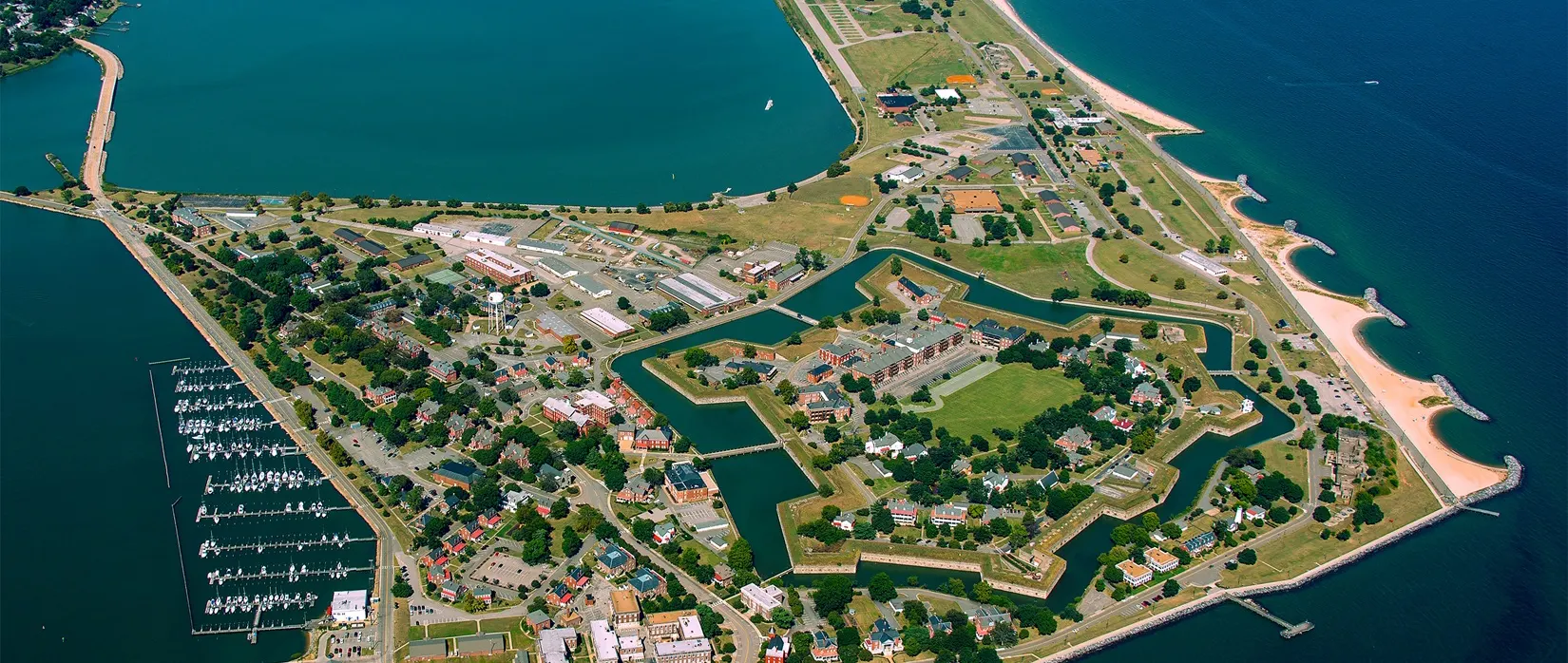
Fort Monroe's defensive plan becomes clearer when its moat and bastions are viewed in relation to the central enclosure. Water, masonry and carefully angled positions were intended to complicate attack while giving defenders command of possible approaches. These systems can be appreciated as a kind of pre-modern infrastructure design, in which the movement of ships, soldiers and supplies influenced every choice of wall and gate.
Architecture enthusiasts will find the repeated forms of the fort especially revealing. The size of the works demonstrates the strategic importance once attached to controlling access from Chesapeake Bay. A route around the public exterior, followed by the museum and selected internal areas, allows visitors to understand scale before examining details. Photography is often strongest where the edges of the fort meet the harbor.
The Old Point Comfort Lighthouse
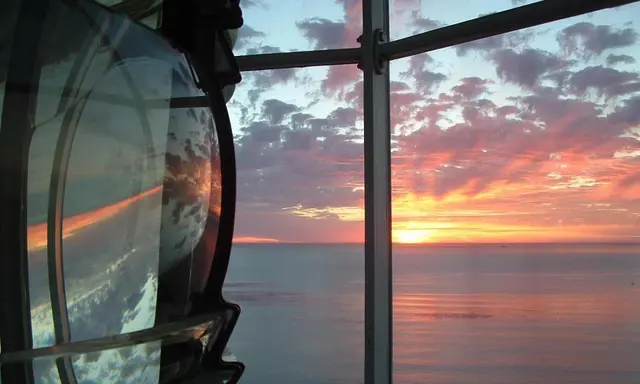
The Old Point Comfort Lighthouse adds a second maritime function to the site. Fortifications were intended to stop hostile vessels, while lights helped ordinary mariners navigate toward the port. Including the lighthouse in a shore excursion creates an immediate conversation about how a single narrow waterway can be both a trade route and a military threshold. The monument is most useful as a stop interpreted in that wider setting.
From the shore, guests can imagine successive generations of captains identifying the point as they entered the bay. The precise requirements of navigation have changed with electronic charting and vessel traffic management, but the historic light remains a tangible expression of the navigational challenges that predated modern equipment. Do not assume public entry into lighthouse structures; plan around accessible public viewpoints and the currently posted rules.
The Lincoln Gun and the long military presence
The National Park Service includes the Lincoln Gun among the distinctive features visitors can seek within the fort. Its name and scale invite discussion of the nineteenth-century transformation in coastal artillery and the demands placed on heavy military installations. The Park Service also points visitors toward Flagstaff Bastion, the Parade Ground and the Chapel of the Centurion as elements that show how the fort supported both defense and daily life.
These sites can be joined into a walk that alternates between military engineering and human experience. For guests accustomed to the technical achievements of contemporary yachts, the fort offers an absorbing comparison with an older era of metallurgy, materials handling and infrastructure. It is also a reminder that remarkable machines and structures must be interpreted alongside the purposes and consequences of their use.
A living neighborhood, not an abandoned military post
Fort Monroe is different from an empty archaeological site because people still live and work in parts of the historic district. The National Park Service specifically asks visitors to respect the privacy of residents in leased buildings and not to open private gates or look through windows. A considerate walk concentrates on authorised public routes, interpretive areas and the architectural character of the streets and Parade Ground.
This continuing use gives the landscape a subtle appeal. Historic homes, mature trees, public grounds and surviving military buildings belong to one visual composition, while the harbor remains active beyond the walls. Taking time to move through the district without treating it as a film set produces a more respectful, richer experience. A pre-arranged local guide can identify which places are public and which are simply best admired from a distance.
Coastal walks and outlooks beyond the walls
The NPS suggests that visitors with several hours can extend their itinerary to the shoreline boardwalk, the Old Point Comfort Lighthouse, the First Africans in Virginia marker, Outlook Beach and later coastal batteries. These places connect the compact fort interior to the wider peninsula and its setting on Chesapeake Bay. The result can be an agreeable mix of history, fresh air and photography without requiring a strenuous hike.
Conditions along the water still deserve attention. Beaches and shorefront areas have their own opening rules, and waves, wind or seasonal weather may affect comfort. Choose footwear suited to uneven historic surfaces and bring layers for a breezy maritime afternoon. The presence of a broad beach does not automatically imply suitable tender access, and visiting yachts should continue to use their pre-approved berth and land transfer.
Timing a thoughtful half-day ashore
The park recommends roughly two to four hours to explore the area's principal attractions, which makes Fort Monroe suitable for an enriching day between longer yacht passages. A sensible plan begins with the visitor center, continues into the Casemate Museum and the fort's accessible historic areas, and ends with selected shoreline viewpoints. Guests with a special interest in history may wish to stay longer for guided interpretation.
Opening patterns differ among the general park grounds, museum, visitor center and beaches. The grounds have extensive daily access, but museums operate shorter schedules and seasonal adjustments. Check the National Park Service's published hours and contact the visitor facilities shortly before arrival. Planning around the most restricted interior access prevents a disappointing excursion in which guests see the monument but miss the exhibits they most wanted.
Photography, reflection and a responsible return
Fort Monroe rewards wide-angle views that reveal the unusual geometry of its defenses against a broad maritime horizon. The official National Park Service aerial photograph selected for this guide makes that geometry especially clear. On the ground, smaller details—the curves of the moat, aging stonework, gateways and quiet streets—can be equally compelling. Photographers should remain on designated paths and respect residential areas and protected features.
The best ending is not an overloaded sightseeing checklist but a moment to consider what this peninsula has witnessed. Ships arrived carrying goods, soldiers and people forced across the Atlantic; others later came seeking liberty, refuge and opportunity. A measured return to the yacht gives guests time for conversation and makes the shore excursion memorable for its meaning, not just its visual beauty.