Trani: an Adriatic waterfront with substance
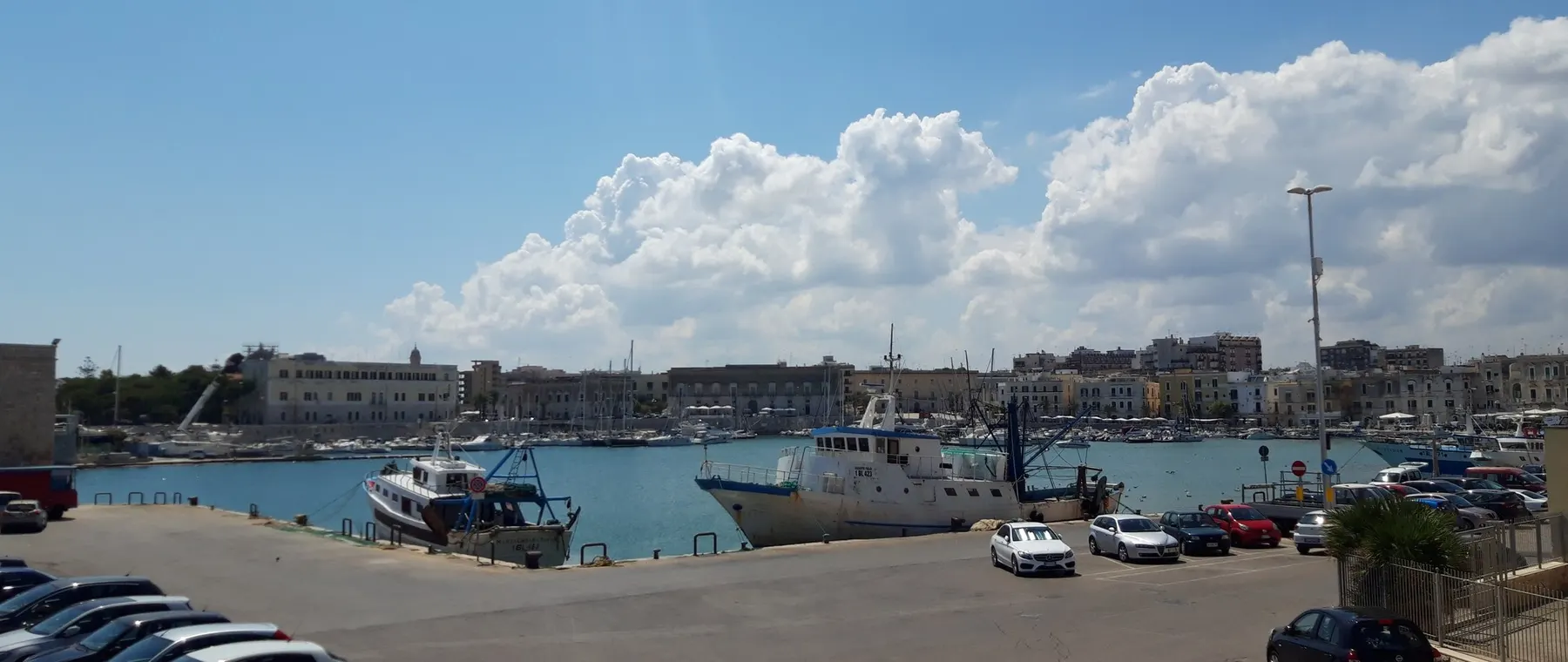
Trani’s port sits immediately beside the historic centre of a Puglian town whose cathedral and castle give the waterfront an unusually strong identity. For the owner of a 12–23.99-metre yacht, that makes it more than a convenient pause along Italy’s Adriatic shore. It offers a compact cultural excursion close to the harbour and a town that still works around the water rather than treating the marina as a separate resort. The appeal, however, should not distract from the fact that Trani is a working port. Visiting yachts need a confirmed and suitable mooring, access permission where required, an up-to-date weather assessment and a careful approach using current nautical information. A historic harbour photograph can show the character of the destination, but it cannot show the present position of commercial traffic or whether a suitable berth is free. Owners planning a route should treat the town as a potentially rewarding stop, never a guaranteed berth.
What Puglia’s port database actually says
The Puglia Region’s Interreg AI Smart port profile lists Trani with 550 berths, a maximum mooring length of 30 metres and a maximum mooring depth of four metres. Those headline numbers suggest that a yacht in this publication’s size category may fall within the general port dimensions. They do not mean that all 550 positions can accept visiting yachts, or that water alongside every berth is four metres deep. In fact, the same regional page presents a separate tourist-services section showing zero available berths, which clearly requires clarification from the operating authority before a captain relies on it. That apparent inconsistency is worth reporting, not silently removing. The figures are useful as context but not operational confirmation. The correct procedure is to identify the actual marina or quay operator, provide the yacht’s dimensions and obtain a specific response on availability, berthing position, facilities and charges for the intended dates.
Port facilities and operator responsibility
The regional database records repair yards, sail-repair services, electrical repairs, fuel facilities and other marine services in the vicinity. Puglia’s visitor information also describes floating pontoons managed by the municipality and the Italian Naval League. That is a starting point for investigating a call, not a promise that any particular berth offers each service. In a working harbour, different pontoons or quays may have different operators and access arrangements. A yacht arriving for two nights may need a different booking process from one seeking long-term service work. The captain should establish who can authorise the proposed berth, what paperwork is required and whether the vessel’s draft and beam suit the position actually offered. Owners should not assume that nearby repair facilities can attend immediately, or that the availability of fuel in the port means bunkering can be arranged at a convenient hour. Accurate local confirmation makes the difference between a smooth stay and an inconvenient diversion.
Why a sheltered-looking harbour still needs proper pilotage
The Port of Trani is described in regional tourism guidance as a natural harbour protected by the San Antonio and San Nicola piers. That setting makes it attractive from the shore, but the approaches remain subject to maritime regulations and the latest local information. The Puglia visitor guide mentions a specific separation requirement near the green lighthouse at the San Nicola pier. Because navigational restrictions can be amended, that description should not be used as an approach instruction without checking official charts and notices. The yacht’s captain remains responsible for planning a safe arrival, including any required communications and the effects of wind or traffic. A 20-metre yacht has different manoeuvring characteristics from a small fishing boat photographed in the port. Guests may see a short, attractive walk from berth to cathedral; the crew sees water depth, turning room, line-handling and the proximity of other vessels. Both perspectives matter, but the operational one comes first.
The cathedral that defines the view from the sea
Trani Cathedral, dedicated to San Nicola Pellegrino, stands close to the water on an open esplanade. Italy’s official tourism portal identifies it as a significant example of Apulian Romanesque architecture, built in local pale pink stone, and describes a complex of church, crypt and hypogeum. It is a particularly rewarding monument for a visitor arriving by boat because its setting helps explain why this part of the town became so visually distinctive. From the waterfront, the building appears almost suspended above the Adriatic. Inside, visitors encounter several layers of sacred architecture rather than one simple hall. Opening arrangements and any access restrictions should be checked before setting out, especially if a special service or restoration work affects parts of the building. The building deserves time for looking at materials, proportions and the relationship between the esplanade and surrounding water, not merely a photograph before returning to the yacht.
A castle opposite the cathedral
The Swabian Castle is another key element of the historic waterfront. Italy’s tourism authority places it close to the cathedral and connects it with Frederick II, whose building works helped define Trani’s medieval setting. The castle’s defensive purpose is apparent in its position near the sea. It is especially interesting to those who enjoy maritime history, because it illustrates how control of a port and the shape of a town influenced one another. Visitors should verify current entry arrangements, tickets and exhibitions rather than assume every space is accessible on a given day. Historic structures can present uneven surfaces, exposed areas and stairs that affect some guests more than others. For an owner travelling with family or friends of different ages, it may be sensible to split the programme. Some can visit the castle while others explore the cathedral precinct or enjoy an unhurried waterfront lunch. The town is compact enough to make varied interests practical without demanding a full-day excursion far inland.
The old town and a history of Adriatic exchange
Trani’s centre reflects centuries of contact with the wider Adriatic. The Italian national tourism portal explains how its importance developed in the Norman and Swabian periods, when maritime commerce connected the town with other ports. It also discusses the historic Jewish quarter, known as Giudecca, and the different religious and commercial communities whose buildings contributed to Trani’s urban fabric. Such background is useful because the old streets are more than a photogenic extension of a marina. They tell a story of trading networks, changing political control and coexistence that can be explored at a human pace. A visitor may wish to see the Scolanova Synagogue or other surviving historic buildings, but access and use should be verified with the responsible institutions. No guide should promise entry to a religious site without checking the relevant rules. The best shore visit balances the pleasure of wandering with respect for places that remain culturally meaningful.
A harbour lunch is part of the experience
One of Trani’s practical strengths is the proximity between its waterfront and the streets of the historic centre. Yacht guests can plan a gentle walk and a meal without arranging an elaborate inland transfer. The port’s restaurants, cafés and public spaces can make an evening ashore attractive after a passage, but no specific restaurant should be recommended as open or available without checking its current arrangements. For a large party, advance reservations and dietary requirements deserve particular attention. During quieter months, opening days may differ from summer expectations. Owners who prefer to dine aboard can still enjoy the harbour atmosphere, buy provisions from local shops where available and return for a relaxed dinner on the yacht. There is no need to turn a short stop into an inflexible itinerary. The point of visiting Trani is the chance to spend time in a living town whose maritime setting is immediately accessible.
An easy cultural itinerary over two days
A two-night visit could begin with arrival, a confirmed berth and a short orientation walk around the port. Guests might spend their first evening exploring the waterfront and arranging dinner. The next morning could be devoted to the cathedral and nearby castle, followed by a leisurely walk through the old town. Those are suggestions, not reservations or guarantees of opening hours. A captain should keep the schedule adjustable to match weather and the practical work of running the yacht. The crew may need time for provisions, fuel or maintenance, while guests may want to linger at a particular historic site. Trani is useful precisely because it does not demand a complicated transfer before anything interesting can happen. A short stay can still be satisfying, but allowing extra time reduces pressure to combine harbour entry, technical work and sightseeing into one crowded afternoon. Owners should put the vessel’s requirements ahead of the tourist timetable.
What a 12–24m yacht should confirm in advance
The essential questions are the same for an owner-operated 13-metre yacht and a professionally crewed 23-metre motor yacht, but the answers can differ. Can the port authority or operator identify a specific berth for the vessel’s true length overall, beam, draft and displacement? What depths apply at the entrance and the assigned position, not just the regional maximum? Are mooring assistance, electricity, freshwater, waste services and a suitable shore connection available? What paperwork or advance payment is needed, and who will be present on arrival? Can the captain confirm the latest approach restrictions from official notices? The regional profile is not a booking system, and the headline 550-berth figure should not be treated as current vacancy. A professional itinerary includes a sensible alternative if Trani cannot accommodate the yacht or conditions make entry undesirable. This is a destination recommendation grounded in published information, not live port clearance.
Trani in a wider Puglian journey
The town can form one stop on a longer Puglia itinerary, but sailing distances and travel times should be calculated by the captain from the actual previous berth and planned next destination. The Adriatic coast offers several historic ports, and the temptation is to list them as if moving between them were simply a road trip. Weather, fuel reserves, marina acceptance and passenger comfort all matter. A yacht of this length may be able to make a comfortable passage when conditions are favourable, but a fixed schedule should never override prudent navigation. Trani’s appeal is that the cultural experience begins almost immediately at the water’s edge. The cathedral, castle and old streets provide a strong shore programme without creating a claim that every cruising yacht can enter the harbour. The best owner experience is one where the town and the seamanship fit together.
Official sources and photo licence
The Puglia Region Interreg AI Smart Trani port profile supplies the published figures for berths, maximum length and depth, including the conflicting tourist-berth field that must be checked locally. The Italian national tourism portal’s Trani guide documents the old town, castle and heritage of its maritime trading history. Its Trani Cathedral page describes the church, crypt and waterfront setting. Additional regional port information gives context about harbour services. The hero is a genuine 2021 photograph of Trani harbour taken by Mickey83 / Wikimedia Commons, licensed CC BY-SA 4.0. It was resized for web publication and does not depict today’s berth availability.