A real island capital beyond the tourist circuit
Stornoway is one of the most appealing places in the British Isles to arrive by yacht because it feels like a working island town, not a waterfront stage set. The principal town on Lewis, in the Outer Hebrides, has ferries, fishing activity, shops and a strong connection to the sea. Visitors find that the marina sits close to everyday amenities rather than isolated several miles from shore life. For a capable 12–23.99m cruising yacht, that provides a rare combination: a practical harbour for replenishment and a base for exploring a landscape with a distinctive cultural identity.
A voyage to the Outer Hebrides deserves care. Conditions on exposed Scottish coasts can change quickly, and the passage should be planned using up-to-date marine forecasts, charts, tide information and the yacht's actual capabilities. The attractiveness of Stornoway as a stop does not make the approach casual. Once secure, however, the reward is immediate. A yacht crew can walk into town for a meal, visit the museum and Lews Castle grounds, or organise a longer day on the island without moving the boat from its berth.
Published berth dimensions from the port authority
Stornoway Port Authority's own marina handbook describes an Inner Harbour facility accommodating vessels up to 24 metres in length and three metres draught, with larger boats considered by arrangement. The document describes a protected setting and says the marina lies in the town centre. Those figures are unusually pertinent to LYG's cruising yacht segment, because they cover almost the entire 12–23.99m range. But the published maximum must not be treated as proof that a particular berth is available or that the yacht's beam and handling characteristics are suitable.
The authority's handbook also describes fresh water, electricity, Wi-Fi, surveillance, toilets, showers, laundry and fuel facilities for marina visitors. Confirm the present service arrangements and operating conditions directly with port staff before relying on any individual item. The handbook and a tourist listing may have different published berth counts; facility capacity can evolve and need not determine the actual visiting allocation. An owner should be concerned with the real available berth, its approach and the services that the yacht requires, not a headline total. Specific advice from the operator is always more useful.
The boat's first hours alongside
Arriving in a northern harbour is often a moment to deal with small practical tasks before sightseeing. Replenish fresh water if permitted, assess fuel needs, get wet passage clothing drying and check the next weather window. Stornoway's town-centre position makes those jobs easier because the crew does not need to spend hours travelling to a shopping district. It also allows guests to settle gradually. After securing the yacht and confirming the port's terms, a short walk through the centre can supply everything required for a quiet evening in the saloon or cockpit.
For yachts toward the upper size limit, give staff exact length overall, beam, draught and the timing of the proposed arrival. Ask about allocated pontoons, mooring arrangements and any interaction with working harbour traffic. Do not assume that the booklet's three-metre limit applies to every position without qualifications. Windage may be significant, and the crew should be prepared for the berth actually allocated. Seamanship remains the foundation of a comfortable stay, particularly in a harbour that shares its water with ferries and other commercial users.
Lews Castle above the harbour
Lews Castle is the town's most prominent shore landmark, rising above the harbour within landscaped grounds. Its location makes it a natural first excursion after mooring. The castle and surrounding park offer a place to slow down, look back toward the waterfront and see how the town sits within the wider island landscape. The official Lews Castle visitor information provides current details for access and associated facilities. It is worth allowing time for the grounds as well as the building, especially if the weather offers a clear view across the harbour.
The castle complex is also home to Museum nan Eilean and archive services, bringing the history of the islands into the centre of a yacht visit. The official Outer Hebrides heritage service publishes seasonal opening hours. In the low season from October 2026 to March 2027, the Stornoway museum advertises reduced afternoon opening on selected weekdays and Saturdays; readers should reconfirm the latest schedule before going. For visitors who have arrived by sea, the collections can give greater meaning to the places and communities encountered along the coast.
Learning about island life before exploring
A yacht offers the freedom to move between harbours, but it can also make travellers skim the surface of a destination. A museum morning in Stornoway is a useful antidote. The Outer Hebrides have a particular relationship with language, community, craft and the maritime environment, and local heritage institutions provide a more reliable introduction than a hurried collection of scenic photographs. Spending an hour learning about Lewis can change the way the crew understands the surrounding coast. This is an island with a living culture, not simply open water and beautiful beaches.
After the museum, a walk back into the town centre brings another aspect of daily life. Local shops, cafés and public spaces provide an opportunity to spend time in Stornoway itself, rather than immediately driving across Lewis for a landmark. The choice between an evening out and cooking aboard is easy when the berth is so close to town. Check individual opening hours, especially outside summer, and reserve restaurant tables where necessary. The practical convenience of the marina supports a less hurried way of discovering the island.
Calanais and a journey into the island
With another day available, the standing stones at Calanais offer a compelling excursion. Located away from Stornoway, the prehistoric site introduces a very different timescale to a visit that began in a modern marina. The official Calanais visitor organisation provides current access, visitor-centre information and transport guidance. Guests should check those details before departing, because journey times, weather and seasonal arrangements matter. A yacht provides the base for the trip, but the excursion is a land journey requiring realistic planning and a comfortable return margin.
The stones are a remarkable contrast with the practical engineering of a cruising vessel. One part of the trip concerns electricity, harbour dues and the day's forecast; another takes visitors into a landscape shaped by thousands of years of human presence. For owners who enjoy archaeology or photography, that contrast is especially satisfying. The outing need not become an exhausting tour of every famous Lewis sight. A single meaningful excursion can be enough, leaving time to return to Stornoway, review the next day's weather and enjoy a peaceful evening back aboard.
Lewis beaches and the outer Atlantic coast
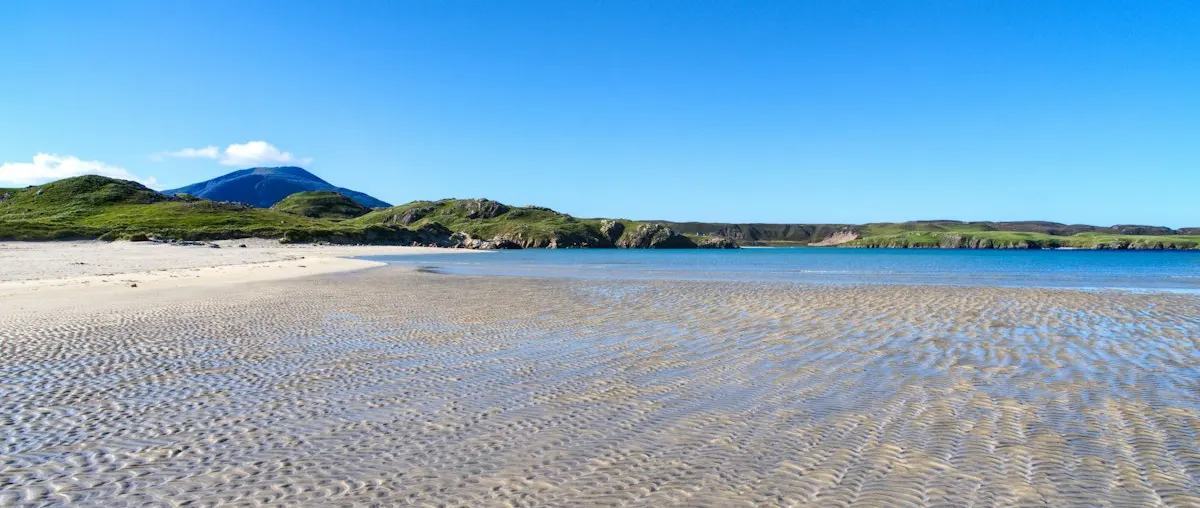
Beyond the town, Lewis offers striking coastlines that deserve respect as well as admiration. Uig Bay and other island shores are compelling for their open horizons, sand and changing light. The landscape can be dramatic even in unsettled weather, but exposed beaches are not playgrounds to approach casually when surf or wind is strong. Guests should follow local advice, check forecasts and choose appropriate clothing for the conditions. A shore excursion by road is often the sensible way to appreciate these places while leaving the yacht secure in Stornoway.
An island day also offers a change in rhythm. Rather than organising a complicated waterborne itinerary among unfamiliar shallows and anchorages, the crew can explore by land and return to the same berth. That is especially appealing on the first visit to the Outer Hebrides. The boat remains the centre of the holiday, but there is no need for it to move every day. In fact, a longer stay can be more rewarding: local history, a coast walk and time for the next weather window can turn a routine passage stop into a genuine encounter with Lewis.
Weather margins are part of the luxury
The Outer Hebrides reward well-prepared yachts, but they cannot be reduced to a fixed itinerary. Weather, visibility and sea state may force changes to the route or length of stay. A comfortable 20-metre cruiser has more options than a tiny open boat, but the owner still needs to make decisions within the craft's limitations. Passage plans should have alternatives, and crews should be prepared to remain in port if conditions are unsuitable. The ability to wait in a town-centre marina with useful facilities is a significant advantage.
Onboard life also changes in a northern climate. Heating, ventilation and the drying of wet clothes may be higher priorities than on a Mediterranean itinerary. Shore-power requirements should be checked with the marina rather than presumed unlimited. Food and fuel provisioning should account for the next likely harbour and the possibility of delays. None of this detracts from the destination; it is simply the practical work that makes relaxed exploration possible. When the yacht is safe and comfortable, a day of rain can still be an enjoyable day in a distinctive island town.
Two days ashore, with time to adapt
On the first day, arrive according to the port authority's current directions and confirm berth suitability, service access and any fees. Keep the afternoon close to the harbour: a walk into the town centre, Lews Castle grounds and the museum if open. Finish with a meal either aboard or in town. On the second day, choose one longer excursion, perhaps Calanais or an island coast, rather than attempting everything at once. Return with enough daylight and flexibility to prepare for the following passage.
The primary marine source here is Stornoway Port Authority's marina handbook, supported by the official Outer Hebrides visitor listing; Lews Castle, Museum nan Eilean and Calanais' own materials support the shore itinerary. Published lengths, facilities and opening times require confirmation and this feature is not navigational pilotage. For LYG's 12–23.99m audience, Stornoway is an unusually strong combination of suitable published berth dimensions, a real town at the quay and a wider island with a memorable sense of place. That is a compelling reason to allow more than a single night.
Image credit: Uig Bay on the Isle of Lewis by Pix Tresa. Original photograph, used under the Unsplash License. The lead photograph is illustrative and does not depict an unverified product or berth.