Brittany's working port with a yacht welcome
Roscoff has a practical advantage for yachts exploring Brittany: its modern Bloscon marina offers a deep-water stop close to a town with a strongly maritime character. The official marina operator describes a facility open around the clock throughout the year, with 625 berths and capacity for boats up to 30 metres and up to three metres draught. Those headline figures put it within reach of a substantial part of the 12–23.99m yacht-cruising audience, although availability and exact berth suitability must be confirmed for every vessel.
The setting also makes clear why a marina's operational instructions matter. Roscoff is not a secluded basin devoted solely to leisure craft. Commercial and fishing activity takes place nearby, and the marina's own safety guidance emphasises communication and controlled entry. For a skipper arriving after a tidal passage, the reward for preparing properly is considerable. Once the boat is settled, the crew can explore a distinct Breton town, consider a short ferry journey to Île de Batz or simply enjoy the contrast between an Atlantic port and the gentler life ashore.
What the Bloscon marina offers
The 625-berth Roscoff-Bloscon facility is described by its operator as a sheltered marina protected by a long, angled breakwater. The pontoons and main jetty cater for a range of boats, with published upper limits that extend beyond LYG's usual size segment. The operator also describes an arrival welcome, with personnel available to guide visiting craft and assist at the pontoon. That is a useful arrangement, but it should not be assumed that every arrival at any hour will receive identical handling. Check current staffing, berth assignment, costs and conditions before departure from the previous port.
The published three-metre draught figure is particularly useful when comparing Roscoff with smaller tidal harbours, but it must be interpreted correctly. It is a facility statement, not a guarantee of clearance at every point of the route or berth. A yacht with deeper draught, substantial beam or difficult manoeuvring characteristics needs individual approval. Confirm the height and availability of the shore-power connection if required; don't take the presence of pontoons to mean the yacht can obtain any desired electrical load. The operator's current berthing instructions should govern the actual arrival.
Port signals and radio procedures
Roscoff's operator publishes specific safety guidance for yachts approaching the marina. Its instructions tell vessels equipped with VHF to monitor channel 12 while navigating the entrance channel and announce arrival to the marina office on channel 9. It also explains a light system at the Pierre Lemaire breakwater: when three red lights are displayed, entry is restricted to vessels specifically authorised by the harbour master's office, ordinarily because of ferry movements. Those are operational details with direct consequences, not optional etiquette.
The same official guidance notes other traffic lights controlling departures from the marina and inner fishing harbour when commercial movements are in progress. Check the newest published regulations, charts and notices, and follow the instructions actually issued on arrival. Do not try to interpret a gap between vessels as permission to pass a prohibitive signal. In a busy commercial port, a yacht's freedom to manoeuvre may be temporarily limited for perfectly good reasons. Planning for that possibility makes a calm arrival more likely and helps protect both leisure and working traffic.
The value of an all-tide stop
Deep-water access is one of Roscoff's defining attractions for cruising yachts. The operator describes the marina as accessible 24 hours a day in all tidal conditions, a useful contrast with marinas behind tidal gates and smaller harbours that dry at low water. For crews combining several short passages along the Atlantic coast, such flexibility can make passage planning easier. It does not mean weather, visibility or traffic can be disregarded, and it certainly does not replace an up-to-date navigational plan. It simply removes one of the constraints that governs some alternative ports.
Roscoff works particularly well as a place to reset the voyage after an exposed leg. Refill supplies, check the boat, do laundry where available and let guests explore town without a rigid gate schedule. If conditions delay departure, there is still something to enjoy nearby. The marina's public materials also mention environmental programmes and participation in visitor schemes, but commercial offers should be checked directly for current terms. The practical heart of the destination remains an accessible, protected berth with a genuine Breton town close at hand.
The old town and its maritime texture
Roscoff's town centre invites a different pace from the marina basin. Streets, stone buildings and the waterfront recall generations of trade and fishing, while today's visitors find cafés, small shops and views across the water. The official tourist office publishes guidance to the town's attractions and surrounding destinations; it is a sound basis for selecting a walk when the yacht's schedule is settled. A short stop need not involve a hired car. Simply allowing the afternoon to unfold between the waterfront and the older streets gives a persuasive impression of this corner of Brittany.
The distinction between commercial Bloscon and the historic waterfront is part of the pleasure. The modern marina serves the practical needs of a passage-making yacht; the old town provides much of the atmosphere that makes the port worth remembering. A crew can move between these worlds in a single day. Those interested in local food have plenty of reason to look for seafood and Breton specialities, though individual restaurants and menus change with the season. For guests who prefer cooking aboard, a town visit also offers the opportunity to choose provisions for an evening meal.
Île de Batz as a straightforward day trip
One of Roscoff's most appealing shore excursions is Île de Batz, a small island reached by a passenger ferry from the town. The tourist office describes an approximately fifteen-minute crossing and provides information on services and island attractions. That short journey makes an island day possible without moving the yacht from its secure berth. It is a satisfying change of scale: after navigating a substantial cruiser into a working port, the crew can travel as ordinary visitors and enjoy a slower, pedestrian perspective on the coastline.
Check the actual ferry schedule for the date and weather, and be aware that island access points may be influenced by tides. The official tourist office lists the island lighthouse and other destinations, but seasonal opening arrangements need confirmation. Avoid trying to fit every attraction into one day. A good plan might include a leisurely walk, a long lunch and time simply looking back toward the mainland. The benefit of travelling by yacht is that the private base remains waiting in Roscoff, ready for another evening aboard after the excursion.
A shore itinerary without overplanning
On the first afternoon, once marina check-in and safety preparations are complete, visit the old town and waterfront. The crew can take a slow walk, explore a few shops and choose where to eat. The contrast between the marina's engineering and Roscoff's historic buildings is interesting enough to fill several hours. If the passage was demanding, it may be more pleasant to stay near the harbour and keep the programme gentle. Checking the next day's forecast and ferry schedule before dinner avoids having to reorganise plans in the morning.
On day two, allow enough time to reach the ferry departure point and visit Île de Batz without rushing back. Those not interested in a ferry can enjoy the mainland's heritage and gardens or extend the marina stay. If the yacht is due to sail onward, put the vessel's departure requirements ahead of sightseeing. An all-tide marina may offer flexibility, but departure is still affected by sea state and traffic signals. Roscoff's real strength is that it offers attractive choices without forcing a narrow timetable, a luxury in its own right.
Seasonal conditions and sensible choices
The north Brittany coast deserves a realistic weather plan. Wind, visibility and swell can change the comfort of a passage or influence a visiting crew's enthusiasm for a ferry excursion. Carry appropriate clothing and expect the shore itinerary to adapt. Harbour protection is helpful, but even a well-protected marina is not a reason to press on into uncomfortable or unsafe conditions. A 12-metre sailing yacht and a 23-metre motor yacht may experience the same approach differently, and berth handling should be assessed for the actual boat.
Likewise, year-round marina operation does not guarantee that every tourist attraction or restaurant has the same opening hours in November as in summer. The tourist office and individual businesses provide the most useful current information. Check the marina's 2026 tariffs rather than quoting an outdated price chart, and ask staff to confirm any fees tied to length or services. Owners may find that an extra night for maintenance and a quiet town walk is better value than racing toward the next destination. The flexibility to make that decision is part of enjoyable cruising.
What the primary sources confirm
This guide's central harbour facts come from the Roscoff-Bloscon marina operator: 625 berths, 24-hour deep-water access, published size and draught limits, and the specific VHF and traffic-light precautions. The operator's tariff page supplies a route to current fees. The official Roscoff tourist office is the source for the Île de Batz excursion, ferry crossing description and town sightseeing suggestions. These sources have different roles, and the article does not represent sightseeing guidance as permission to enter a commercial harbour.
All instructions must be reconfirmed before a voyage; procedures and availability may change without notice. This is not a pilot book, berth booking or assurance that the maximum advertised dimensions suit a particular yacht. For 12–23.99m cruising owners, Roscoff stands out as a practical all-tide Breton stop that also provides a rewarding short holiday ashore. The strongest itinerary is uncomplicated: secure the right berth, respect the working port, explore the old town, and if time allows take a small ferry to a beautiful island.
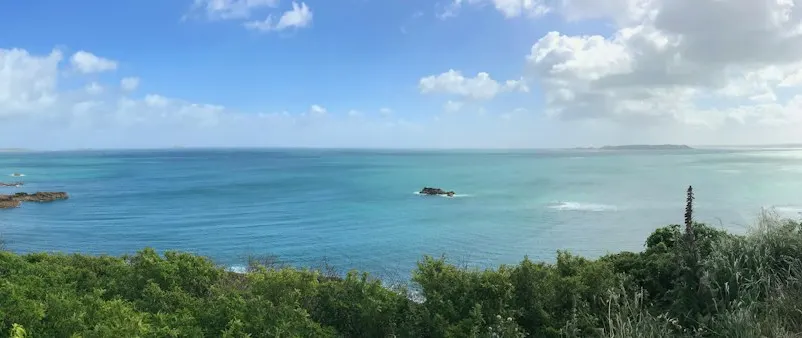
Image credit: Boat off the Brittany shore photographed by Alex. Original photograph, used under the Unsplash License. The lead photograph is illustrative and does not depict an unverified product or berth.