A city whose centre is a harbour
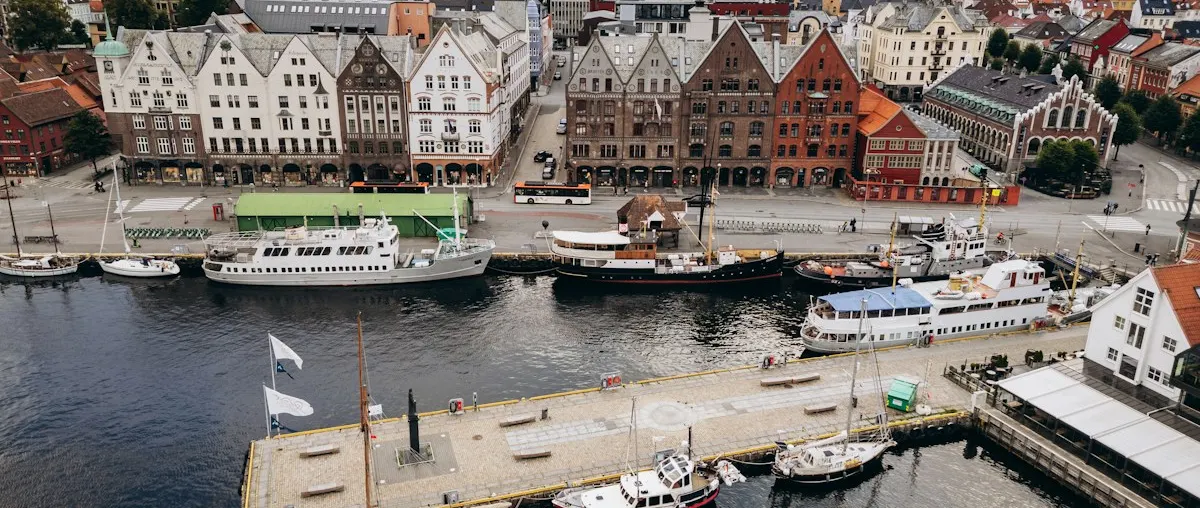
Bergen's historic waterfront gives arriving yachts a special kind of welcome. In many cities the marina is a considerable distance from the cultural centre; here, the harbour called Vågen leads directly into a dense landscape of old timber buildings, markets, streets and surrounding hills. The approach is recognisably maritime, with leisure boats and other traffic moving through a working urban basin. For people travelling aboard a 12 to 23.99 metre yacht, the promise is a Nordic city break that begins close to the gangway. The boat can remain a comfortable base while much of the first day's sightseeing unfolds on foot.
Bergen also deserves proper seamanship. A picturesque inner harbour is still part of an active port, and an arrival must account for vessel movements, changing weather, available space and the yacht's physical dimensions. Official Bergen Port information describes the central leisure-boat facilities, while Visit Bergen provides the visitor context. Those two kinds of information should be kept distinct. The former helps determine where a yacht may berth and what services are actually offered; the latter helps guests decide whether to spend their next hour among historic buildings, at a market or above the city.
The guest berths in Vågen
Bergen Port's published leisure-boat information describes guest mooring capacity in Vågen, with roughly a hundred recreational berths in the wider provision and facilities whose suitability varies by boat size. This is a meaningful opportunity for visiting cruising yachts, but it is not a promise that a vessel nearing 24 metres can occupy any empty space. Berth dimensions, mooring methods, beam, draught and the amount of room for manoeuvring all require attention. A skipper should use the official port information and contact the operator about a specific vessel rather than infer availability from an aggregate count.
Harbour facilities include water and electricity provision at certain positions, with published references to 10A and 16A connections and other shore services. Electrical supply should be treated as limited and position-dependent, not a universal superyacht-style pedestal. The port directs users to payment arrangements through the GoMarina system; check the current payment process, tariffs and any requirements at the time of arrival. If the yacht needs a particular shore-power configuration, arrange that question in advance. Bringing an appropriate plan for water and energy avoids turning a relaxing stop into a search for equipment.
A careful approach to a crowded basin
Do not use the photographs of Bergen's old harbour as a substitute for current charts or local instructions. Vågen is attractive precisely because so much activity shares its waters. Mooring configurations and available space may be affected by events, commercial traffic and seasonal visitors, so the sensible approach starts with the latest Bergen Port guidance. A vessel at the upper end of the 12–23.99m range may have significantly greater windage and less tolerance for tight manoeuvres than a smaller cruiser. Assess the yacht's handling, the crew's experience and the conditions together.
Norwegian weather can change quickly, particularly around a city framed by hills. Visibility, rain and wind conditions influence both the passage into Bergen and how much time guests will want to spend on open decks. Plan an alternative stop if the berth or approach is unsuitable, and avoid treating any published leisure-boat number as an automatic right to enter. Once secure, review the local fees and facilities with the crew. The first task is to establish a reliable base; from there the town becomes an exceptionally accessible destination for a day ashore.
Bryggen and the harbour's long memory
Bryggen is the waterfront that makes Bergen instantly recognisable. The old commercial quarter, with its closely packed timber-fronted buildings, tells the story of a city shaped by North Sea trade. Its inclusion on the UNESCO World Heritage List is one reason it attracts visitors, but the experience is more immediate than a heritage designation. Walking alongside the facades and into the passages behind them gives a sense of how space and commerce developed along the harbour. From a yacht, the contrast is delightful: contemporary navigation equipment and modern hulls arrive beside a landscape associated with centuries of maritime activity.
The best way to appreciate Bryggen is slowly. Begin with the full panorama across the water, then move closer to see the shapes, details and narrower ways that are less visible from the quay. Visit Bergen's visitor material offers a practical introduction to attractions in and around the quarter. Shops and cultural venues operate on their own schedules, so check opening hours before committing to a particular stop. Even without a formal guided tour, the district rewards attentive looking. For a yacht guest, the shoreline is both a destination and a continuation of the voyage's maritime story.
The market and a kitchen afloat
Bergen's fish-market tradition is another connection between the city and the sea. The central waterfront environment makes it easy to combine a morning walk with looking at food, local produce and the working economy of a coastal city. Individual market offerings, vendors and trading hours can change by season, so verify the current position through local visitor information rather than expecting a particular stall or menu. For a crew cooking aboard, the market is an invitation to plan an evening meal inspired by the destination instead of relying only on supplies taken aboard several ports earlier.
There is no requirement to turn the market into a culinary performance. A simple meal enjoyed in the cockpit, with the old harbour in view, may be the most memorable part of the stay. Alternatively, Bergen's centre has established eating options for guests who would prefer a night off from the galley. Allow for Norway's pricing and individual business schedules when making the choice. The wider point is that a yacht's galley and the city's food culture can work together. The vessel is a home as well as transport, and a good stop makes use of both qualities.
From sea level to the surrounding hills
Bergen's landscape changes dramatically when viewed from above the harbour. The hills that frame the city are not simply a backdrop; they are part of its identity and explain why the waterfront streets feel sheltered yet tightly assembled. Many visitors make time for a hilltop perspective, using the city's established transport and walking options. Check the latest route, ticket and operating information through Visit Bergen before setting out, particularly when the weather is unsettled. The view is worth planning for clear conditions, but low cloud can be part of the authentic western Norwegian experience too.
The shift in viewpoint is especially satisfying for sailors. From a higher vantage, the channels, islands, urban basin and surrounding topography become easier to read as a whole. A harbour that may have felt busy and close during arrival takes on a different geometry. Allow enough time for a gentle excursion rather than squeezing it into the last few minutes before an onward passage. For guests who would rather stay near the waterfront, the city's lanes and waterside cafés still provide plenty to fill an afternoon. Bergen works well as both a modest stop and a longer urban interlude.
Rain is part of the itinerary
Western Norway's changeable weather is a practical consideration and a distinctive part of the atmosphere. Pack suitable waterproof layers and shoes for walking on wet paving; a fine day can turn quickly, while a wet morning can open into clear harbour views. The pleasure of Bergen does not depend on uninterrupted sunshine. Reflections on the quays, low cloud around the hills and the warmth of a café can make the place memorable in their own right. A yacht crew should treat local forecasts as relevant to both its sea passage and its shore plans.
Humidity and rainfall also influence onboard routines. Dry wet gear properly, ventilate when conditions allow and take care on slippery decks and pontoons. If the boat has limited shore power, consider energy demand before assuming that heating, charging and galley appliances can all run as if connected to a high-capacity marina service. Bergen Port's own descriptions of the electrical connections help set realistic expectations. The practical approach is not complicated: carry appropriate clothing, maintain the boat's normal safety routines and leave enough flexibility to choose an indoor attraction when the weather asks for it.
Two days from a central berth
Day one should begin with the latest port instructions, a suitable berth and a careful mooring operation. Once settled, take an exploratory circuit of the harbour, Bryggen and the market area. That circuit gives a strong impression of Bergen without forcing any lengthy transfer. A restaurant dinner is an easy option, but a quiet meal aboard is equally compelling if the berth faces the historic scene. Check payment, shower, water and electricity arrangements well before the evening, because the crew should not discover missing facilities only when shops are closing. Good preparation makes the city feel effortlessly close.
On day two, use the morning for a hilltop view if conditions are clear, or choose a museum, shops and covered attractions if rain is heavy. After lunch, provision, check the weather for the next leg and confirm any required berth departure procedure. Those with a longer stay can spread the experiences over several days, but a short visit still delivers a distinctive mix of Norway's maritime culture and city life. The 12–23.99m yacht remains an ideal scale for this kind of trip: capable of substantial passages, yet intimate enough for its owners and friends to enjoy the shore together.
What the official sources do and do not promise
Harbour details in this guide come from Bergen Port's leisure-boat and pricing pages, including the published descriptions of guest facilities and their payment arrangements. Cultural context and shore attractions are drawn from Visit Bergen's official visitor material. Berth counts, electricity provision, tariffs and opening times are subject to change, and no facility should be assumed available for a specific vessel without confirmation. Mariners must use current charts, notices, weather information and the harbour authority's own instructions; this article is not a substitute for passage planning or pilotage.
The attraction of Bergen lies in the rare intimacy between an active harbour and an important historic centre. A visitor can spend the morning handling lines and checking the day's conditions, then spend the afternoon walking through a recognised maritime heritage landscape. The voyage and the destination belong to the same story. For luxury cruising yachts below 24 metres, that is more meaningful than a list of expensive amenities. Bergen offers a place where the boat is truly connected to the city, provided the arrival is approached with the respect due to any working northern harbour.
Image credit: Boats and historic Bergen waterfront by Jonathan Borba. Original photograph, used under the Unsplash License. The lead photograph is illustrative and does not depict an unverified product or berth.