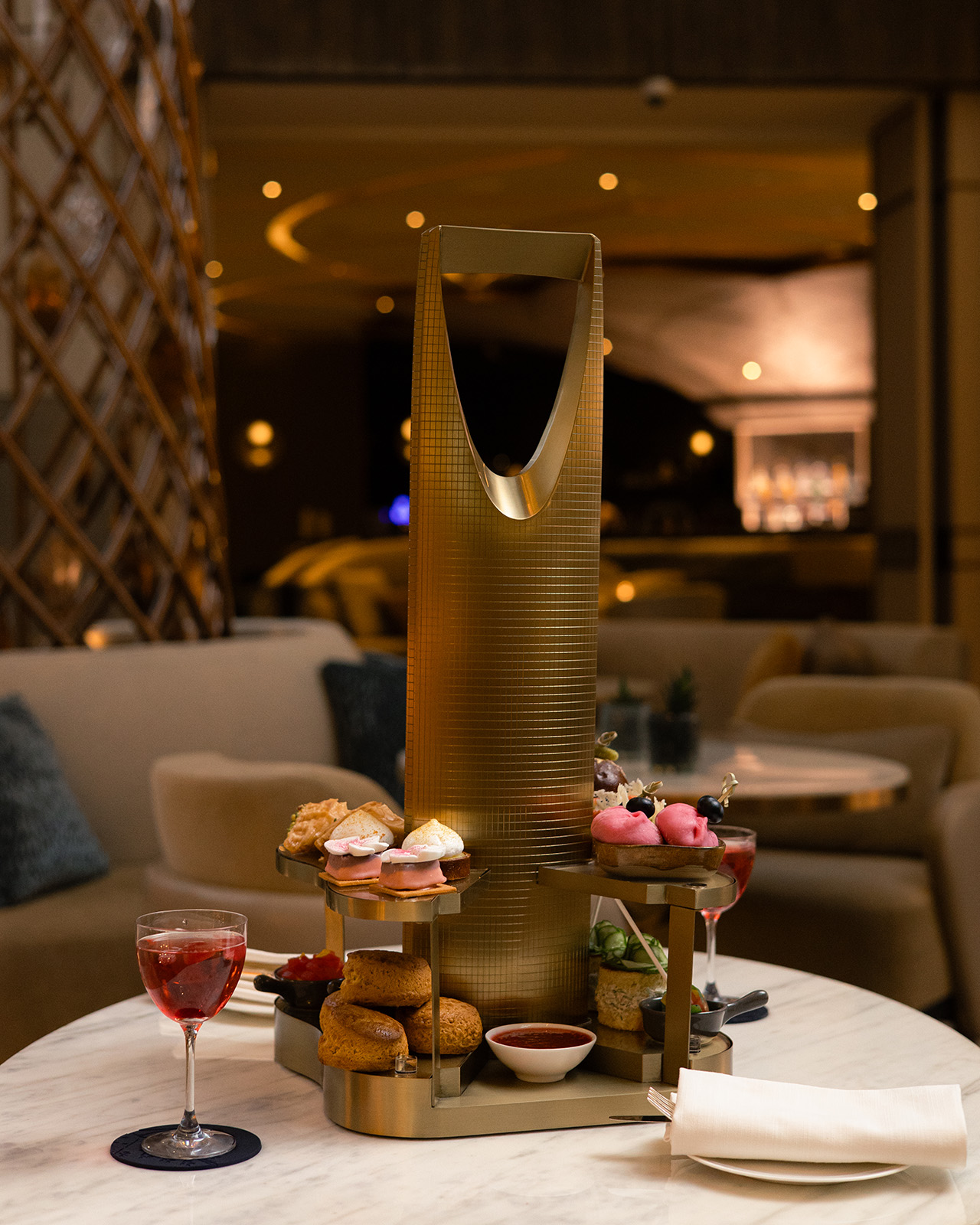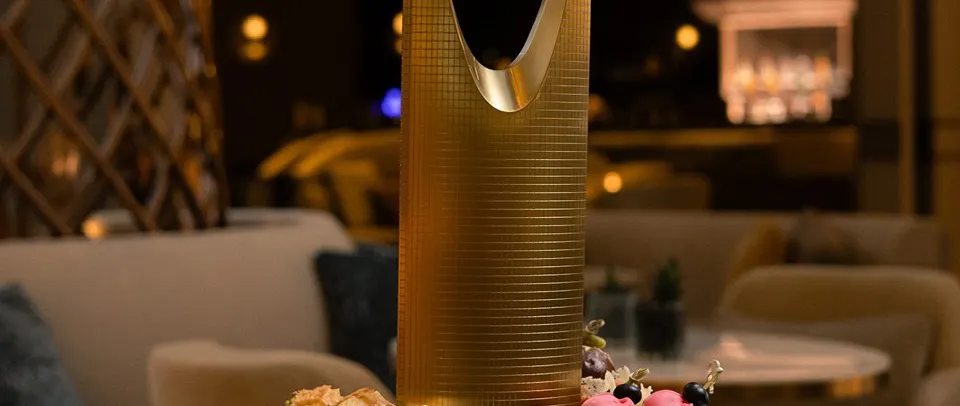
Four Seasons Hotel Riyadh at Kingdom Centre has introduced a bespoke high-tea stand inspired by the instantly recognisable profile of the Kingdom Centre tower. Announced in May 2026, the custom-designed serving piece gives Obaya Lounge's afternoon-tea experience a distinctive visual connection to the building in which the hotel operates. The launch coincided with a summer menu featuring savoury pastries, imaginative desserts and a range of teas, available from June until the end of August 2026. The seasonal menu described in the original release has therefore concluded as of 22 November, while the architectural idea remains worth exploring as an example of hospitality design. For luxury lifestyle travellers, the story is about how a familiar ritual can become more memorable when the serving objects communicate something about the city around them.
An architectural silhouette becomes tableware
The Kingdom Centre is one of Riyadh's best-known buildings, with a striking upper-level opening and a profile that stands out in the city's skyline. Four Seasons has taken this visual identity into a smaller-scale design object used during high tea. This is not an architectural replica intended for technical comparison with the original tower. It is an interpretive serving stand, borrowing the recognisable outline as a way to connect the experience with its location. The effect is conceptually simple but distinctive: visitors encounter an image of the building on a table inside the same development. That relationship between large architecture and small object design provides the central appeal.
Why presentation matters during afternoon tea
Afternoon tea is partly about food and drink, but its traditions also involve the arrangement of cups, plates, service pieces and table settings. A carefully designed stand can influence how guests move through the selection and how a shared experience feels. Four Seasons presents the new Obaya Lounge piece as a bespoke object that brings storytelling into the service. That language should not obscure its practical function: food must still be accessible, stable and clearly presented. A beautiful form is most successful when it helps rather than complicates the meal. The release provides the design concept but not a detailed technical specification of the stand's materials or manufacture.
Kingdom Centre gives the idea a geographical anchor
A high-tea experience could be copied almost anywhere if its only ingredients were familiar sandwiches and pastries. By referencing Riyadh's Kingdom Centre, the new serving stand locates the ritual more specifically. The hotel is not claiming that afternoon tea originated in Saudi Arabia, nor that the tower's architecture has a direct historical connection with the tradition. The interesting creative move is to bring a local landmark into an established international hospitality format. Travellers may appreciate that link even if they are unfamiliar with the city's architectural history. A small design choice can prompt curiosity about the building and the place beyond the dining room.
Obaya Lounge supplies the setting
The high-tea experience takes place at Obaya Lounge within Four Seasons Hotel Riyadh at Kingdom Centre. A hotel lounge serves different purposes from a formal dining room: guests may arrive for conversation, meetings or a more leisurely break between activities. A tiered stand suits that kind of gathering because several items can be shared without a rigid sequence of courses. The hotel's release describes the new presentation as part of its signature service, but it does not guarantee the continued availability of the same seasonal menu on every date. Travellers interested in the precise offering should check the lounge's current details before visiting.
The summer collection was a separate seasonal layer
Alongside the custom stand, the hotel introduced a Summer High Tea menu for June through August 2026. The original announcement described fresh flavours and bright colours appropriate to warmer weather. These details help explain the launch, but they must be read in the correct timeframe. By 22 November the published summer dates have passed. It would be misleading to present those items as a currently bookable menu unless the hotel confirms they remain available. The distinction between a lasting design concept and a limited-season collection is important in luxury lifestyle reporting, where attractive photography can sometimes make an expired offer appear current.
Savoury preparations used playful formats
The summer savoury selection included an open cheese éclair, an herb-chicken finger pretzel, a tomato-and-mozzarella lollipop and a cucumber-blossom sandwich. These names demonstrate a preference for familiar ingredients presented in unexpected forms. An éclair is normally associated with sweet pastry, so a cheese version changes a well-known reference; the lollipop format similarly brings a playful visual idea to a savoury bite. Such creativity can be enjoyable when it supports good flavour and texture. The official release supplies the dish names but not complete recipes or independent tasting notes. No claim should be made that a particular item is still being served in November without confirmation.
Desserts brought together several influences
The summer sweets included milk scones with strawberry jam and cream cheese, mochi with blueberry ice cream, English-breakfast muhallabia with compressed watermelon, and a warbat with orange and pistachio cream. Other named pieces included a Cassis Yuzu Flower and date, citron and apricot combinations. This range draws on different culinary references rather than remaining within one traditional British afternoon-tea template. The selection may appeal to guests who enjoy contrasts of texture and flavour, but the menu does not establish an identical degree of authenticity for every tradition referenced. It is a chef's curated interpretation designed for this particular hotel lounge.
Muhallabia provides a regional note
Muhallabia is associated with milk-based desserts across parts of the Middle East, where its ingredients and preparations vary between communities. The summer menu paired an English-breakfast reference with compressed watermelon, illustrating how the Obaya experience combines familiar international and regional elements. Such combinations can be imaginative, though they should not be used to suggest that an entire culinary tradition has one definitive version. A hotel dessert is a particular interpretation, not a cultural authority. Travellers may enjoy learning about the original dish and its variations while recognising that the contemporary version reflects the choices of the kitchen.
Warbat also draws on familiar pastry traditions
The announced orange-and-pistachio warbat is another example of a pastry reference with regional associations. Layered dough and fillings can provide a contrast between crisp pastry and softer textures, although the exact preparation at Obaya Lounge is not described in technical detail. A press release cannot replace a recipe or a review by someone who tasted the dessert. Its value is to identify the idea and the ingredients published by the hotel. Fine pastry work often depends on precision in temperature and preparation, skills that may not be obvious from an elaborate serving stand. Attractive presentation is most convincing when accompanied by carefully made food.
Tea choices went beyond a single classic blend
Four Seasons listed summer tea selections such as peach and pear, Rush Hour Berry and apple elderflower. These names suggest fruit and floral directions that differ from conventional black-tea pairings. The release does not establish the caffeine content or exact botanical composition of each blend, so visitors with sensitivities should ask the operator. A high-tea menu can accommodate different preferences, but not every drink described as tea is necessarily identical in ingredients or preparation. Providing variety helps guests choose flavours that suit the food and their own tastes. The value of the menu is not in offering the longest possible list, but in how the drinks complement the experience.
Prices belonged to the summer promotion
The original announcement identified the Summer High Tea at SAR 365, inclusive of VAT, and a Summer Tea Party offering at SAR 195, also inclusive of VAT. These were advertised prices for the specified summer programme, not a verified current November price list. They should not be used as a quotation for a booking today. Travellers need to confirm present menu choices, taxes, service arrangements and availability directly with Obaya Lounge. Including historical prices can help describe the character of an offer, but accurate reporting must keep them attached to the dates in which they applied. A current reservation requires current information.
A serving object can become part of a brand's identity
Hotels often rely on architecture, interiors and graphic design to create a recognisable style. A bespoke object brought to the table can extend that identity into the guest's hands and immediate surroundings. The Kingdom Centre-inspired stand makes the connection unusually direct because it references the building itself. Yet the effect could become superficial if the food or service did not meet expectations. Guests may appreciate a memorable photograph, but the ritual also depends on comfortable seating, well-balanced portions and attentive staff. Thoughtful product design can enrich hospitality; it cannot substitute for the underlying work of preparing and serving a meal.
Design should be practical as well as expressive
A high-tea stand needs to support dishes, allow servers to place them efficiently and let guests reach each item without difficulty. The more unusual the shape, the more important those considerations can become. The Four Seasons release highlights the stand's architectural inspiration but does not disclose the engineering or manufacturing details. It would be unwise to infer that it was produced using a particular material, craft workshop or specialised fabrication process. A design-led article can discuss function without inventing technical specifications. The interest lies in how a distinct silhouette may coexist with the everyday demands of restaurant service.
What the experience says about contemporary Riyadh
Riyadh has been developing a broad range of hospitality, dining and cultural experiences. The Kingdom Centre tower is a recognisable landmark within that urban landscape, and a hotel lounge that incorporates its form into tableware is one small expression of place-conscious design. Visitors should not treat this as a complete account of the city's architectural history or the variety of its food scene. Independent cafés and restaurants also contribute to Riyadh's identity, often in different ways from major hotel brands. A thoughtfully planned visit can include both formal hospitality and time exploring other areas of the city.
Afternoon tea does not have one fixed identity
The ritual is often associated with British tradition, but international hotels have developed many local interpretations. Obaya Lounge's approach combines a distinctive architectural stand with pastries referencing several culinary cultures. That range demonstrates how a familiar format can evolve without necessarily losing its social purpose. The experience remains a chance for people to gather over small dishes and drinks. There is no need to insist that one interpretation is the only authentic version. What matters is whether the food, surroundings and service form a satisfying whole. Design can communicate the location while allowing the ritual to remain welcoming and accessible.
Travellers should distinguish design from availability
The original release confirms the existence of the bespoke high-tea stand and the June–August 2026 seasonal menu. It does not establish that the same dishes, prices or schedule continue indefinitely. Those differences are easy to overlook when an attractive promotional image circulates beyond the original announcement date. Visitors should contact the hotel for the active tea programme and any reservation requirements, particularly if they are interested in a named dessert. Dietary restrictions should also be discussed, since some of the announced items contain dairy, nuts or other ingredients that may matter to guests. A current experience must be evaluated using current information.
The relevance to luxury yachting lifestyles
Owners and guests of 12–24-metre luxury yachts may appreciate the relationship between architecture, object design and personal hospitality. A vessel's interior details can communicate an identity through proportions, materials and custom pieces, while a bespoke serving stand performs a similar conceptual role at a very different scale. This is an analogy about design, not a claim of a partnership between Four Seasons Riyadh and the yacht industry. The original release contains no maritime service. Its relevance is the broader interest in craftsmanship and place-specific luxury experiences that can form part of international travel away from the water.
A lasting design idea beyond a seasonal menu
The official 2026 announcement establishes Obaya Lounge's Kingdom Centre-inspired high-tea stand and describes the accompanying summer menu that ran through August. The stand brings a local architectural reference to a familiar hospitality format, while the seasonal dishes demonstrate the kitchen's preference for playful interpretations of savoury and sweet traditions. Future availability of any particular item must be confirmed with the hotel. For luxury lifestyle readers, the enduring story is how small-scale design can create a sense of place. A carefully considered object may make an ordinary ritual more memorable when it is supported by the practical work of good food and attentive service.
Sources and image credits: Four Seasons Hotel Riyadh at Kingdom Centre official 29 May 2026 press release, Four Seasons Hotel Riyadh Unveils a Kingdom Centre-Inspired High Tea Experience at Obaya Lounge, accompanied by original hotel press-media photography. The original summer dates, sample menu, architectural design and published prices are attributed to Four Seasons. Independent design and culinary analysis by Luxury Yacht Guide.
Sources and image credits
Reporting based on Four Seasons Hotel Riyadh at Kingdom Centre, original 29 May 2026 high-tea design and seasonal menu press release.
Lead photograph: Riyadh's Obaya Lounge Turns a City Landmark into an Afternoon Tea Design — credited first-party original official press photograph. Image: Four Seasons Hotels and Resorts, original official press photograph of the Obaya Lounge Riyadh high-tea design. Original official image source.