Four Seasons Hotel Tokyo at Marunouchi has introduced two seasonal takeaway creations by Executive Pastry Chef Nicolas Maugard for December 2026, combining techniques associated with European pâtisserie with ingredients closely connected to Japan. Éclat de Noël is a sculptural, tree-shaped celebration cake with vanilla, yuzu and almond, while Matcha & Mikan Panettone interprets a traditional Italian holiday bread through Uji matcha and Japanese citrus. The hotel's 26 October announcement specifies collection from 1 to 31 December, with different reservation deadlines for each product. For luxury lifestyle travellers, the story is a useful example of how the ritual of giving and sharing food can acquire a distinctive sense of place without abandoning established craft. The products are planned for the coming festive season, not confirmed as available for immediate collection on 22 November.
A Tokyo celebration with international references
Holiday cakes have a particular place in Japanese year-end celebrations, and a Tokyo hotel can draw on several traditions at once when developing its seasonal offering. Four Seasons has chosen a French-inspired festive cake and an Italian sweet bread, both incorporating ingredients associated with Japan. The combination is not an attempt to claim that either European tradition originated in Tokyo. Instead, it reflects the way contemporary pâtisserie develops through travel, training and local interpretation. A guest might recognise the silhouette of a winter cake but discover an unfamiliar balance of citrus and vanilla, or encounter a panettone that uses a tea ingredient ordinarily associated with other preparations.
Nicolas Maugard leads the collection
The hotel's announcement attributes both creations to Executive Pastry Chef Nicolas Maugard. A pastry chef working on a festive collection must consider flavour, texture, appearance and practical handling. A cake displayed in a restaurant is one challenge; an elaborately decorated dessert intended for takeaway must also travel successfully and retain its intended shape. Panettone presents different technical demands involving dough development and baking. The source outlines Maugard's two products rather than offering a full account of his career or a behind-the-scenes manufacturing report. The interesting aspect is how two very different formats have been brought together under one seasonal programme.
Éclat de Noël resembles a snow-covered fir tree
The first creation is shaped like a snow-covered tree, with small stars, ornaments and silver-coloured leaves as decoration. Its sculptural form is designed to make the cake a centrepiece for a shared festive table. The use of a white chocolate exterior provides a smooth visual surface, according to the hotel. Such a design can be attractive, but the construction must also be practical when the cake is sliced and served. A dessert made primarily for photographs would be less convincing than one that balances presentation with flavour. Four Seasons describes the outer decoration and internal layers, allowing readers to understand the intended experience without inventing a direct tasting assessment.
Vanilla provides a soft foundation
The cake contains a mousse made with Madagascar vanilla, which Four Seasons describes as light and aromatic. Vanilla can provide a familiar, rounded element that allows stronger flavours to remain prominent without overwhelming the dessert. Its use here forms a foundation for Japanese citrus. The precise origin of the individual vanilla beans and the detailed preparation of the mousse are not included in the release, so the ingredient should not be described through unsupported farm or ethical sourcing claims. The relevant story is the way an international pastry ingredient is used alongside more local references to create a coherent composition.
Kochi yuzu brings a citrus counterpoint
The hotel identifies yuzu confit from Kochi Prefecture as another component of Éclat de Noël. Yuzu is known for its distinctive aromatic and acidic character, although its expression depends on preparation and the amount used. Confit can preserve citrus qualities while integrating them into a dessert. The pairing with vanilla offers a contrast between rounded sweetness and brighter notes. This is a specific geographical reference that helps locate the cake in Japan, but it does not establish a direct relationship with a named grower. Guests interested in food provenance may appreciate the regional detail while recognising that the hotel's source supplies only the information published in the announcement.
Almond dacquoise adds another texture
An almond dacquoise forms part of the cake's interior, contributing a different texture from mousse and chocolate. Dacquoise is associated with European pastry techniques involving nuts and a light baked structure. In a layered dessert, such a component can provide contrast and help the filling retain a balanced feel. The exact preparation remains the work of the pastry team; the press release does not publish a recipe that readers could reproduce precisely. Almond is also a significant allergen, so the product should not be assumed safe for guests with nut allergies. The hotel identifies the cake as made without alcohol, but that does not resolve every dietary consideration.
A cake without alcohol is not automatically allergen-free
Four Seasons explicitly says Éclat de Noël contains no alcohol and presents it as suitable for families. That may be useful for guests avoiding alcoholic ingredients, but it is important to distinguish alcohol content from other concerns. White chocolate and mousse may involve dairy, while the dacquoise contains almond. Guests should ask about the complete ingredient list and cross-contact policies before ordering when allergies or other restrictions matter. A beautifully designed cake can still require practical information. Responsible hospitality is not simply about calling a product family-friendly; it also involves communicating what people will actually eat.
Panettone supplies a second seasonal tradition
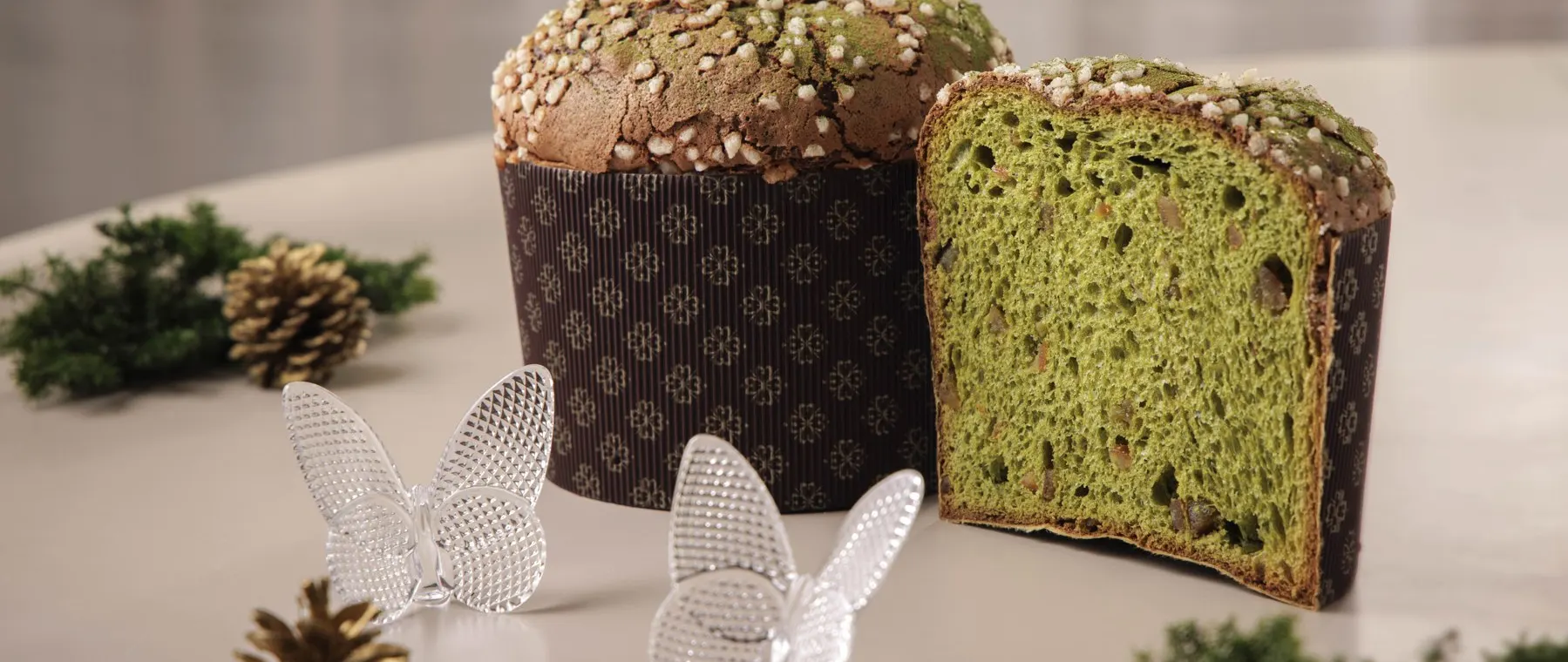
The Matcha & Mikan Panettone draws on the Italian holiday bread associated with a tall, domed form and rich, airy crumb. Rather than presenting an ordinary imported version, the hotel has developed a recipe using Uji matcha and mikan confit. This places the bread within a Japanese culinary context while retaining an international reference point. The source describes a substantial preparation period rather than a quick adaptation. Panettone depends on dough management, fermentation and careful baking, making it a suitable showcase for the technical discipline of a pastry kitchen. The product is also conceived as a gift, extending the experience beyond hotel dining.
A month-matured starter changes the process
Four Seasons says the panettone uses a starter matured for one month, with a week-long preparation process before baking. Those are significant operational details because they show the planning involved in producing a short seasonal collection. A long development time does not automatically guarantee that every loaf will taste better, but it can contribute to the structure and fermentation character intended by a particular recipe. The source does not provide temperatures, flour specifications or the complete method. Rather than invent technical claims, the useful editorial observation is that the hotel's pastry team has chosen a deliberately time-intensive process for a product intended to be collected during a defined December period.
Uji matcha is worked into the dough
The use of Uji matcha gives the panettone a green colour and an earthy, potentially bitter dimension. Uji is closely associated with Japanese tea culture, making this a more specific reference than the generic word matcha. The hotel says the powder is incorporated directly into the dough rather than used only as a decorative dusting. That matters because the ingredient becomes part of the bread's flavour and appearance throughout. Yet the exact grade and supplier of the matcha are not given, so claims about a particular tea estate would be unfounded. A balanced panettone needs the tea's flavour to work with the sweetness and richness of the bread.
Mikan confit provides sweet citrus
Pieces of mikan confit are distributed through the panettone, according to Four Seasons. Mikan is a citrus reference familiar in Japan, and its sweeter character offers a potential counterpart to matcha's bitterness. Confit fruit also suits the broader structure of panettone, which is often associated with preserved or dried fruit additions. The hotel describes the intended balance, but individual perceptions of sweetness and acidity vary. Readers should not treat promotional tasting language as an independently verified review. The value of the combination is its clear culinary idea: an established Italian festive bread interpreted through two ingredients with Japanese associations.
Finishing details reinforce the seasonal appearance
The panettone is finished with icing sugar and matcha powder, giving it a contrasting white-and-green surface. Packaging also forms part of the presentation, with a SÉZANNE gift box mentioned in the original release. Such details are important for an item that may be given to someone else rather than consumed immediately. A gift needs to survive transport, be easy to present and come with clear instructions about storage and consumption. The announcement does not specify the full storage life or all packaging materials, so those practical questions remain for the hotel. Visual design can enrich gifting without replacing freshness and quality.
Two price points reflect different products
The official October release lists Éclat de Noël at JPY 8,300 including tax and Matcha & Mikan Panettone at JPY 12,000 including tax. These are the operator's published prices for the 2026 December collection, not a guarantee that every order will remain available. The difference reflects products with distinct formats, preparation and presentation. A visitor should not infer that the higher-priced item is objectively better or more appropriate for every gathering. The practical decision depends on how many people will share it, their preferences and whether the product can be collected and transported as planned.
Reservation deadlines are not identical
Both products are scheduled for pickup from 1 through 31 December 2026, but their reservation terms differ. The hotel indicates that Éclat de Noël may be reserved from 13 October through 30 December, with at least one day's notice. The panettone has a shorter reservation window ending on 24 December and requires at least seven days' advance notice. Those details matter because a traveller planning a celebration may find that one option remains available for late-December collection while the other no longer accepts orders. Availability and pickup arrangements should be confirmed directly before any purchase, particularly where a particular day is important.
Seasonal gifting connects with a wider city journey
A festive cake can be one element of a visit to Tokyo, but the city's cultural and culinary life extends far beyond hotel pastry. Travellers may be interested in neighbourhood bakeries, tea shops, galleries and traditional food businesses as well as contemporary international hospitality. The Four Seasons collection offers one particular interpretation of festive sharing, not a comprehensive guide to Japanese celebrations. It may encourage curiosity about yuzu, matcha and the techniques behind laminated pastries and fermented doughs. A thoughtful journey leaves time to explore how other businesses and communities express the season in different ways.
Craftsmanship is visible in the quiet decisions
The most interesting part of the collection may be the set of decisions that guests do not immediately see: how a mousse is balanced, how confit is incorporated, how a cake retains its shape and how dough is managed over time. These details make pastry a craft rather than a decorative exercise. A luxury hotel can present elaborate creations, but the experience depends on the team's skill in making them consistently. The official release establishes the intended products and techniques, not an independent audit of each finished item. Those limitations do not diminish the value of describing the care required by the formats.
A connection to the luxury yacht lifestyle
Owners and guests of 12–24-metre yachts may appreciate custom confectionery, design-led gifting and international culinary journeys when travelling away from their vessels. The Tokyo collection is relevant through those wider interests, not through a yacht-specific service. Four Seasons has not announced a marina partnership or onboard delivery programme in the source release. The appeal is the thoughtful combination of presentation, ingredient choice and disciplined preparation. Such qualities can be appreciated in many hospitality settings, whether at a seasonal table in Tokyo or during a private gathering elsewhere.
A December collection still ahead
As of 22 November 2026, the announced products are scheduled for December pickup, with reservations subject to the hotel's stated deadlines and availability. Éclat de Noël combines a white-chocolate tree form, vanilla mousse, Kochi yuzu confit and almond dacquoise. Matcha & Mikan Panettone brings Uji matcha and mikan to an Italian festive-bread format. For luxury lifestyle readers, the story illustrates how a pastry team can make a familiar holiday ritual distinctive through ingredients and technical choices connected to a destination. The most useful next step for prospective customers is to confirm the current collection conditions directly with Four Seasons Hotel Tokyo at Marunouchi.
Sources and image credits: Four Seasons Hotel Tokyo at Marunouchi, official 26 October 2026 release, Four Seasons Hotel Tokyo at Marunouchi Unveils Festive Takeaway Creations by Executive Pastry Chef Nicolas Maugard, with first-party downloadable pastry press photography. Product names, recipes as described, prices and dates attributed to Four Seasons; culinary and practical commentary by Luxury Yacht Guide.
Sources and image credits
Reporting based on Four Seasons Hotel Tokyo at Marunouchi original 26 October 2026 festive takeaway collection and pastry press announcement.
Lead photograph: Tokyo's Festive Pâtisserie Brings Matcha and Mikan to the Holiday Table — official first-party editorial press photograph. Image: Four Seasons Hotels and Resorts, original official first-party editorial press photograph published for Tokyo's Festive Pâtisserie Brings Matcha and Mikan to the Holiday Table. Original official image source.