The other side of the Gulf of Trieste
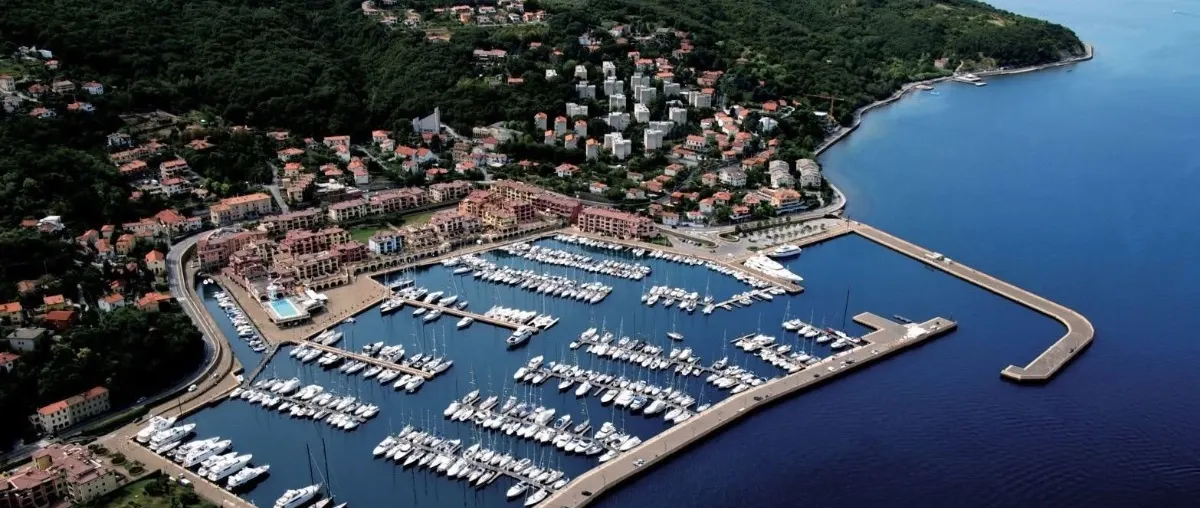
On the southeastern edge of the Gulf of Trieste, Muggia offers an appealingly different way to experience the northern Adriatic. It has the character of a small Istrian-influenced town, yet sits close to the culture and services of Trieste. Porto San Rocco, the marina resort on this stretch of coast, became part of the D-Marin portfolio in an acquisition announced in October 2026. For owners travelling in yachts between 12 and 23.99 metres, the combination deserves a fresh look. It provides the possibility of a managed berth within reach of a distinctive old town and the wider border region. The attraction is not simply convenience: Muggia has enough character to justify spending time ashore instead of treating it as a parking place for the yacht. A well-planned visit can offer an urban day, a historical walk and a relaxed evening aboard without a long passage between each.
What Porto San Rocco actually offers
D-Marin's official description gives Porto San Rocco 546 serviced berths and says it welcomes vessels up to 60 metres. Its published facilities encompass marina support and access to nearby marine services, while the surrounding development is presented as a waterfront resort. Those numbers identify the scale of the marina; they do not guarantee a particular berth for a 14-metre sailing yacht or a broad-beam 22-metre motor cruiser. Before committing to a cruise, send the operator the vessel's exact length overall, beam, draught, electrical needs and expected arrival window. Ask about the configuration of the available berth, any manoeuvring considerations and how the quoted price is calculated. This is particularly important when several different types of vessel share a facility. The right berth is the one that works safely for the actual yacht, not merely one inside a published maximum length.
A change of ownership, not an automatic change of terms
D-Marin announced the acquisition of Porto San Rocco Marina Resort on 12 October 2026, describing the Muggia property as a way to strengthen its northern Adriatic presence. A change of marina operator can bring expectations about service systems, booking tools or future investment, but a visiting owner should distinguish a corporate announcement from operational changes that are actually in place. Ask staff which reservation process is currently used and whether any previously published terms have been updated. Existing berth holders may have different arrangements from transient visitors. If the yacht is staying for weeks rather than nights, seek written confirmation of security, access, utilities and service coordination. The benefit of a managed base is confidence; that confidence comes from clear, current arrangements with the marina itself rather than assumptions based on the name of the network now operating it.
A village with layers of history
Muggia stands apart from many Mediterranean resort towns because its historical identity is so visible. The official tourism office describes the settlement's Istrian-Venetian character and highlights a castle associated with the medieval defensive system. In the centre, the pattern of streets and the harbour setting invite slow exploration on foot. A good first afternoon requires little more than an unhurried walk and a willingness to depart from a rigid sightseeing list. Stop to look at architectural details, seek a local café, and allow time for a meal that is not arranged around a departure schedule. Visitors should check the actual access arrangements for the castle and other historic buildings, as being a named attraction does not imply that every interior is freely open. For yacht guests, the intimacy of the town is part of the reason to stay.
Muggia Vecchia adds depth to a shore day
The Archaeological Park of Muggia Vecchia is another reason to extend the visit beyond the marina waterfront. Friuli Venezia Giulia's official tourism information explains that the hill was once home to an old settlement inhabited until the end of the fifteenth century, and the area preserves traces of its longer history. It is a rewarding choice for guests who enjoy landscapes and heritage as much as swimming or dining. Because a hilltop archaeological visit differs from a promenade stroll, check transport, walking conditions, accessibility and opening arrangements beforehand. Wear suitable footwear and bring water according to the season; do not assume that a yacht holiday itinerary is automatically an easy walk. The contrast between old Muggia and today's harbour helps make the destination memorable. Guests return to the boat with a fuller sense of the coastline's cultural history.
Trieste as a deliberate day excursion
The proximity of Trieste greatly expands the choices available from a Muggia berth. Guests can enjoy a larger urban setting, museums and architecture while leaving the yacht secured at Porto San Rocco. Regional tourism sources cover the area as a connected coastal destination, although current transport timetables and service routes should be checked through the relevant operators before travel. One relaxed option is to spend a full day in Trieste rather than forcing the yacht to reposition for a short city visit. This gives the crew time to manage routine tasks and allows guests a change of scene. The decision between public transport, a taxi or an arranged excursion can be made according to accessibility and the day's programme. A marina outside the centre of a larger city can therefore be an advantage: it offers separation from urban activity without losing cultural access.
The sea remains a working environment
Northern Adriatic cruising involves a mix of pleasure traffic, commercial movement and conditions that can change quickly. An owner should not interpret the sheltered appearance of a bay as proof that an arrival is simple in every wind. The skipper needs current charts, notices, forecasts and local information, including the relevant harbour and traffic requirements. The region's well-known strong-wind episodes are a reminder to plan with margins rather than guarantee passage dates. Obtain the marina's specific arrival guidance, including communications, entrance arrangements and the allocated berth. If conditions are unsuitable, retaining a contingency day is better than pressing on to honour a restaurant reservation. This careful approach supports a relaxed holiday: once the yacht is securely berthed, its guests can leave navigation decisions behind and enjoy the setting. Professional planning is what makes the shore experience feel effortless.
Cross-border cruising requires more preparation
One intriguing feature of Muggia is the geographic nearness of Slovenia and Croatia. D-Marin explicitly promotes access to the Italian, Slovenian and Croatian coasts from Porto San Rocco, and that can make it a convenient point from which to consider a wider Adriatic voyage. Proximity, however, does not make every itinerary administratively identical. A skipper planning to cross national waters or enter new ports must check the current entry, documentation, customs and other requirements that apply to the vessel, crew and voyage. Marina staff may be able to direct visitors toward information, but they cannot replace official instructions. Likewise, local protected waters and harbour areas may impose different operating rules. A sound passage plan separates the appealing geography from the legal and practical steps needed to travel through it. The result is freedom supported by preparation.
Service work and a longer stay
Porto San Rocco's marina information refers to technical support contacts and nearby yard capabilities, including lifting services at a partner facility. For a yacht owner, this may be useful when the trip includes routine maintenance or winter preparation. It is not evidence that a repair slot, a lift or a particular technician will be immediately available. Obtain the details of the responsible service provider, a scope of work and any permissions, access or insurance conditions before booking. Depending on the yacht's weight and configuration, a published lifting capacity may also require further suitability assessment. A longer marina stay should be arranged with a realistic maintenance schedule and room for delays in parts or diagnosis. Owners who combine an interesting destination with practical work can often make good use of time, but only when the technical activity is treated as a separate, confirmed commitment.
The waterfront after sunset
After exploring Muggia, returning to a familiar berth gives the day a satisfying rhythm. A short walk near the water, an easy meal and time in the cockpit can be enough. The town's harbour and its surrounding streets offer a different atmosphere from a purpose-built resort, while Porto San Rocco adds a more formal marina setting. Travellers should check restaurant openings outside the busiest season, especially when holidays or local events may affect hours. Owners with guests on different schedules will appreciate the option of eating aboard or ashore without making the yacht the transport for every outing. In this kind of travel, the measure of luxury is less the number of attractions visited than the ability to choose the pace. A destination that supports both privacy and simple access to town is well suited to a small crew or an owner-operated yacht.
A calm three-night framework
A possible three-night programme begins with a cautious approach and check-in at Porto San Rocco, followed by an easy evening on the waterfront. Devote the next day to historic Muggia and, if desired, an organised visit to Muggia Vecchia. Use the third day for Trieste or a more relaxed combination of coastal walking and meals. Departure should remain dependent on a suitable weather window and the vessel's condition. This is an illustrative holiday structure rather than a passage instruction, and it can be adapted for families or friends who prefer longer stays. The strongest itineraries usually leave some time unallocated. A museum may prove unexpectedly interesting, the sea may be too lively for a planned departure, or guests may simply want to enjoy the boat. Flexibility helps turn all three outcomes into a good holiday.
Costs should be quoted for the real yacht
The marina's portfolio scale and polished presentation cannot answer the most practical budget question: what will this particular boat cost to berth on these dates? Request a current quote that specifies length, beam, season, electricity, water, taxes and any ancillary services. Clarify cancellation conditions and whether different rates apply for extended stays. If the trip includes travel to Trieste or technical work, add those items separately. Fuel, provisioning and insurance should not disappear into a vague all-inclusive estimate. Equally, compare total convenience and not only the berth fee: the ability to visit several places from one fixed base may avoid repeated marina changes and additional fuel use. A transparent budget leaves the owner free to enjoy the destination without later disputes about assumptions. Prices can change, so this guide intentionally offers no invented daily rate.
A distinctive northern Adriatic stop
Porto San Rocco and Muggia make an appealing pairing for owners who enjoy both seamanship and cultural travel. The operator's published facts establish a substantial marina with managed berths, while the region's official tourism material shows a place with genuine history and access to Trieste. The announced change to D-Marin ownership provides a timely reason to reconsider the destination, but visiting owners still need current berth confirmations and live operational advice. For 12–23.99-metre yachts, the attraction is an itinerary with several layers: a comfortable base, a small town that rewards walking, and the possibility of wider northern Adriatic cruising. None of that requires a frantic schedule. The best visit will be the one that allows weather, curiosity and the people aboard to set the pace, with the practical details settled before the lines are made fast.