A marina that can support an island holiday
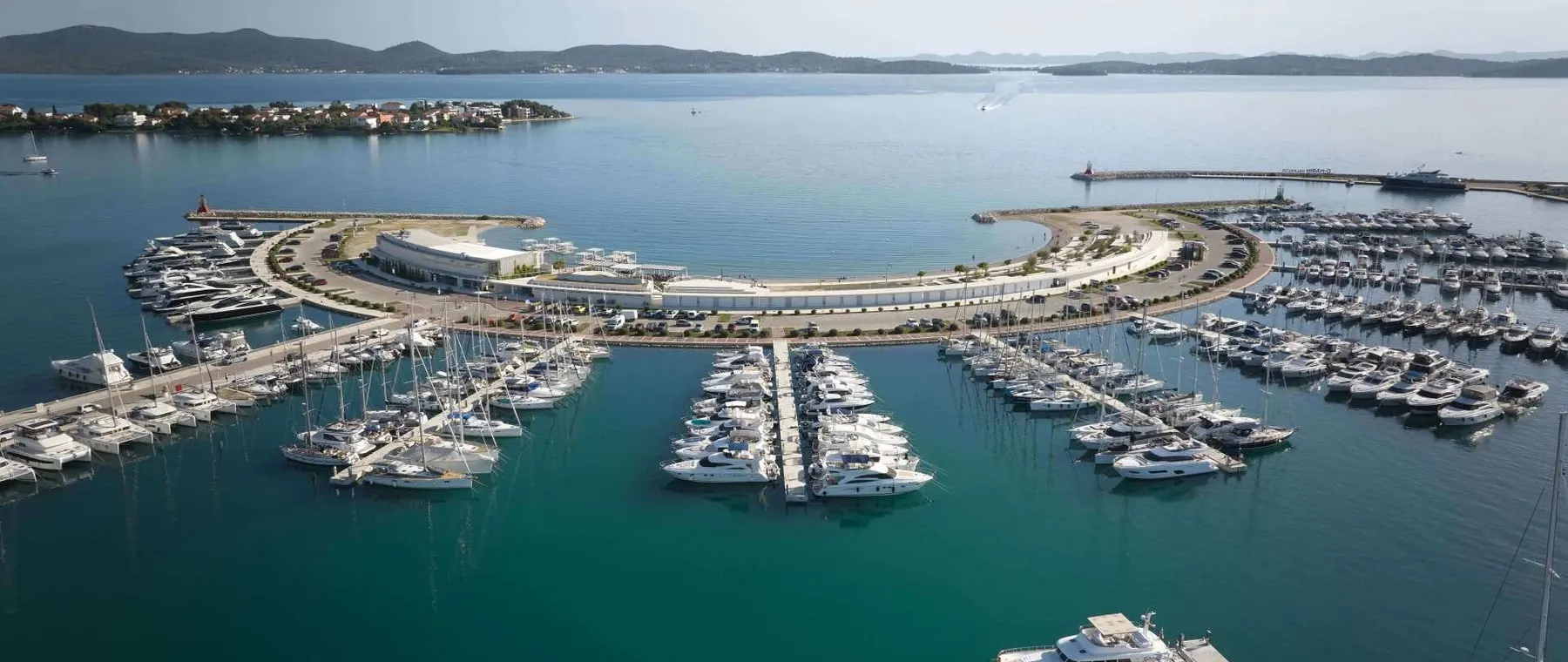
For cruising owners considering the Croatian Adriatic, D-Marin Dalmacija at Sukošan is a substantial base from which to build a holiday around the Zadar archipelago and the Kornati islands. Its position south of Zadar connects marina logistics with a coastline celebrated for a mosaic of islands and varied cruising experiences. That makes it particularly relevant for yachts in the 12–23.99-metre segment. An owner may want a berth with reliable services before exploring the islands, or a comfortable place to return after several days away. The most important decision is how to balance the attractions of the sea with the operational demands of the actual yacht. A protected marina can simplify the start and end of a cruise, but the islands, park rules, weather and anchoring choices still require detailed preparation. Sukošan works best as a base for deliberate exploration, not a shortcut around responsible passage planning.
Capacity is impressive, but availability is individual
D-Marin describes Dalmacija as one of the Adriatic's large marina facilities, with around 1,200 berths and support for substantial visiting yachts. Its online information also highlights provision for multihulls and access to technical services. These numbers establish scale; they do not promise a berth in the correct dimensions on a particular summer weekend. A catamaran measuring 15 metres can demand a very different allocation from a monohull of similar length. Send the operator length overall, beam, draught, required utilities and arrival dates, then request the current offer and entry guidance. Owners should also clarify whether a seasonal berth and a short transient reservation are handled in the same way. A modern marina can have extensive capacity while individual berth categories are heavily booked. The good outcome is written confirmation of the precise arrangements before a schedule depends on them.
The value of Sukošan itself
Sukošan is more than a word on a marina reservation. It is a coastal town with a local rhythm, restaurants and waterfront life that can reward an uncomplicated first evening after arrival. Croatian regional tourism presents it as part of the Zadar Riviera and points to its traditions and local dining. For a yacht whose guests have travelled a long distance before joining, a first day spent close to the berth can be preferable to an immediate departure into the islands. It gives the crew time to complete checks, fill provisions and confirm the coming route. Rather than treating Sukošan as only a service stop, allow a walk and a relaxed meal to set the pace. The strongest family yacht trips often begin with such ordinary pleasures, especially when the planned itinerary will soon involve more remote anchorages and changing conditions.
Zadar gives the itinerary an urban chapter
A marina near Zadar allows guests to combine a yacht holiday with urban exploration without moving the boat for every excursion. Croatia's national tourism material describes the Zadar area as a starting point for island routes, and the city's streets and waterfront can fill a rewarding shore day. Exact travel connections from Sukošan depend on the chosen transport and current schedule, so confirm them rather than relying on a fixed travel-time promise. The practical advantage is flexibility. Guests who enjoy history and restaurants can have one sort of day, while those keen on sailing can plan the next without unnecessary compromises. A city visit is also a useful weather alternative, provided road conditions and local opening hours have been checked. By keeping the yacht in a managed base, owners reduce the number of arrivals and departures that have to be coordinated with every shore activity.
Kornati is a national park, not an open anchorage
The Kornati archipelago's appeal is obvious, but a private yacht itinerary must begin with the rules of Kornati National Park. The park's official guidance permits entry by private or charter boat, subject to its visitor arrangements, and publishes conduct rules for the protected area. It also explains that anchoring and spending the night are permitted only at designated locations, identified in its current guidance. The park website has referred to sixteen such locations, but no skipper should rely on a historical count or a travel article as a substitute for the active rules, charts and marked areas at the time of sailing. This is an environmentally sensitive destination where a beautiful-looking bay is not automatically a lawful place to drop anchor. Responsible cruising protects the very setting that visitors have come to experience.
Tickets require a boat-specific check
The park publishes ticket information with categories that depend on vessel size and the method and timing of purchase. Owners should consult the current Kornati National Park website or official sales channels before entry, taking care that they choose the correct size band and validity period. A 12-metre yacht and a 22-metre yacht may fall into different pricing categories even though both are within the audience of this guide. Tickets purchased outside the park and those obtained inside it can also be subject to different conditions. Prices and procedures may change, making a quoted universal amount unreliable. Keep a copy of the valid ticket and any related instructions accessible aboard. If using a chartered yacht, establish whether the operator or skipper is responsible for securing the park entry and paying the relevant fees. This administrative step is part of a successful passage plan.
Mooring and the seabed matter
In an island landscape, the temptation is to choose an anchorage for the colour of its water and the view from the cockpit. That is not sufficient inside a protected park. Kornati's conduct rules and information on designated mooring locations should determine where a yacht may stay, with current charts and the skipper's assessment of conditions providing the operational detail. Owners also need to consider depth, shelter, swing room and how other boats may affect safety. Seabed habitats are vulnerable to careless anchoring, particularly where an anchor or chain can drag through vegetation. Using an authorised arrangement and respecting environmental protections makes the stay more responsible. A guest may experience the result simply as a quiet night in an island setting, but behind that calm is the skipper's careful decision about where the vessel belongs.
Weather and local knowledge have the final say
The Adriatic can provide beautiful cruising, but sheltered islands do not remove the effects of wind changes, squalls or congested passages. The captain should consult current official forecasts, notices and charts, with special attention to local conditions and whether the yacht has suitable alternatives. A day's planned island stop may become impractical for reasons that are not visible in a tourism photograph. Build weather margins into the itinerary and avoid creating a chain of non-refundable reservations that encourages poor seamanship. For owner-operated yachts, the same people who enjoy the holiday may also be responsible for docking, route planning and meals. A manageable passage schedule is therefore an important part of comfort. The most sophisticated itinerary is not the longest one; it is the one that lets the crew make good decisions without pressure.
A service centre for a longer cruise
D-Marin's published material identifies a marina service environment and lifting equipment, and the company announced the arrival of a new 250-tonne travel lift with operations planned for autumn 2026. That announcement is not proof that a specific lift is operational on the day a yacht arrives, nor that every vessel within a weight limit can be lifted. A boat's beam, hull design, lifting points and yard schedule matter as much as displacement. Owners contemplating maintenance should verify the current operational status of the equipment and arrange a specific inspection and work plan with the marina or chosen contractor. For a normal cruising stop, the marina's support infrastructure may be reassuring even if no major work is planned. For a longer winter or seasonal stay, it warrants a separate technical conversation covering storage, access, insurance, utilities and the timing of any planned haul-out.
How to budget a Croatian island cruise
The total cost of cruising from Dalmacija includes more than the marina berth. Owners should consider fuel, provisions, shore transport, park entry, authorised moorings and any services used during the journey. These amounts depend on the season, vessel dimensions, route and preferences aboard. A broad price estimate without those inputs would not be useful. Request a current, yacht-specific berth quotation from D-Marin and obtain park tickets through official channels. If the yacht is chartered, ask which items are included in the agreement and which are paid separately by guests. An owner who budgets transparently can make better choices about where to spend time, whether to include a maintenance stop and how many nights to remain within the park. The aim is not to minimise every item but to understand the costs before decisions become difficult to change.
A four-day framework with breathing space
An illustrative four-day visit begins with a planned marina arrival, equipment checks and a relaxed evening in Sukošan. On the next day, guests can explore Zadar and the surrounding coast while the skipper reviews forecasts and park arrangements. The third and fourth days might be devoted to an island cruise, with the actual stops determined by current official permissions, sea conditions and available moorings. A sensible alternative is to spend an additional night at the marina if the weather or park access does not favour departure. For longer holidays, the route can be extended gradually without assuming that every island needs to be visited. This plan deliberately avoids giving unofficial anchoring instructions or fixed passage times. Such details belong in live navigation documents for the specific yacht, not in a general travel article intended to help owners decide how to spend their time.
Different yachts, different best itineraries
A lightweight performance sailboat, a cruising catamaran and a 22-metre motor yacht may all use Dalmacija but have different priorities. A catamaran may require particular berth width and mooring consideration. A power yacht may have higher fuel expenditure and greater dependence on provisioning, while a sailboat might place more emphasis on wind direction and the ability to sail rather than motor between islands. None of these differences makes one vessel inherently better suited to the region; they make individual planning indispensable. Owners should also consider the experience of the people aboard. A family with young children may enjoy short trips and shore days, while experienced sailors may prefer longer passages and more nights away from the marina. The best itinerary fits the vessel, the crew and the conditions, with the national park's requirements treated as non-negotiable.
Why the base is part of the destination
D-Marin Dalmacija's appeal lies in the relationship between a substantial marina, the coastal town of Sukošan, the city of Zadar and the protected island landscapes farther offshore. Official operator material helps establish the practical base; national tourism information identifies the possibilities for travel; and Kornati National Park's own guidance sets the limits of acceptable activity in the protected waters. For a yacht measuring 12 to under 24 metres, these sources together provide a far better starting point than a simple list of beaches. The owner's task is to translate the possibilities into a confirmed berth and an achievable voyage. When done properly, the result is a holiday that gives guests memorable island experiences while keeping navigation, environmental responsibility and the crew's workload firmly in view. The Adriatic rewards patience and preparation as much as distance covered.