A remarkable return to a familiar rally route
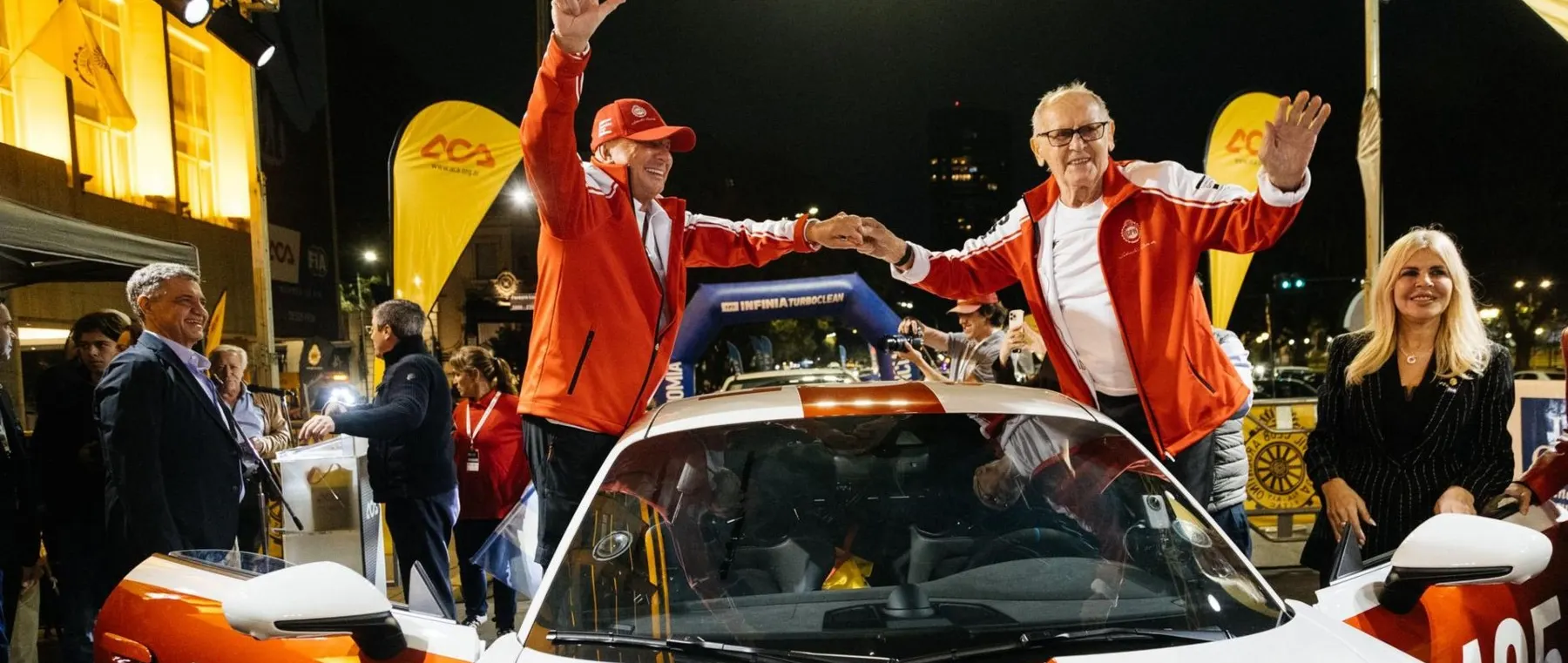
Porsche’s latest heritage story revisits the remarkable career of Sobiesław Zasada as the veteran rally driver returns to Argentina. This development is relevant to owners and guests who pursue luxury motoring, hospitality, private travel or collectible objects alongside their yachting interests.
The car wore a tribute livery recalling the number 405 Porsche driven by Zasada in 1967. The gesture was more than a familiar racing graphic: it connected a contemporary visitor programme with a particular contest, vehicle and driver whose achievement remains part of Porsche’s international motorsport history.
The Gran Premio victory that made history
In October 1967, Zasada contested the Gran Premio Internacional de Turismo, a route exceeding 3,000 kilometres across mountains, desert and flooded plains. He drove a red Porsche 911 nicknamed Porschito, accompanied by engineer and co-driver Jerzy Dobrzański, and prevailed against a field of nearly 400 starters that included substantial factory-backed competition.
The crew secured overall victory as well as its class, demonstrating the 911’s toughness over terrain far removed from the circuit racing with which the model is often associated. Porsche highlights their use of an intercom system then unusual in Argentine competition, a reminder that preparation and effective crew communication mattered alongside outright driving speed.
The pair’s winning vehicle bore Kraków registration 25-15-KR, a small detail that helps make the story identifiable in historical photographs and archives. Rally provenance often depends on precisely these details, which permit historians and collectors to distinguish a particular competition car from a later tribute or restoration.
From Poland to an international racing career
Born in 1930, Zasada originally pursued athletics but turned toward motor racing after a shoulder injury ended his hopes of competing in javelin at the 1952 Olympics. His subsequent career included three European rally championships, eight Polish national titles and 148 rally victories across five continents, according to Porsche.
He also competed for Porsche in the London–Sydney Marathon in 1968, finishing first on the Australian leg and fourth overall with Marek Wachowski after a journey of more than 16,000 kilometres. These events predate the controlled logistics of much modern competition and demanded considerable adaptability from both crews and cars.
Zasada’s continuing enthusiasm at 96 is extraordinary, but this appearance should not be misconstrued as an announcement that he has resumed full professional competition. His role in the heritage event is best understood as a celebration of personal endurance, memory and the rallying community.
Two generations of the 911 meet in Argentina
Porsche Argentina presented a replica of the original Porschito during Zasada’s visit, alongside the contemporary Dakar used in the event. Both vehicles were intended to recall the 1967 success while illustrating how the 911’s identity has been adapted to different driving conditions over the intervening years.
The relationship between a race car and a later tribute can be compelling to collectors provided the historical distinction remains clear. A faithful replica can preserve the visual story of an unavailable original, but it does not inherit the provenance of the competition vehicle merely by sharing its colours or number.
Zasada’s visit offers a memorable example of how car companies can make heritage tangible. It gives enthusiasts an opportunity to understand why an old racing result matters without treating history as an advertising slogan, and why the surviving personal recollections of participants are as valuable as photographs and trophies.
For readers combining cruising with international travel or collecting, the announcement provides a useful reference point when planning a private itinerary or acquisition. Individual costs, access and conditions should be verified with the company concerned before making a commitment.