Two competitive worlds move closer together
Porsche’s comparison of simulator and circuit competition has relevance for owners of high-performance cars who also enjoy occasional organised track experiences. This development is relevant to owners and guests who pursue luxury motoring, hospitality, private travel or collectible objects alongside their yachting interests.
The question is not whether a racing simulator can reproduce every physical sensation of a car. It is which elements of decision-making, concentration, track knowledge and racecraft survive the transition from a screen to the cockpit, and what important dimensions remain specific to a real vehicle.
Precision at the edge of the virtual circuit
High-level sim racing requires competitors to repeat extremely precise lines and braking points under pressure from other drivers. Changes in track position or tyre grip need to be processed quickly, and small errors can cost positions in the same way that errors matter during a professional motorsport event.
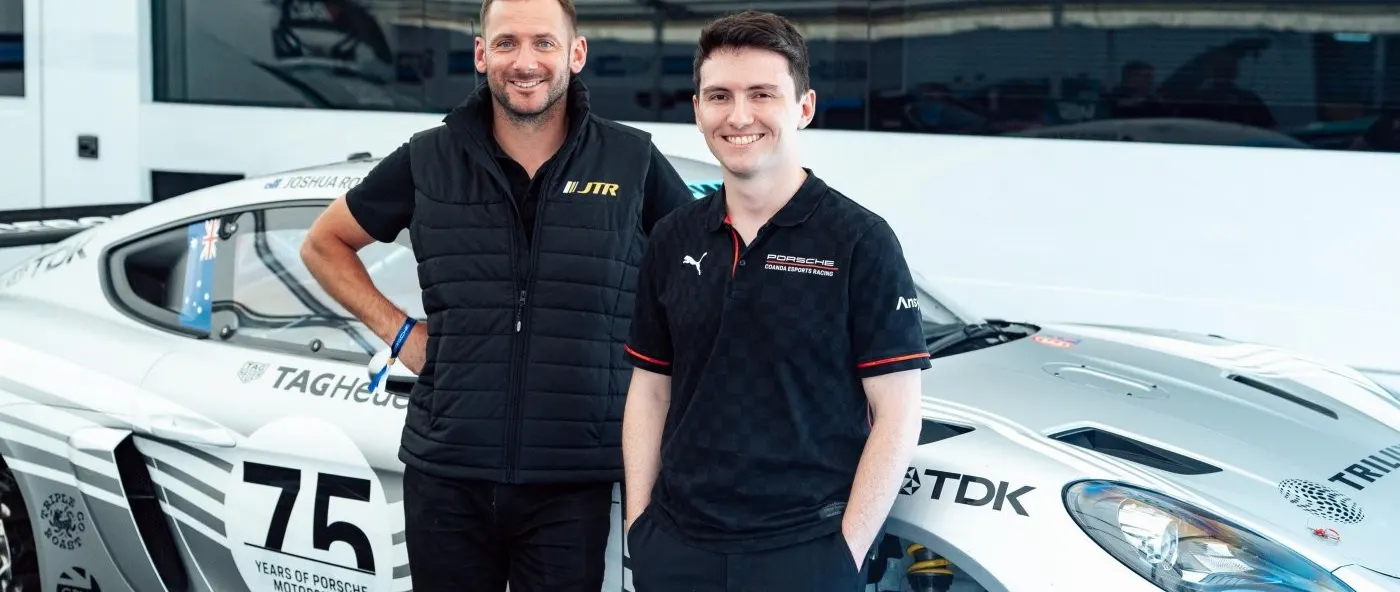
Rogers has achieved significant success in Porsche esports competition and brings the perspective of an athlete accustomed to spending long periods refining lap-time performance in simulation. The transferable elements include familiarity with circuit sequences, planning overtakes and anticipating what rivals are likely to do in traffic.
However, an accurate virtual lap does not automatically mean the same pace is available in a physical car. Drivers must still account for tyre temperatures, cockpit movement, communication with engineers and an entirely different sense of consequences when a manoeuvre goes wrong.
Real-world forces and the demands of endurance racing
Tandy represents the other side of the comparison, drawing on professional motorsport experience where heat, vibration, braking loads and physical fatigue are part of every stint. Real endurance racing also involves strategy shaped by weather, reliability, fuel consumption and the condition of a vehicle that cannot be reset after a mistake.
Driving skill is intertwined with teamwork. Engineers interpret telemetry and help refine a setup, mechanics prepare the car, and the driver must report what is happening in terms useful enough for the team to act upon. Simulated racing can reproduce parts of that feedback loop, but the operating environment remains fundamentally different.
Pressure can be intense in both worlds even if its sources differ. A virtual championship has real consequences for its participants’ careers and competitive standing, while a live track event introduces personal safety and substantial mechanical and financial exposure alongside sporting expectations.
Why this matters beyond professional racing
For owners of high-performance road cars, a modern simulator may be a useful way to learn a circuit before a professionally organised track day. It can improve knowledge of corners, racing lines and braking zones, but it should never be treated as a substitute for tuition, safety briefings or the measured assessment of real vehicle dynamics.
The crossover is also reshaping how manufacturers introduce younger audiences to motorsport. Online competitions can expose talent that might not otherwise enter conventional racing, while the presence of factory drivers lends the virtual environment a connection to the engineering and competitive standards of the paddock.
Porsche’s comparison presents these disciplines as complementary rather than interchangeable. The strongest lesson is that practice, adaptability and awareness matter in both settings, but translating virtual confidence into real speed requires experience, professional guidance and respect for physical limits.
For readers combining cruising with international travel or collecting, the announcement provides a useful reference point when planning a private itinerary or acquisition. Individual costs, access and conditions should be verified with the company concerned before making a commitment.