Porsche has turned the Gobi Desert into a demanding driving experience built around endurance rather than lap times. The route begins near Hami in Xinjiang and moves into remote terrain where sand, heat and limited infrastructure become part of the challenge.
Cayenne, Macan and 911 Dakar models are used across the programme, allowing participants to learn how different Porsche technologies work away from asphalt. The experience mixes driving technique with teamwork and the practical realities of travel in a harsh landscape.
The desert changes the driving priorities
Loose sand and gravel reward smooth momentum and careful throttle control rather than aggressive inputs. Drivers learn quickly that stopping in the wrong place can leave even a capable SUV digging itself deeper into soft ground.
Recovery becomes a group exercise using shovels and sand boards when a car gets stuck. The lesson is as much about judgement and cooperation as it is about the vehicle.
Cayenne hardware earns its place
Adaptive air suspension, off-road modes, electronic differential locks and all-wheel drive are central to the Cayenne’s performance in the desert. These systems become easier to appreciate when traction and clearance are genuinely limited.
The environment strips away the abstraction of a specification sheet. Owners can feel how suspension height, torque distribution and tyre placement affect progress over difficult surfaces.
Camp life is part of the experience
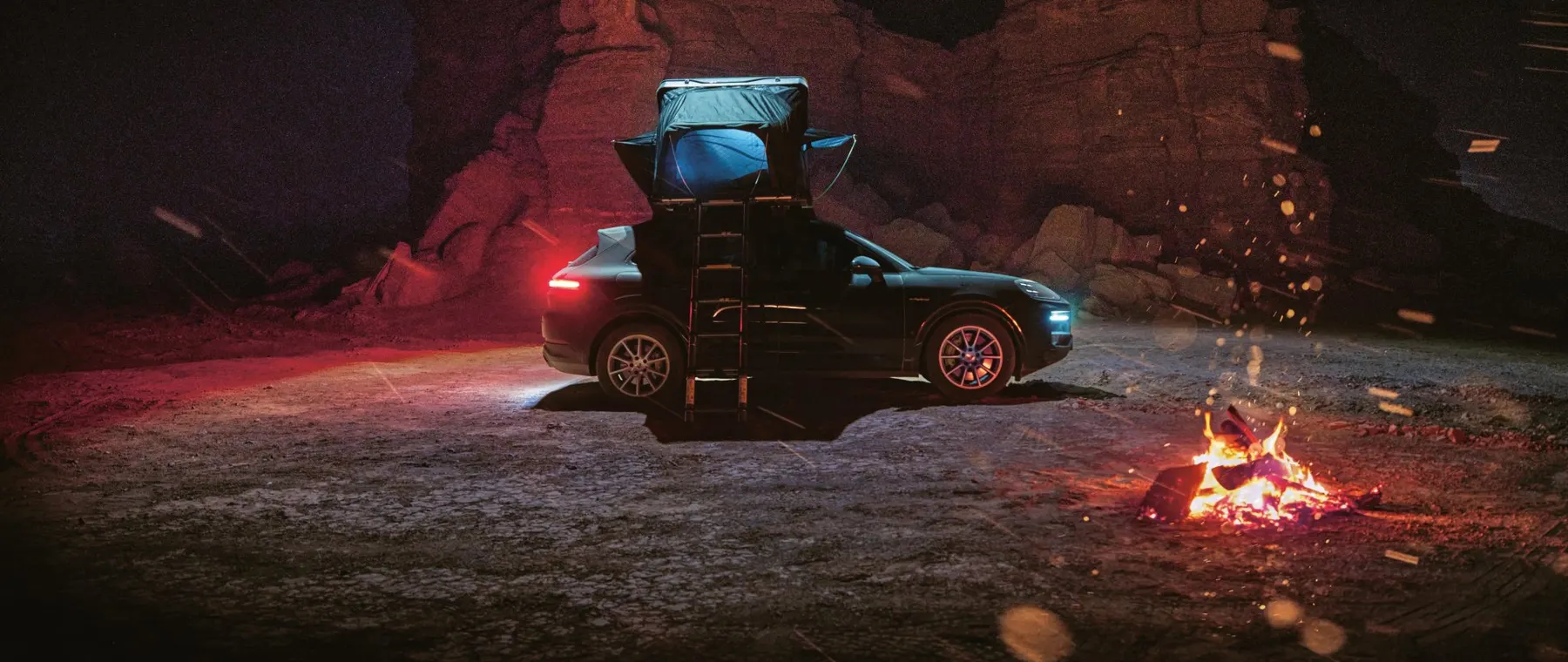
The drive includes remote overnight stops with roof tents and simple camp routines under a clear desert sky. That deliberate reduction in comfort contrasts with the refinement of the cars used to reach the site.
The result is a form of luxury based on access rather than excess. Participants are buying the chance to reach an extraordinary landscape with expert support and capable equipment.
Adventure remains the point
Porsche describes the programme as a test for both vehicles and people, and the Gobi provides little room for pretence. Dust, heat and distance ensure that the experience feels earned rather than staged.
For travellers who value active holidays, the proposition is compelling because the car becomes part of the adventure instead of simple transport. The lasting memory is likely to be the landscape and challenge rather than a conventional luxury itinerary.