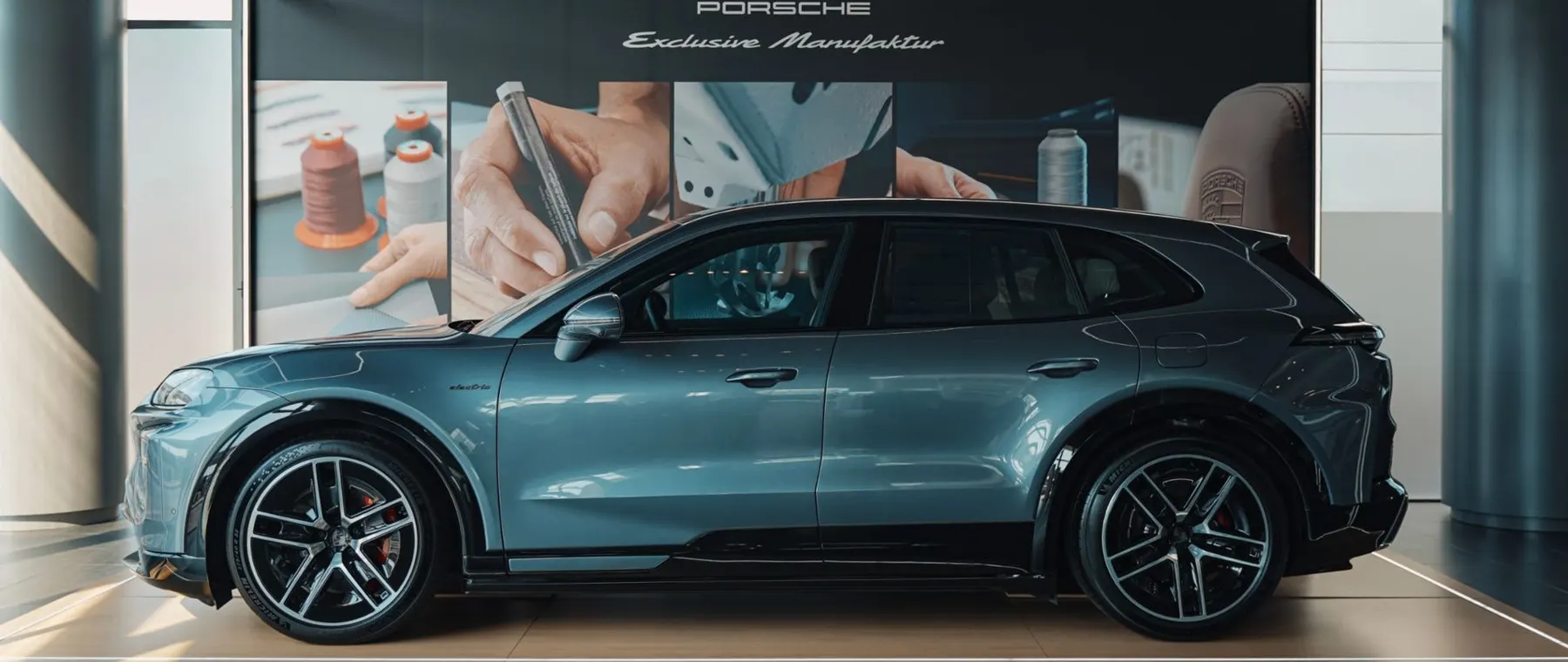
A carefully specified electric Porsche in Dubai
Porsche Centre Dubai and Northern Emirates has used a Cayenne Turbo Electric to demonstrate the range of individual factory options available through Porsche Exclusive Manufaktur. The example shown in the manufacturer’s 23 October 2026 announcement is painted Vanadium Grey Metallic and combines selected exterior treatments with a Black and Chalk Beige cabin. The project is presented as an exercise in personal specification rather than a newly named limited-edition model. That is an important distinction for anyone considering whether a similar appearance can be ordered.
The appeal lies in how individual choices work together. A subtle paint colour can be transformed by contrasting wheels, dark trim and selected interior materials, yet a long options list does not automatically produce a harmonious car. In this demonstration Porsche takes a coordinated approach, keeping exterior details mostly within black and grey while allowing the leather cabin to introduce a brighter contrast. The result illustrates the difference between merely adding equipment and curating a consistent design.
Vanadium Grey provides a restrained starting point
The official release names Vanadium Grey Metallic as the principal body colour. Metallic paint can look different in direct sun and artificial lighting, a particularly relevant consideration in a city with strong daylight and illuminated evening streets. Porsche pairs the colour with body-coloured exterior mirrors, black side-window trims and selected high-gloss details. The visual balance is intended to feel deliberate rather than allowing each decorative element to compete for attention.
A prospective owner should examine a large colour sample or a vehicle in the chosen paint before placing a bespoke order. Photographs can alter the perception of metallic flake, contrast and brightness. The finish will also need care appropriate to the region’s climate and ordinary road use. A personalised exterior is valuable when it reflects the person who selected it, but buyers should be realistic about cleaning, repair matching and how certain finishes may wear over time.
Wheels make the strongest exterior statement
This Cayenne uses 22-inch Cayenne Exclusive Design wheels in high-gloss black, with polished surfaces and aerodynamic blades known as Aeroblades. Wheels sit at the intersection of style and function, making them among the most visible parts of a car’s identity. The dark finish connects them visually to the SportDesign Package and the other black exterior details. Their substantial diameter changes the vehicle’s stance, although it should not be taken as evidence of a particular handling improvement without comparable testing.
The practical choice of a wheel also involves tyres, replacement costs and exposure to kerbs. An owner who uses urban car parks may make a different calculation from one who primarily travels between private premises. The correct tyre specification, load rating and maintenance advice should be confirmed with Porsche. Decorative elements can be expensive to restore if damaged, so a careful fitting and clear dealer documentation make more sense than evaluating the wheels through appearance alone.
Lighting and trim complete the dark exterior theme
Porsche lists tinted HD-Matrix LED headlights and a tinted rear light strip carrying its lettering among the selected details. These components contribute to the vehicle’s visual identity when parked and when illuminated. The SportDesign Package adds further high-gloss black treatment to the body. Together, they frame the grey paint and create a relatively restrained appearance for a highly specified electric SUV.
Lighting should never be judged solely by its styling. Buyers need to understand the equipment available in the chosen market and any legal requirements that apply to an imported vehicle. Porsche’s announcement identifies the installed features but is not a substitute for a market-specific technical specification. Functional benefits, maintenance and replacement expense belong in the purchasing conversation, especially where a more complex lamp unit may cost substantially more than a conventional component.
A two-tone interior adds warmth
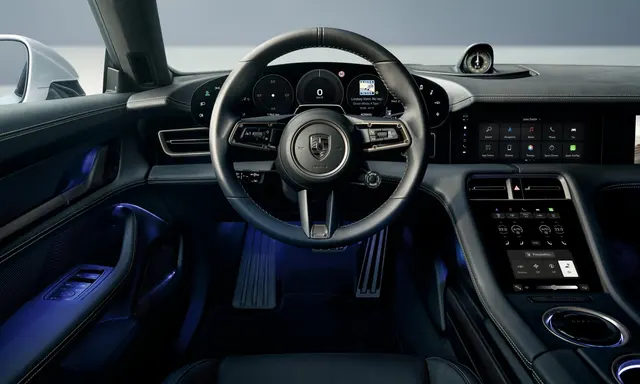
Inside, the Dubai example uses Black and Chalk Beige leather upholstery, Chalk Beige seat belts and Porsche Crests on the headrests. The lighter material softens the dark exterior scheme, creating an interior that feels distinct from a single-colour sports cabin. Porsche also specifies a heated GT Sports steering wheel with a matte carbon inlay. These are tactile choices as well as visual ones, because the driver encounters the wheel and seating surfaces on every journey.
Light upholstery can look especially refined, but its long-term condition depends on careful use and appropriate cleaning. Buyers should ask how the leather should be maintained, particularly if children, pets or frequent passengers are part of the ownership pattern. The choices also show why a bespoke specification is best considered as a whole. Seat belts, headrests and steering wheel materials may seem minor in isolation, yet their repetition gives the cabin a coherent personality.
Small personal details distinguish the commission
Porsche mentions an embossed model logo on the centre-console armrest and an individually painted vehicle key with a matching case. Such details are not related to speed or acceleration, but they can make a factory-configured car feel personally commissioned. A key case that echoes the exterior colour is a small example of connecting the ownership experience with the car itself. It is precisely this kind of detail that a bespoke programme can offer beyond standard option selection.
Personalised elements should be documented because they may not be obvious to a later owner or a service workshop. If a unique finish is damaged, restoration may require information about the original ordering specification. Customers should also establish whether every detail can be reordered, and whether there are lead-time implications. A bespoke option may be part of the manufacturer’s current catalogue, yet availability can change across regions and model years.
Digital and comfort equipment support the design
Alongside the appearance package, the vehicle is equipped with a Passenger Display, Park Assist with 3D Surround View and rear comfort pillows. These items illustrate a more practical side of luxury: improving the usefulness of the cabin for passengers while addressing manoeuvring and everyday convenience. It would be misleading to assume that all Cayenne Turbo Electric models receive this precise package as standard, because the manufacturer’s presentation is about an individually optioned example.
A buyer should test the passenger screen and parking aids on the actual vehicle, then check that selected options operate as expected. Driver-assistance technologies should support attentive driving rather than replace it, and a display does not guarantee that every app or service is available in every country. The combination of comfort and design is most convincing when the systems match the owner’s routines, whether that means commuting, airport journeys or longer weekend travel.
The meaning of a modern factory bespoke programme
Porsche Exclusive Manufaktur offers a route to personal expression within the manufacturer’s design and engineering process. The Dubai Cayenne shows the result of coordinated paint, exterior trim, leather and selected convenience equipment. It is not evidence that a new Cayenne variant has been launched, nor does it establish prices for a comparable commission. The official 23 October presentation is a useful case study in factory personalisation at the upper end of modern automotive luxury.
The sensible next step for a prospective customer is a detailed build review with Porsche specialists. They should distinguish standard equipment from optional components, confirm compatibility and ask about delivery times, servicing and replacement parts. Individual choices can add emotional value without necessarily increasing resale value, so ownership enjoyment deserves more weight than speculative investment arguments. The most successful specification is one that continues to feel coherent after the novelty of its first unveiling has passed.