A birthday that spans racing generations
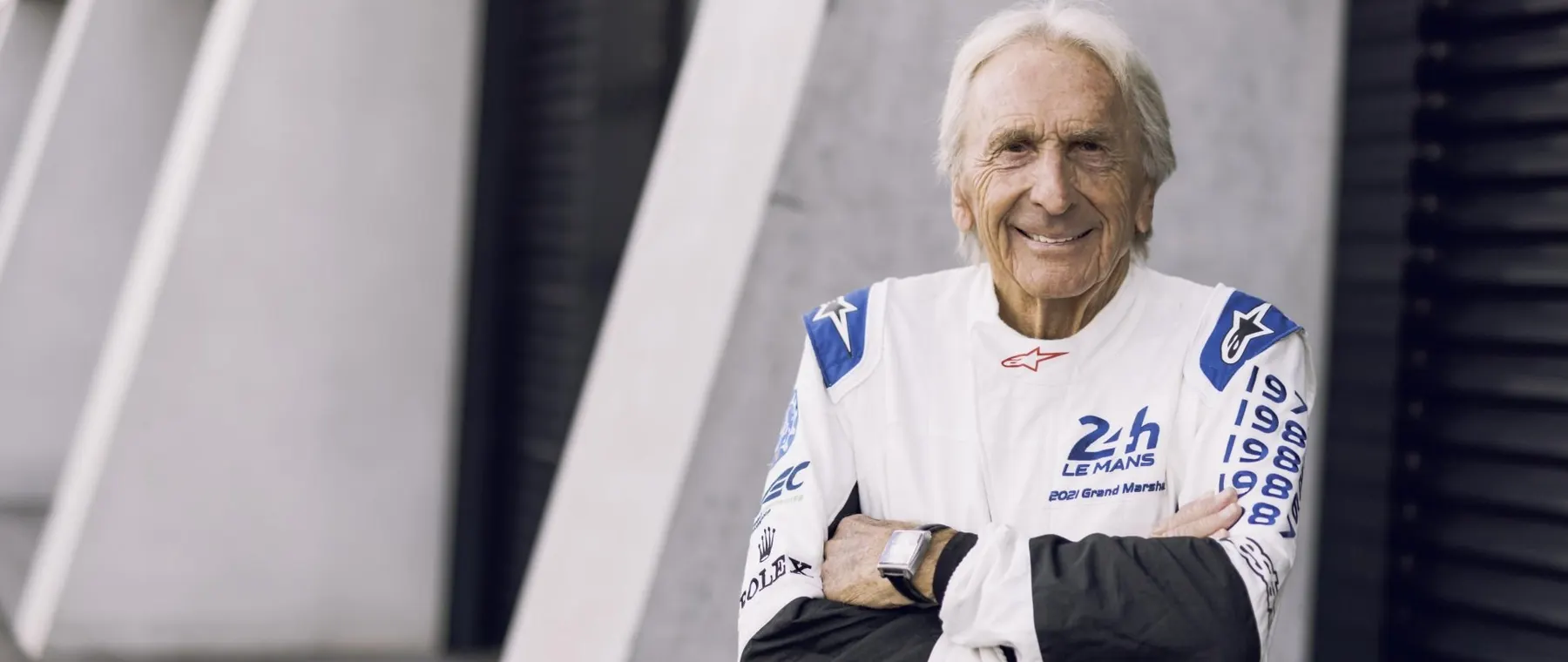
British racing driver Derek Bell turned 85 on 31 October 2026, and Porsche used the occasion to revisit a career that helped define the modern endurance-racing legend. Bell's record includes five overall wins at the 24 Hours of Le Mans, four of them with Porsche, and successive World Endurance Championship titles in 1985 and 1986. Those figures are impressive on their own, but the most interesting aspect of his career is the way they connect several very different periods of racing technology. Few drivers have firsthand experience that stretches so clearly from the long-tailed Porsche 917 to the ground-effect prototypes of the 1980s.
In its official birthday tribute, Porsche places equal emphasis on Bell's judgment and his pace. A 24-hour event asks a driver to share a fast and mechanically complex car, adapt to changes in weather and traffic, and return it to the team in condition to finish. That is a different test from producing one spectacular qualifying lap. For enthusiasts who follow modern endurance championships, Bell's story offers an unusually clear explanation of why restraint, communication and mechanical sympathy can be decisive competitive strengths rather than merely admirable personal qualities.
The 917 LH and the scale of early Le Mans
Bell was born in Pinner, Middlesex, in 1941 and progressed through British club racing into Formula 3 and Formula 2 before establishing himself in international sportscar competition. His early Porsche connection included the 1971 Le Mans race in a 917 LH, the long-tail version created to exploit the speed potential of the circuit's long straights. Porsche recalls Bell describing a run at 396 kilometres per hour on the Hunaudières straight. It is a striking reminder of how extreme the performance of those cars was, even before the electronic and aerodynamic systems now familiar in elite motorsport.
There was no simple division between driving quickly and understanding machinery in that era. Changes in grip, engine behaviour or vibration could become information the crew needed to act upon during a brief pit stop. The driver's seat was both a workplace and an observation post. Bell's reputation for calmness therefore had a practical function: he could report what a car was doing while still managing the risks of traffic and fatigue. Porsche's new tribute treats that ability as one of the foundations of the long partnership that followed, rather than suggesting his reputation rested only on raw speed.
How the Porsche 956 changed the assignment
The Group C regulations of the 1980s introduced a particularly demanding combination of speed and fuel management. Porsche's 956 brought sophisticated ground-effect aerodynamics to endurance racing, while the subsequent 962 developed the concept further. The machinery could carry remarkable speed through corners, yet performance had to be considered in relation to fuel use over a full stint. A driver could not simply attack every lap without thinking about the consequences for the overall race plan. Bell excelled in an environment where consistency was as valuable as aggression.
This is what makes the 956 and 962 important to more than collectors of famous racing cars. They illustrate a period when engineering innovation was inseparable from strategic decision-making behind the wheel. Teams needed drivers who could interpret unfamiliar loads, manage turbocharged power and remain precise when concentration was being eroded by hours of racing. Bell's long association with these cars reflects trust built across repeated events. His success was part of an organisation of engineers, mechanics and fellow drivers, not the achievement of a single individual operating independently.
Five Le Mans victories, four in Porsche cars
Bell's five overall Le Mans wins came in 1975, 1981, 1982, 1986 and 1987. The first was outside Porsche's four-win share of the total; his later victories came with the Porsche 936, 956 and 962. This distinction matters when reviewing a career often summarised through its long Porsche association. It also shows that Bell was already an accomplished endurance racer before the manufacturer entered the Group C years that are most closely linked to his name. Porsche's birthday announcement explicitly counts four of his five Le Mans victories with the marque.
His achievement extended well beyond one race. The official tribute records World Endurance Championship titles in both 1985 and 1986 and overall 24 Hours of Daytona wins in 1986, 1987 and 1989 in a Porsche 962. Bell shared cars with prominent team-mates including Jacky Ickx, Hans-Joachim Stuck and Al Holbert. His partnership with Ickx became a particularly recognisable chapter in Porsche's long-distance racing history. These shared results underline a defining feature of the discipline: although each driver has a distinctive style, the race outcome belongs to the whole crew.
The human stories behind the statistics
One of the most personal episodes mentioned in Porsche's announcement came in 1992, when Derek Bell raced a 962 C at Le Mans with his son Justin and fellow British driver Tiff Needell. They finished twelfth. The placing may not attract the attention given to a major victory, but the family connection adds depth to a career otherwise told through trophies and engine specifications. Racing at Le Mans with a son required the same trust and shared responsibility demanded of any professional team, with an additional significance that no results table can fully convey.
Porsche also recalls Bell's involvement with the making of the film Le Mans in 1970 and his appearances at historic motorsport gatherings long after leaving full-time competition. Those experiences have helped keep the cars and people of his era visible to newer audiences. The manufacturer describes his ability to speak about hard work and technical collaboration without romanticising it. That is useful perspective in a heritage market where beautifully restored racing cars can sometimes obscure the exhaustion, improvisation and difficult decisions that produced their original records.
What Bell's example still means today
Modern endurance racing has different electronics, safety systems and powertrain technologies, yet the balance between speed, efficiency and reliability remains recognisable. Bell's career is a case study in how a talented driver adapts when engineering changes the nature of the task. The 917 LH rewarded bravery at very high speed, while the 956 and 962 demanded a refined response to aerodynamics, traffic and strategic fuel constraints. Porsche's tribute is therefore more than a birthday announcement: it traces the evolution of the relationship between human judgment and increasingly capable racing machines.
For Porsche enthusiasts, this anniversary is also an invitation to look more closely at the people who made the famous cars successful. Bell, now based in Florida according to the manufacturer's announcement, remains associated with a period when the drivers, engineers and mechanics learned together under the pressure of long-distance races. Five Le Mans victories are the headline, but the longer legacy is a working method: be fast when the moment requires it, conserve when the distance demands it, and understand the car well enough to bring the team home. Those lessons have outlasted the prototypes that first demonstrated them.