Nine Porsche classics reach the national stage
Porsche Cars North America has identified nine finalists for its sixth annual Porsche Classic Restoration Challenge, after sixty dealership-led projects competed across the United States. The selected vehicles span more than three decades of Porsche history, from a 1969 912 Soft Window Targa to early-2000s 911 models. The finalists were announced on 8 October ahead of national judging and public display during the Luftgekühlt gathering at Town at Trilith in Georgia on 9–10 October.
The programme is of particular interest to owners who value craftsmanship, documentation and personalised classic cars. It brings Porsche-trained technicians, parts specialists and enthusiasts together around three distinct objectives: preserving original character, rebuilding a car to its historical specification, or undertaking a bespoke transformation. The competition's shortlisting has been confirmed; the announcement does not itself establish the national winners.
The Gentleman’s Outlaw shows the appeal of bespoke classics
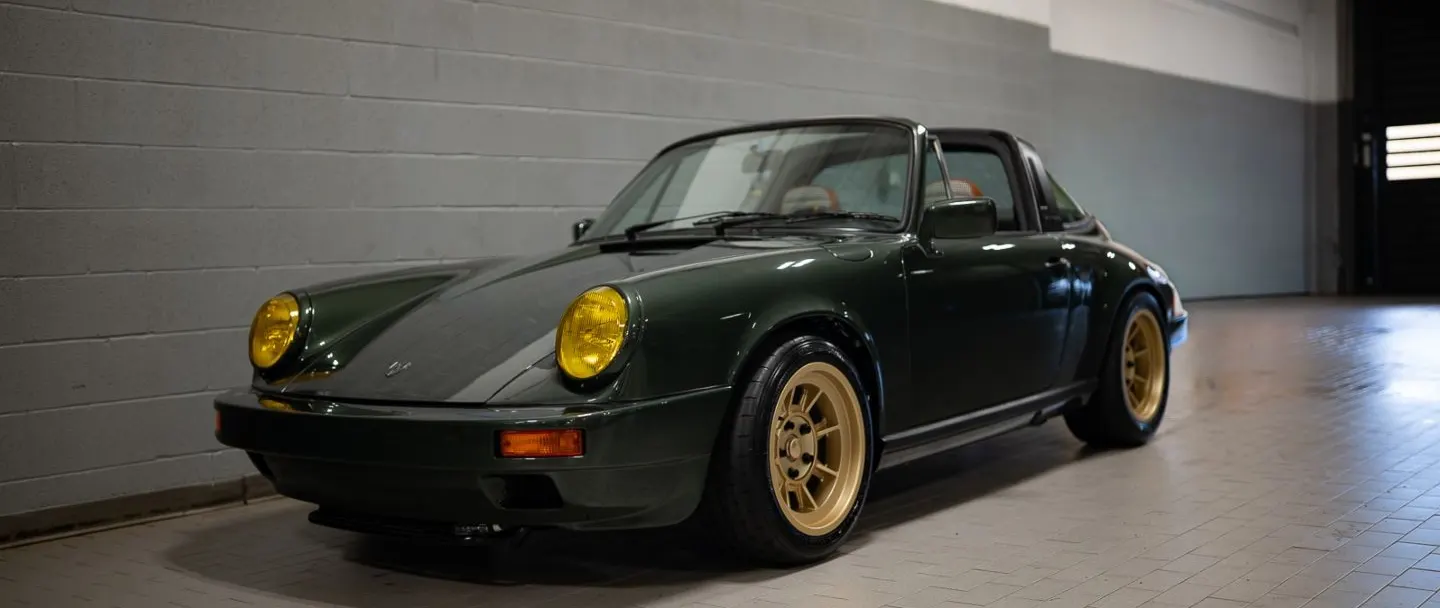
Porsche Englewood's individualisation entry is a 1980 911 Targa known as The Gentleman's Outlaw. The project began with a conventional air-cooled car and developed into an extensively reworked vehicle finished in Oak Green Metallic. The dealership undertook a detailed rebuild, including transmission work with a limited-slip differential, changes to the three-litre engine and upgrades to the suspension and braking system.
That approach is different from restoring a factory specification exactly. The aim is to keep enough of the original model's character to make the result recognisably a classic Porsche while tailoring performance, materials and appearance to a personal vision. Prospective clients should treat such work as a bespoke engineering project with explicit documentation, rather than assume modifications automatically improve desirability or resale value.
Preservation rewards history as well as finish
The preservation category asks teams to retain the identity of a vehicle while returning it to reliable use. Porsche Mechanicsburg entered a Dark Teal Metallic 2003 Carrera 4S Coupe that had served its owner for many years as a daily driver. The work included mechanical repairs, paint correction, renewed interior details and the installation of Porsche Classic Communication Management, with the project built around retaining the car's familiar character.
At the western regional level, Gaudin Porsche Las Vegas presented a 1996 911 Turbo from the 993 generation. Its history included decades of aftermarket alterations, so the team concentrated on reversing those changes and returning the vehicle to a factory-correct state. Authenticity was supported by a Porsche Classic Technical Certificate and subsequent road testing, evidence that careful preservation can require as much technical judgment as a dramatic custom build.
Restoration is a different promise to the owner
Porsche Beachwood chose a 1969 912 Soft Window Targa for the restoration class. The car had a long connection to the local Porsche community, having been delivered originally in Ohio and later owned by enthusiast Bruce Schwartz. After a period in storage, the dealership undertook engine rebuilding, paint and cosmetic work while trying to respect the model's original specification. The project also became associated with fundraising for Alzheimer's disease research in memory of its former owner.
Harper Porsche's entry in the same category was a 1978 930 Turbo, an early performance model with a striking period specification. The team addressed extensive deterioration, including corrosion and tired mechanical components, and worked to reproduce the vehicle's original Paint to Sample finish and distinctive light-coloured interior. A correct restoration depends on historical evidence and appropriate parts as much as visual attractiveness.
Customisation can extend beyond the original factory brief
Porsche Orlando's 1997 Carrera 2 from the 993 generation entered the individualisation category after a major transformation. The owner-led project drew on the RS tradition, combining specialist body and interior work with a high-revving four-litre engine built using components from different Porsche platforms. It illustrates how personal commissions can blend period design cues with engineering that the original vehicle never offered.
The category also includes a 1973 Porsche 914 created by Porsche Tucson as a tribute to long-serving master technician Jim Guthrie. Such projects may appeal to collectors who place a premium on personal meaning and the skill of a particular workshop. Their ultimate value, however, depends on execution, originality of the base car and the buyer's own preferences; the competition does not provide investment guarantees.
The concours owner faces three very different choices
Before commissioning work, a collector needs to decide whether the goal is preservation, restoration or individualisation. Those objectives may appear similar in photographs but require different budgets, research and treatment of original components. A mechanically sound car with authentic patina can lose part of its story through indiscriminate refinishing, just as a heavily altered vehicle may require considerable investigation before being restored to its original state.
Written project specifications are essential. Owners should agree how historical research, photographic records, component sourcing, engine numbers, finishes and unforeseen repairs will be handled. They also need a realistic timetable and a clear policy on retaining removed parts. The more historically important the car, the more valuable it can be to consult marque specialists before authorising irreversible changes.
Why original parts and qualified specialists matter
Porsche's challenge highlights the role of its dealer network and Classic specialists rather than presenting restoration as merely a styling exercise. The manufacturer supplies a large catalogue of parts for heritage vehicles and provides technical expertise intended to support continuing ownership. A specialist workshop can use this information to evaluate compatibility, document earlier repairs and plan maintenance after an expensive project is complete.
Restoration costs frequently depend on discoveries made after disassembly, when corrosion, damaged fixings and previous repairs become visible. As a result, apparently comparable vehicles may require very different programmes of work. A collector comparing estimates should look for transparent assumptions, examples of completed projects and an explanation of which components will be repaired, replaced or left undisturbed.
A celebration of craft rather than a single design formula
The national programme was held in conjunction with Luftgekühlt at Town at Trilith, where enthusiasts could see the finalists and consider a People's Choice selection. Porsche stated that the national championship would recognise preservation, restoration and individualisation as well as an overall grand champion. Any final results should be taken from a subsequent confirmed announcement rather than inferred from the order in which cars appeared in Porsche's preview.
For luxury-car collectors, the most enduring message is that exceptional workmanship need not produce identical outcomes. A faithful 912 revival, a restrained 993 preservation and a radically individual 911 can each meet a different owner aspiration. The 2026 shortlist gives a useful cross-section of those approaches and makes the people and decisions behind the finished vehicles part of the story.